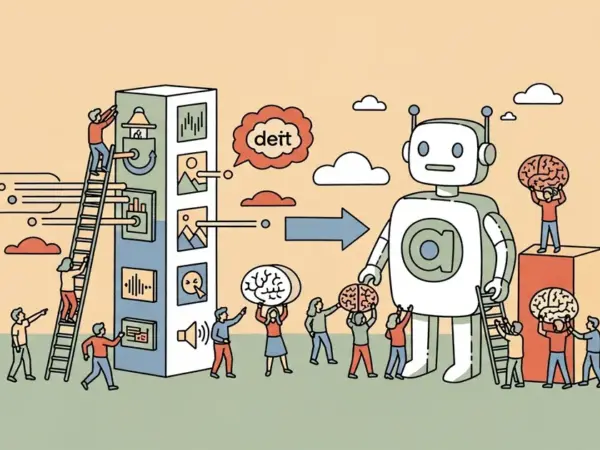
- Notion launched a developer platform on May 13, 2026 that turns the workspace into an orchestration hub for AI agents.
- Notion customers have built over one million Custom Agents since the feature launched in February 2026.
- The new Workers feature lets teams deploy custom code into a cloud-based sandbox connected to Notion.
- External agents can now connect to Notion workspaces; previously, integration required third-party automation platforms or self-hosted scripts.
What Happened
Notion announced a developer platform expansion that extends the capabilities of its custom AI agents, lets external agents connect to the Notion workspace, and supports multi-step automated workflows that pull data from any database, TechCrunch reported on Wednesday following a Notion livestreamed product announcement. The expansion positions Notion as more than a note-taker with AI features and instead as an orchestration layer where people and agents collaborate.
Why It Matters
Notion’s claim of over one million Custom Agents built since the February 2026 launch is the most concrete adoption number released for any in-workspace agent platform to date. The previous architecture limited those agents to operating only within Notion data and built-in logic. The new platform removes both constraints. The orchestration framing aligns with similar moves from competitors: Slack’s AI Workflow Builder, Microsoft 365 Copilot Studio, and ClickUp’s recent agent platform all stake out similar territory.
Notion co-founder and CEO Ivan Zhao acknowledged the company’s prior gap during the livestream: “It’s true that, historically, Notion hasn’t been the most developer-focused platform. But things are changing.”
Technical Details
The most significant addition is Notion Workers, a cloud-based environment for running custom code. Teams can write their own logic and deploy it to a secure sandbox — an isolated environment that prevents the code from interfering with other systems. Workers enable use cases that Notion previously could not handle natively: connecting to external APIs, calling third-party services, processing data with custom logic.
The platform also adds bidirectional connectivity for external agents. Teams using OpenAI’s Operator, Anthropic’s Computer Use, or custom in-house agents can now have those agents query, read, and write to Notion databases without intermediary infrastructure. The expanded Custom Agents themselves can connect to external data sources and apply custom logic, removing the earlier limitation that required teams to use third-party automation platforms (Zapier, Make) or self-hosted scripts.
Who’s Affected
Notion’s enterprise and developer customers — the company has reported over 100 million users across consumer, team, and enterprise plans — gain a native agent-orchestration layer. Competing collaboration platforms — Atlassian, Slack, ClickUp, Asana, Coda — face renewed pressure to match the developer-platform depth. Third-party automation companies such as Zapier and Make see partial displacement risk; many of the workflows their platforms hosted as workarounds can now run natively inside Notion. AI agent platforms — OpenAI Operator, Anthropic Computer Use, Microsoft Copilot Studio — gain an orchestration target for cross-tool work.
What’s Next
Notion did not publicly disclose pricing tiers for the developer platform beyond mentioning that the new capabilities are available to existing Notion customers. Rollout timing for Workers and the external agent connectivity was described as available but staged. Expect competing platforms to respond with platform expansions or pricing changes in the coming months. Notion’s $10 billion valuation in its most recent fundraise places it in the upper tier of collaboration-software valuations; the developer-platform move strengthens the underlying business case ahead of any anticipated public listing.