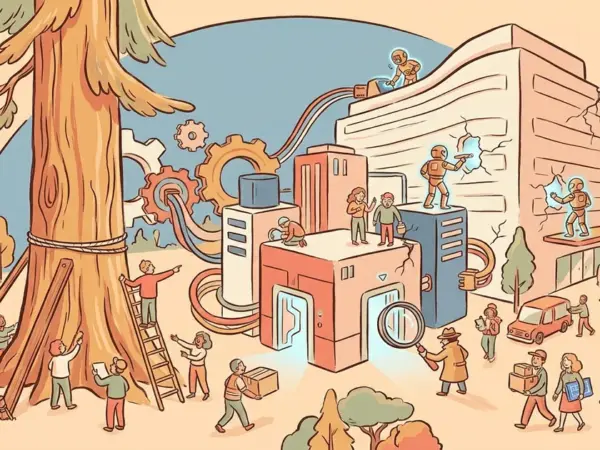
- Salesforce’s Dreamforce became a venue for the CEOs of OpenAI, Anthropic, and Nvidia to debate AI’s pace.
- The dispute centered on whether AI development should slow down.
- It reflects a widening industry split between accelerationists and safety-first voices.
- The debate follows recent high-profile safety warnings.
What Happened
Salesforce’s Dreamforce conference became “an unlikely battleground for the CEOs of OpenAI, Anthropic, and Nvidia to debate whether AI development should slow down,” WIRED reported on September 17, 2026. The disagreement played out at one of enterprise software’s largest annual gatherings.
Why It Matters
The split among the leaders of the three companies most central to the AI boom — a model maker focused on safety (Anthropic), a model maker racing to ship (OpenAI), and the chipmaker selling to both (Nvidia) — captures the industry’s core tension in public. That the argument erupted at a customer-facing enterprise conference shows the “should we slow down” question has moved from research forums into the commercial mainstream, where buyers are listening.
Technical Details
The “slowdown” debate is less about a literal pause than about pacing: how fast to deploy increasingly autonomous systems, how much independent evaluation to require, and who coordinates it. It follows recent safety warnings from inside the labs and Anthropic CEO Dario Amodei’s separate proposal to “pace the frontier” with independent evaluators. Nvidia, whose revenue depends on continued buildout, has the most commercial interest in acceleration.
Who’s Affected
Enterprise customers weighing large AI commitments now hear the vendors themselves disagree on pace and risk. Regulators watching the debate gain evidence that industry self-governance is contested. Employees and the public inherit the outcome of whichever view prevails.
What’s Next
The debate is unresolved and unlikely to settle soon. Concrete signals to watch are whether any lab actually slows a deployment, and whether the coordination mechanisms floated by safety-minded executives gain traction with rivals and regulators.