Key Takeaways
- Tesla has officially begun mass production of the Optimus V3 humanoid robot, targeting 10,000 units in 2026 at a price point under $20,000 per unit.
- At $20,000, the Optimus V3 is the cheapest mass-produced humanoid robot ever manufactured — less than the annual cost of a full-time minimum wage worker in most U.S. states.
- Competitors like Figure and Boston Dynamics price their humanoid platforms at $50,000 to $150,000 or more, giving Tesla a significant cost advantage.
- The initial deployment targets repetitive warehouse, logistics, and manufacturing tasks, with Tesla’s own factories serving as the first large-scale testing ground.
What Happened
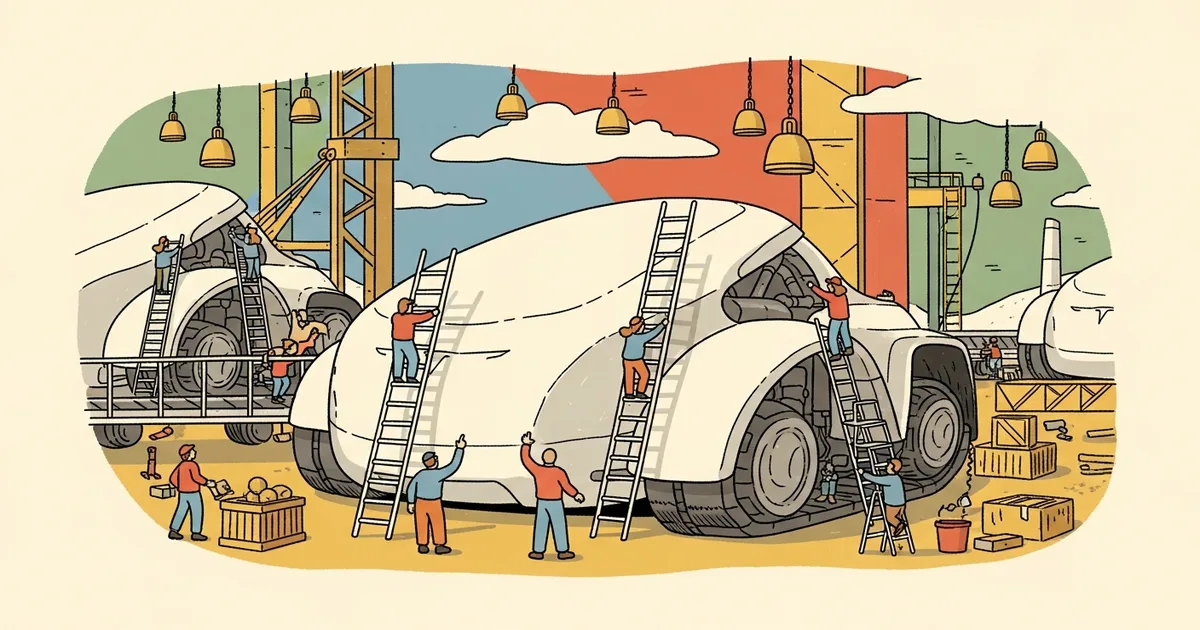
Tesla confirmed it has launched mass production of the Optimus V3, the third generation of its humanoid robot program, at its manufacturing facility. The production target for 2026 is 10,000 units, each priced under $20,000. CEO Elon Musk has positioned the Optimus program as potentially more valuable than Tesla’s automotive business, and the V3 production launch represents the most concrete step toward that ambition.
The $20,000 price point is aggressive by any measure. The federal minimum wage in the United States is $7.25 per hour, which translates to approximately $15,080 per year for a full-time worker. In states with higher minimum wages — California at $16.50/hour, Washington at $16.66/hour — the annual cost ranges from $34,320 to $34,653 before benefits, payroll taxes, and overhead. A $20,000 robot that can operate continuously without breaks, benefits, or shift limitations fundamentally changes the labor cost equation for repetitive physical tasks.
Tesla plans to deploy the initial units within its own factories and logistics operations before offering them to external customers. This mirrors the company’s approach with Full Self-Driving, using internal deployment to refine the product before broader release.
Why It Matters
The humanoid robotics market has been dominated by high-cost, low-volume platforms designed primarily for research and demonstration. Boston Dynamics’ Atlas, while technically impressive, has never been sold as a mass-market commercial product. Figure’s 02 robot is priced in the range of $50,000 to $100,000 and is being deployed in limited pilot programs with BMW and other manufacturers. Agility Robotics’ Digit carries a similar price premium.
Tesla’s entry at $20,000 undercuts the entire field by 60% to 85%. The company’s core advantage is manufacturing scale — the same competency that allowed it to reduce battery costs and vehicle production costs through vertical integration and high-volume production. Applying automotive manufacturing discipline to robotics enables cost structures that pure robotics companies cannot match.
The labor economics are stark. A $20,000 robot amortized over a conservative three-year operational life costs roughly $6,667 per year — less than half of federal minimum wage annual compensation. Add electricity and maintenance costs, and the total cost of operation likely falls between $8,000 and $12,000 annually. For warehouse operators, logistics companies, and manufacturers running three-shift operations, the payback period could be measured in months rather than years.
Technical Details
The Optimus V3 builds on the V2 design with improvements in dexterity, battery life, and onboard processing. Tesla has integrated its custom AI inference hardware — derived from the chips used in its vehicles and Dojo training computer — directly into the robot’s torso, enabling real-time object recognition, path planning, and manipulation without relying on cloud connectivity for basic operations.
The V3’s hands feature 22 degrees of freedom, an improvement over the V2’s 11, enabling the robot to handle a wider range of objects including irregularly shaped items, flexible packaging, and tools. Walking speed has been increased to approximately 5 miles per hour, with battery life supporting 8 to 10 hours of continuous mixed operation (walking, carrying, manipulating).
Tesla achieves the sub-$20,000 price point through several strategies: using its existing supply chain for motors, batteries, and electronics; manufacturing the structural components using the same gigacasting techniques developed for its vehicles; and designing the robot for automated assembly, reducing labor costs in the robot’s own production. The bill of materials for the V3 is estimated at approximately $12,000 to $14,000, with the remainder covering assembly, testing, software, and margin.
The software stack runs on a version of Tesla’s neural network architecture adapted from its autonomous driving platform. The system uses end-to-end learning for task execution, meaning operators can demonstrate a task and the robot learns to replicate it rather than requiring explicit programming for each motion sequence.
Who’s Affected
Warehouse and logistics operators are the most immediate market. Companies like Amazon, which employs over 1.5 million people globally — many in warehouse roles — represent the addressable market Tesla is targeting. At $20,000 per unit, even mid-sized logistics operations could deploy dozens of units for less than the annual payroll of a single shift team.
Competing robotics companies face a pricing crisis. Figure, backed by investors including Microsoft, Nvidia, and Jeff Bezos, has raised over $1.5 billion but has not achieved production scale. Boston Dynamics, owned by Hyundai, has deep engineering talent but has historically struggled with commercialization. Neither company can match Tesla’s manufacturing cost structure in the near term.
Labor unions and workforce advocates will scrutinize the deployment closely. While Tesla and other proponents frame humanoid robots as filling roles that are difficult to staff — dangerous, repetitive, or in locations with labor shortages — the economic math at $20,000 per unit makes displacement of existing workers a realistic concern for low-skill physical roles within the next five to ten years.
What’s Next
Tesla plans to scale production to 50,000 to 100,000 units annually by 2028, contingent on the V3’s performance in internal deployments through 2026. External sales to select enterprise customers are expected to begin in late 2026 or early 2027, starting with logistics and manufacturing partners.
The competitive response will likely accelerate. Figure recently announced plans to increase its production capacity, and Hyundai has committed additional funding to Boston Dynamics’ commercial robotics efforts. Chinese manufacturers, including Unitree Robotics and Fourier Intelligence, are also developing lower-cost humanoid platforms, though none have announced production volumes or pricing comparable to Tesla’s targets. The humanoid robotics market, long a domain of demos and prototypes, has entered its manufacturing era.