Key Takeaways
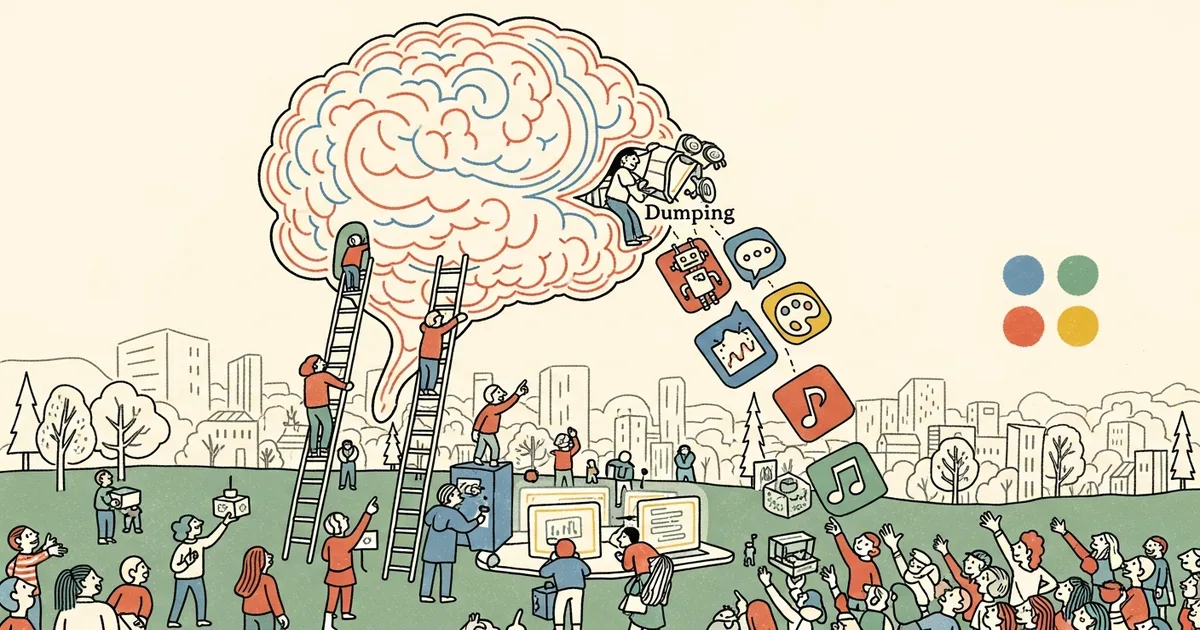
- On April 2, 2026, Google released five open-source AI models simultaneously, spanning reasoning, code generation, and scientific domains.
- At least one model achieves 0.8 accuracy on GPQA (Graduate-Level Google-Proof QA), a benchmark designed to test PhD-level scientific reasoning.
- The releases signal a strategic shift: Google is using open-source volume to establish ecosystem dominance rather than competing solely on closed API performance.
- All five models are available on Hugging Face with Apache 2.0 or similar permissive licenses.
What Happened
On April 2, 2026, Google released five open-source AI models in a single day with minimal marketing fanfare. The releases appeared on Hugging Face and Google’s AI developer portal within hours of each other, covering reasoning, code generation, scientific analysis, multilingual processing, and efficient inference. No dedicated blog post or press event accompanied the drop.
The most notable model in the batch scored 0.8 on GPQA (Graduate-Level Google-Proof QA), a benchmark specifically designed to test questions that require PhD-level domain expertise and cannot be answered through simple internet search. Jeff Dean, Google’s chief scientist, posted briefly on X that the releases represented “the next step in making frontier-class capabilities available to the open-source community.”
Why It Matters
Google’s open-source AI strategy has shifted dramatically since early 2025. The company initially treated open-source releases as secondary to its Gemini API business, publishing smaller models like Gemma 1 and Gemma 2 while reserving frontier capabilities for paying customers. That approach changed with Gemma 3 in late 2025, which competed directly with Meta’s Llama 3.3 on multiple benchmarks. This five-model drop accelerates the pattern further.
The timing is significant. Meta released Llama 4 on April 5, 2025, and has been signaling a Llama 4.1 release. By flooding the open-source ecosystem with multiple models across different domains, Google is forcing developers to evaluate its offerings before Meta’s next release captures attention.
Technical Details
While Google provided limited documentation with the initial release, the model cards and community benchmarking have filled in key details. The reasoning model, based on an updated Gemma architecture, achieves 0.8 on GPQA Diamond, the hardest subset of the benchmark. For comparison, GPT-4o scores approximately 0.53 on GPQA Diamond, and Claude 3.5 Sonnet scored 0.60 when tested in late 2025.
The code generation model is optimized for repository-level tasks rather than single-file completions. It accepts context windows of up to 128,000 tokens, allowing it to process entire codebases. Early benchmarks on SWE-bench Verified place it competitively with frontier closed models, though full independent evaluations are still pending.
The scientific analysis model is trained on a curated corpus of peer-reviewed papers, patents, and experimental datasets. The multilingual model covers 109 languages with particular strength in low-resource languages where previous open models performed poorly. The efficiency model is a distilled variant designed for edge deployment, running inference on devices with as little as 4GB of RAM.
Who’s Affected
Independent AI developers and startups benefit most from this release. Five models covering different use cases under permissive licenses give small teams a full toolkit without API costs. Enterprise users evaluating self-hosted AI deployments now have substantially more options from a major provider with long-term support credibility.
Meta faces the most direct competitive pressure. The Llama model family has been the default choice for open-source AI deployments since Llama 2’s release in July 2023. Google’s multi-model release strategy challenges that default position not by offering one superior model, but by offering breadth across the entire stack.
What’s Next
Google has indicated that full technical reports for all five models will be published by mid-April 2026. The company is also expected to release fine-tuning toolkits and integration guides for Google Cloud’s Vertex AI platform, creating a pipeline from open-source experimentation to paid cloud deployment. Community benchmarking across the full suite is underway on platforms like LMSYS Chatbot Arena and the OpenAI Simple Evals framework.