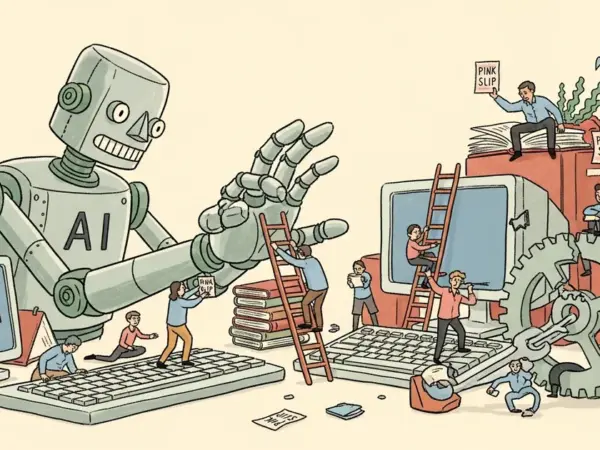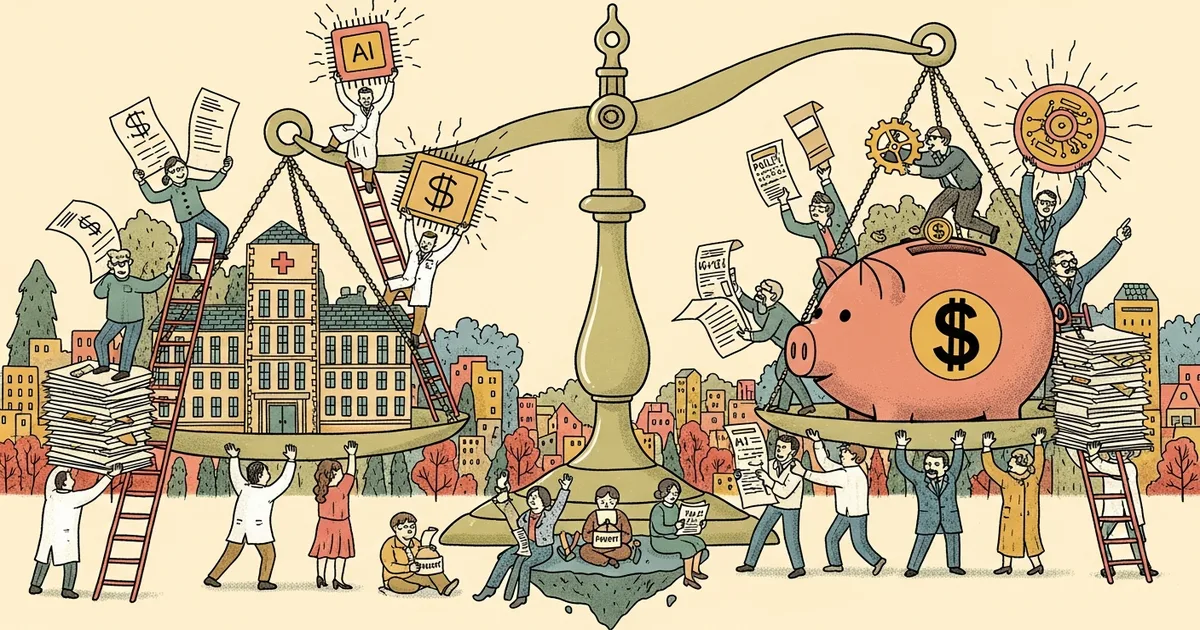
CBS News reports that both health insurers and healthcare providers are now using AI to fight each other over medical bills. Insurers use AI to deny claims faster. Hospitals use AI to appeal denials faster. The result is an AI arms race where patients are caught between two algorithmic systems optimizing for opposing objectives.
How Insurers Use AI
Health insurers have deployed AI systems that:
- Automated claim review: AI analyzes claims against coverage policies and flags denials in seconds, replacing manual review that took days
- Pattern detection: Machine learning identifies billing patterns associated with upcoding or unnecessary procedures
- Prior authorization: AI evaluates treatment requests against clinical guidelines and issues approvals or denials automatically
- Cost prediction: Models predict which claims are likely to be disputed, allowing pre-emptive documentation requests
UnitedHealth Group’s AI-powered claims processing reportedly reviews 30% of all claims without human involvement, according to industry analysts. Cigna’s system processes claims at rates exceeding 1.2 million per day.
How Hospitals Fight Back
Healthcare providers have responded with their own AI systems:
- Denial prediction: AI predicts which claims will be denied before submission and adjusts coding accordingly
- Automated appeals: When claims are denied, AI generates appeal letters citing specific policy language, clinical evidence, and precedent cases
- Optimized coding: AI ensures every procedure is coded to maximize reimbursement within legitimate guidelines
- Revenue cycle management: End-to-end AI systems track claims from submission through payment, automatically escalating stalled claims
The Speed Escalation
The AI arms race has compressed billing timelines dramatically:
- Pre-AI: Claim submission → review → denial → appeal cycle: 60-90 days
- Current: Same cycle: 5-15 days, with multiple rounds of AI-generated appeals and counter-denials
Faster processing sounds like progress, but the speed benefits accrue to the organizations, not patients. A claim denied in 2 minutes instead of 2 weeks still results in a denied claim — the patient just finds out sooner.
Patient Impact
Patients experience the AI billing war as:
- More frequent denials: AI systems catch more technical reasons to deny claims that human reviewers would have approved
- Less transparency: Denial letters are AI-generated and often cite policy language that patients can’t parse
- Harder appeals: Appealing an AI-generated denial requires matching the system’s specific objections, which are more technically precise than human-written denials
Will AI Lower or Raise Healthcare Costs?
The optimistic case: AI eliminates genuine waste — duplicate tests, unnecessary procedures, billing errors — reducing total healthcare spending. The pessimistic case: AI becomes a tool for both sides to optimize their position, adding technology costs without reducing medical costs. The insurance industry spent an estimated $3.2 billion on AI in 2025, according to McKinsey. If those systems primarily produce faster denials rather than better healthcare, the investment raises costs for everyone.