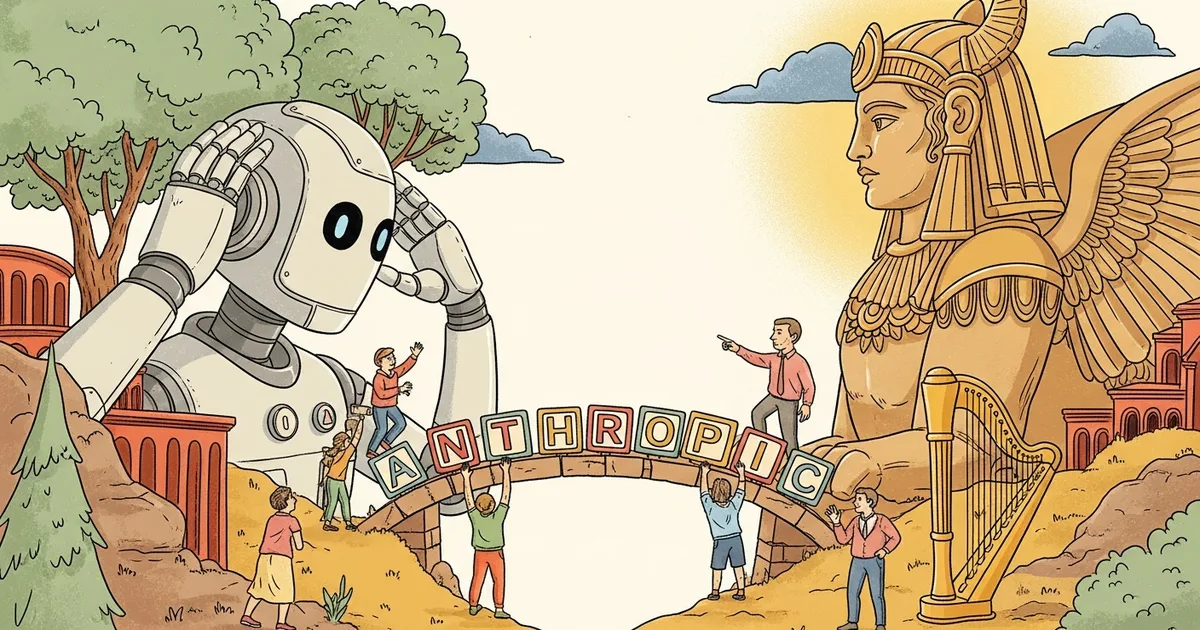
- OpenAI CEO Sam Altman described Anthropic’s strategy of restricting its cybersecurity model Mythos to enterprise customers as “fear-based marketing” during a podcast appearance this week.
- Anthropic released Mythos in April 2026 to a limited enterprise cohort, citing concerns that open access could enable cybercriminal exploitation — a claim critics have characterized as overblown.
- Altman compared the approach to selling bomb shelters while claiming to possess a bomb, framing restricted access as a mechanism for concentrating AI capability among a narrow elite.
- Anthropic has not published technical benchmarks, a model card, or a formal safety evaluation for Mythos to substantiate its access rationale.
What Happened
OpenAI CEO Sam Altman publicly criticized Anthropic’s marketing strategy for Mythos, its new cybersecurity-focused AI model, during an appearance this week on the podcast Core Memory. Altman described Anthropic’s decision to withhold Mythos from public release on safety grounds as “fear-based marketing,” suggesting the framing served to justify exclusivity rather than reflect a genuine risk threshold. The comments were reported by TechCrunch on April 21, 2026.
“There are people in the world who, for a long time, have wanted to keep AI in the hands of a smaller group of people,” Altman said on the podcast. “You can justify that in a lot of different ways.” He extended the analogy further: “It is clearly incredible marketing to say, ‘We have built a bomb, we are about to drop it on your head. We will sell you a bomb shelter for $100 million.'”
Why It Matters
Anthropic announced Mythos earlier in April 2026, making it available only to an undisclosed cohort of enterprise customers. The company stated publicly that Mythos is too capable to release broadly, arguing that open access could allow cybercriminals to exploit its capabilities — a position multiple critics had already called overstated before Altman weighed in.
The dispute reflects a recurring tension in the AI industry over how safety rationales intersect with business strategy. Restricted-release models marketed around catastrophic risk have drawn scrutiny before, including from researchers who argue that capability-withholding claims are rarely accompanied by the technical documentation needed to evaluate them independently.
Technical Details
Anthropic has not published a technical paper, model card, or formal safety evaluation for Mythos alongside its enterprise launch. The company has not disclosed the model’s parameter count, training data composition, or the evaluation benchmarks used to determine that public release posed unacceptable risk.
What Anthropic has demonstrated is a restricted deployment: a limited enterprise cohort with undisclosed pricing and no public access pathway. What it has claimed — but has not substantiated with published methodology — is that Mythos is uniquely dangerous enough to warrant that restriction. The absence of a threat model or red-team disclosure makes independent assessment of Anthropic’s safety rationale impossible at this stage.
TechCrunch’s reporting notes that fear-based framing is not unique to Anthropic: apocalyptic rhetoric about AI risk has also come from executives at competing labs, including Altman himself at various points in OpenAI’s public communications.
Who’s Affected
Enterprise security teams admitted to Anthropic’s early-access program gain a specialist model positioned for high-value cybersecurity workflows. Independent security researchers, academic institutions, and smaller organizations have no access pathway and no announced criteria by which they might qualify.
If the pricing implied by Altman’s analogy reflects anything close to actual enterprise terms, meaningful access to Mythos may be structurally limited to a narrow tier of large corporate buyers — concentrating a cybersecurity-specific AI capability among the organizations already best resourced to develop such tools independently.
What’s Next
Anthropic had not publicly responded to Altman’s remarks as of April 22, 2026. The company has not announced admission criteria for the Mythos enterprise program or a timeline for any broader availability. Whether Anthropic releases technical safety documentation to support its restricted-access rationale will likely determine how much traction the “fear-based marketing” framing gains among enterprise buyers and security researchers evaluating the model’s actual risk profile.