- Microsoft plans to merge its consumer and enterprise Copilot apps into a single app, reportedly releasing in August.
- New background agents called “AutoPilot” will handle tasks like scheduling and email summaries for an extra fee.
- Rarely used features including Copilot Podcasts and Copilot Labs are being cut.
- The move follows Anthropic’s Claude Code and OpenAI’s Codex into a broader “super app” positioning.
What Happened
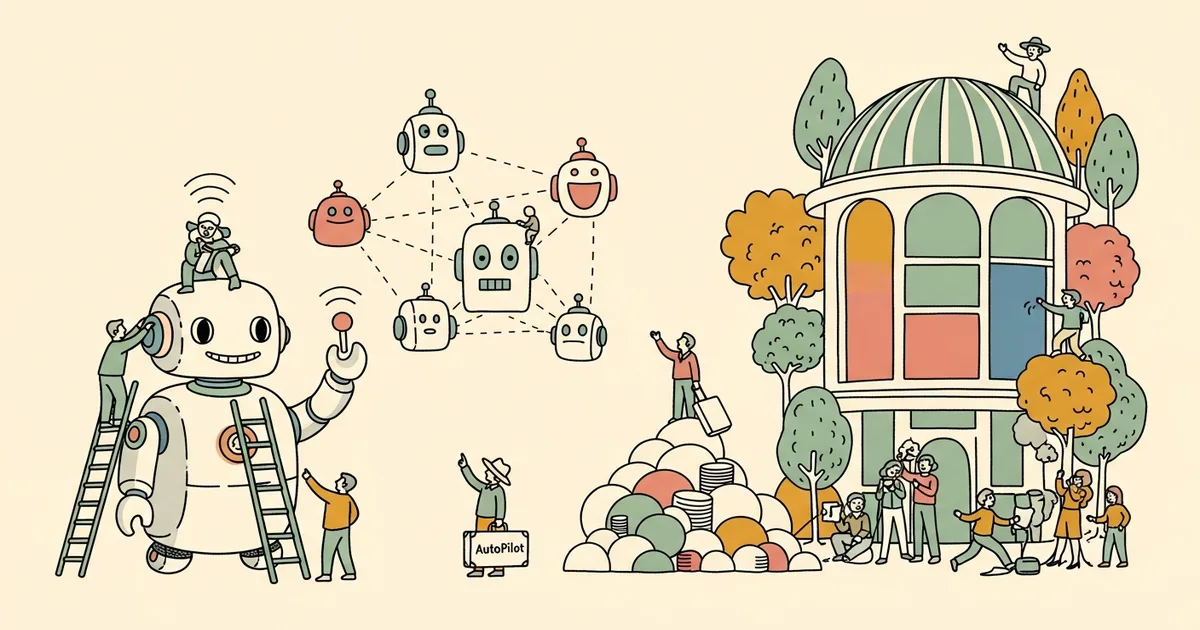
Microsoft is planning another overhauled version of Copilot, reportedly set for August, that merges its consumer and enterprise apps into one. According to an internal memo seen by The Information and reported by The Decoder on July 3, 2026, the single app will include AI coding tools and new background agents called “AutoPilot” that handle tasks such as scheduling and email summaries, with customers paying extra for the added features.
It is the latest in a series of Copilot redesigns, and the memo frames this one as a deliberate narrowing rather than an expansion of the product’s ambitions.
Why It Matters
The consolidation is an implicit admission that a general-purpose chatbot delivers limited, hard-to-measure value on its own. Merging consumer and enterprise into one code base also simplifies a product line that had fragmented into overlapping apps and features.
It puts Microsoft on the same path as Anthropic, whose Claude Code has expanded from a coding tool toward a broader assistant, and OpenAI, which is developing Codex along similar lines. All three are converging on the idea that the valuable product is an agent that completes work in the background, not a chat window that answers questions. Microsoft separately announced a new company focused on deploying AI inside businesses, with engineers embedded in departments to build AI into workflows — a sign it is hedging the self-serve app with hands-on services.
Technical Details
Executive Vice President Jacob Andreou wrote in the memo that the team “stripped out what wasn’t working,” naming Copilot Podcasts and Copilot Labs among the cut features. He said Copilot should focus on “real work” rather than chasing intelligence “for intelligence’s sake,” and should be “optimized for outcomes.” The app, he wrote, has to “earn the right to exist.” The AutoPilot agents are positioned as the paid tier, running tasks in the background rather than only responding to prompts, with scheduling and email summaries cited as early examples. The inclusion of AI coding tools in a mainstream consumer-and-enterprise app also signals that Microsoft views coding assistance as a core capability rather than a developer niche.
Who’s Affected
The change affects both Microsoft’s consumer Copilot users and its enterprise customers, who will land in a merged app with a paid agent tier layered on top of the base product. Users of the features being removed, including Copilot Podcasts and Copilot Labs, lose those tools outright. Rivals building assistant “super apps” — Anthropic with Claude Code and OpenAI with Codex — now face a direct competitor with Microsoft’s distribution across Windows and Office, which few challengers can match on reach.
What’s Next
Microsoft has not publicly confirmed the memo, and the plan is described as targeting an August release, so the timeline could slip. The open question is whether paid background agents deliver measurable outcomes, given Andreou’s own framing that a chatbot’s value is hard to measure — a standard AutoPilot will be judged against. The parallel launch of Microsoft’s business-deployment company suggests the firm expects the app alone to be insufficient for many customers, and is selling integration services alongside it.