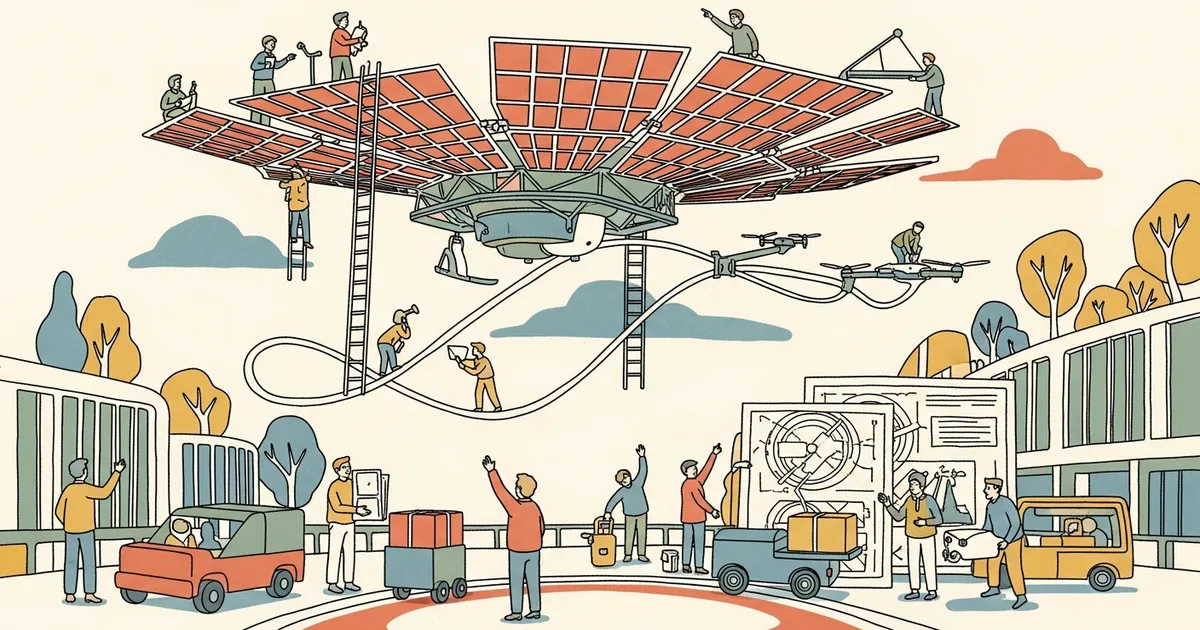
- Meta has signed an agreement with Northern Virginia startup Overview Energy for up to 1 gigawatt of solar power collected in low Earth orbit and transmitted back to Earth.
- Overview Energy’s technology does not yet exist; a first orbital demonstration is planned for 2028, with commercial deliveries not expected before 2030.
- One gigawatt is roughly the continuous output of a single conventional nuclear reactor.
- Meta is simultaneously investing in natural gas and nuclear power, including backing ten new gas-fired plants in rural Louisiana.
What Happened
Meta Platforms has signed an agreement with Northern Virginia startup Overview Energy for up to 1 gigawatt of solar power collected in low Earth orbit and transmitted to ground-based receivers, according to reporting published April 28, 2026, by The Decoder. The deal grants Meta priority access to Overview Energy’s future generating capacity in exchange for financial terms Meta declined to disclose. Nat Sahlstrom, Meta’s head of energy and sustainability, said the arrangement gives the company access to clean and “uninterrupted energy” for its AI data center operations.
Why It Matters
AI infrastructure is among the fastest-growing drivers of electricity demand, with large model training runs and continuous inference workloads requiring sustained, high-density power that strains existing grid connections. Hyperscalers including Microsoft and Google have signed agreements with advanced nuclear developers as conventional grids struggle to keep pace with data center expansion. Space-based solar would, in theory, offer continuous generation unaffected by weather, season, or time of day—an advantage no terrestrial renewable source provides.
Technical Details
Overview Energy’s proposed system would place photovoltaic arrays on satellites in low Earth orbit, convert the collected electricity, and beam power to ground-based receivers—a concept studied by national space agencies for decades but not yet deployed commercially. The company’s roadmap calls for a first orbital demonstration in 2028 to validate core components, with commercial power deliveries projected no earlier than 2030. The 1 gigawatt target represents roughly the continuous output of a single conventional nuclear reactor. Overview Energy is still in the component development and testing phase as of the time the deal was signed.
Who’s Affected
Meta is the immediate party, and the deal’s structure—priority offtake rights in exchange for undisclosed terms—mirrors agreements hyperscalers have used to accelerate nuclear and long-duration storage startups. Should Overview Energy deliver on its roadmap, other large AI infrastructure operators could face competitive pressure to secure capacity from a supply-constrained and pre-commercial technology. Grid operators and conventional energy suppliers near Meta’s existing campuses face no immediate disruption from the agreement.
What’s Next
Overview Energy must first demonstrate its system in orbit by 2028—a four-year window from the current date. Meta is not pausing other energy investments in the interim: the company recently backed the construction of ten new gas-fired power plants to supply its largest AI data center campus in rural Louisiana, and has separately committed capital to nuclear power, including experimental small modular reactors. Whether Overview Energy meets its 2028 orbital demonstration target will determine whether 2030 commercial deliveries remain feasible.