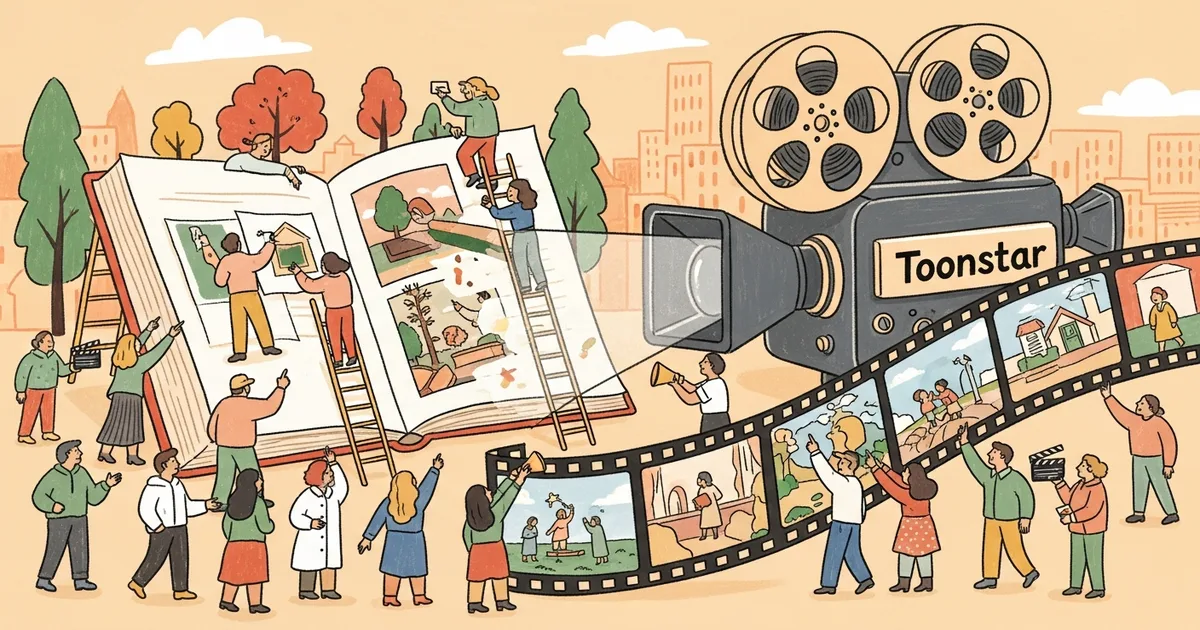
- HarperCollins has partnered with AI animation studio Toonstar to adapt Lisa Greenwald’s “Friendship List” book series into a digital animated show.
- Toonstar claims its AI-driven pipeline produces full episodes 80 percent faster and 90 percent cheaper than traditional animation industry norms.
- The studio’s biggest existing project, the StEvEn and Parker YouTube series, has accumulated 3.38 million subscribers.
- Toonstar originally launched as a Web3 and NFT-oriented studio before pivoting to AI-powered animation production.
What Happened
HarperCollins, one of the largest book publishers in the world, announced a partnership with Toonstar, an AI animation studio, to turn book franchises into digital animated shows. The first project under the deal will be an adaptation of Lisa Greenwald’s “Friendship List” young adult series, which will be accompanied by a graphic novel. The announcement was reported by Engadget on April 3, 2026.
Why It Matters
The deal signals growing interest from traditional publishing houses in using AI-generated animation to extend their intellectual property into new media formats. AI animation tools have gained traction since 2024, with studios pitching faster and cheaper production pipelines as alternatives to conventional animation workflows. HarperCollins’s involvement lends mainstream publishing credibility to a production model that has so far been largely confined to YouTube-native content.
The partnership also raises questions about quality and audience reception. Toonstar’s existing output, including the StEvEn and Parker YouTube series, has drawn significant viewership but has not gained widespread recognition among traditional animation audiences. Whether AI-assisted animation can produce shows that compete with conventionally produced content remains an open question for the industry.
Technical Details
Toonstar co-founder John Attanasio told The New York Times that the company’s AI pipeline can produce full episodes “80 percent faster and 90 percent cheaper than industry norms.” The studio uses AI across its production workflow, including for dubbing dialog for international audiences and for developing storylines. Toonstar refers to its production system as “Ink & Pixel” technology.
“Our artist-centered approach ensures these beloved characters and stories stay true to the author’s vision, while our Ink & Pixel production technology enables fast, high-quality production at scale which unlocks the ability to meet audiences where and when they enjoy content today,” Attanasio said in a press release announcing the HarperCollins deal.
The studio originally launched with a focus on Web3 and NFTs, but those technologies are now virtually absent from its current operations. One of its early series, Space Junk, was “put on hold for a variety of reasons,” according to a Toonstar representative. The original domain for that project now redirects to an unrelated crypto gambling site.
The studio’s current YouTube presence provides a baseline for evaluating its output quality. The StEvEn and Parker series, while commercially successful by YouTube metrics, has drawn comparisons to low-budget animation. Engadget’s report noted that the animation quality was “tough to sit through” for even a few minutes, describing it as “sub-South Park animation.” Whether Toonstar can elevate its production quality for a major publisher’s IP remains untested.
Who’s Affected
The deal directly impacts HarperCollins’s IP portfolio, as the publisher explores new ways to monetize its book catalog beyond traditional print and e-book formats. Authors like Lisa Greenwald whose works are selected for adaptation stand to reach new audiences through digital video platforms. Traditional animation studios and workers may also take note, as AI-driven production models could put competitive pressure on conventional animation pricing and timelines.
YouTube content creators in the animation space face potential competition from studios like Toonstar that can leverage established publishing IP with AI-accelerated production methods. Toonstar’s StEvEn and Parker series, with 3.38 million subscribers and episodes sometimes reaching around one million views, demonstrates the scale already achievable with this approach.
What’s Next
The “Friendship List” animated adaptation will be the first project under the HarperCollins-Toonstar partnership, though neither party has announced a release date or distribution platform. Additional book series from HarperCollins’s extensive catalog may follow if the initial project performs well commercially and draws positive audience reception. The terms of the deal, including revenue sharing between HarperCollins and Toonstar, have not been publicly disclosed. The broader publishing industry will likely be watching to see whether AI-animated adaptations can serve as a viable new revenue channel for book IP.