Dean Forbes, CEO of industrial ERP software provider Forterro, told Bloomberg on March 30, 2026 that public fears about AI-driven job displacement amount to “an overreaction,” and that the technology presents “an opportunity” for companies like his rather than a threat to their existence.
- Forbes described AI displacement fears as “an overreaction” during a March 30, 2026 Bloomberg interview
- Forterro serves mid-market industrial companies with ERP software covering manufacturing, supply chain, and compliance workflows
- A Quinnipiac poll released the same week found more than half of Americans believe AI is likely to harm them
- AI has contributed to measurable workforce changes in functions including code generation, customer support, and data analysis — areas Forbes did not directly address
What Happened
Dean Forbes, CEO of Forterro, appeared on Bloomberg on March 30, 2026, to discuss how his company is navigating rapid AI adoption across the software industry. Forbes pushed back against the dominant public narrative on AI and employment, calling displacement fears “an overreaction” and characterising the current moment as “an opportunity” for vertical software providers. Forterro, which provides enterprise resource planning software to mid-market industrial firms, was the commercial context for his assessment.
The Bloomberg segment did not identify the interviewing correspondent by name in available source material. Forterro is a UK-headquartered company focused on ERP for manufacturers and industrial operators and is not publicly traded.
Why It Matters
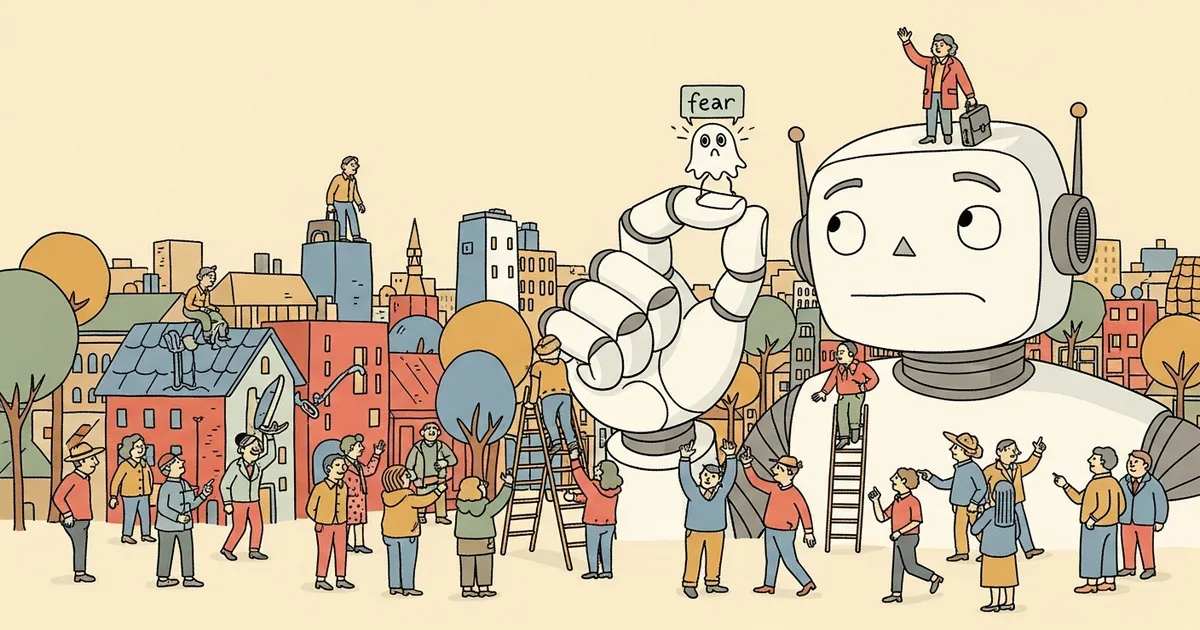
Forbes’s remarks arrive against a backdrop of acute public anxiety. A Quinnipiac poll released the same week — the final days of March 2026 — found that more than half of Americans believe AI is likely to harm them. The divergence between that finding and Forbes’s dismissal of displacement fears captures a defining tension in current AI discourse: corporate executives consistently frame AI as an enhancement, while employees and prospective customers express growing concern about its effects on livelihoods.
The gap is not purely a communications issue. Industrial software has adopted AI more slowly than consumer-facing industries. ERP systems for manufacturers must coordinate production scheduling, procurement, regulatory compliance, and inventory management — workflows involving contractual obligations, safety requirements, and multi-party dependencies that resist full automation.
Technical Details
Forterro’s ERP platforms serve mid-market industrial companies, a segment typically defined as firms with annual revenues in the range of $10 million to $1 billion. These systems handle manufacturing execution, supply chain planning, financial reporting, and compliance documentation — areas where errors carry direct operational costs rather than user-experience penalties.
Forbes’s argument positions AI as augmentative: a layer that improves what existing software does rather than replacing product categories outright. Enterprise ERP vendors including SAP, IFS, and Infor have followed a broadly similar path, embedding AI capabilities into existing modules through features such as predictive maintenance alerts, automated procurement matching, and natural language query interfaces rather than launching standalone AI products in direct competition with their core platforms.
The contrast with other segments is concrete. AI-assisted code generation, customer support triage, content production, and structured data analysis have all seen measurable workforce reductions at companies that moved early on AI adoption. Forbes’s public remarks did not address those reductions or their applicability to Forterro’s own employee base.
Who’s Affected
Forterro’s immediate customer base — mid-market manufacturers and industrial operators — sits in a segment where automation has historically proceeded more slowly than in services or media. Workers in those environments manage physical production lines, equipment maintenance, and supplier relationships that require on-site presence and domain expertise accumulated over time.
But Forterro’s own workforce is also implicated. As AI-assisted development tools mature, software engineering and QA teams at ERP vendors face the same productivity pressures as developers elsewhere. Based on available source material, Forbes did not address internal headcount projections or Forterro’s own AI-related workforce plans during the Bloomberg interview.
What’s Next
Forbes did not announce specific product releases or AI integration timelines during the Bloomberg interview, and Forterro had not published a public AI product roadmap available at time of publication.
The gap between Forbes’s characterisation and the Quinnipiac poll findings is unlikely to narrow quickly. Public concern about AI and employment has risen steadily and is now a factor in labor negotiations, legislative debates, and consumer sentiment research. How mid-market industrial software vendors respond — in product design, workforce planning, and public positioning — will be a practical test of the executive optimism Forbes expressed on March 30.
Related Reading
- Bluesky’s AI Feed Tool ‘Attie’ Draws User Backlash Over Algorithm Fears
- Economist Alex Imas Calls for ‘Manhattan Project’ to Collect AI Labor Data
- Federal Judge Blocks Pentagon Ban on Anthropic, Calls Supply Chain Risk Label Unprecedented
- Anthropic Just Killed Legal Tech With One Feature — Wall Street Calls It the ‘SaaSpocalypse’
- Genspark Just Released an AI Employee That Lives Inside Your PowerPoint, Excel, and Zoom Calls — Workspace 4.0 [Demo]