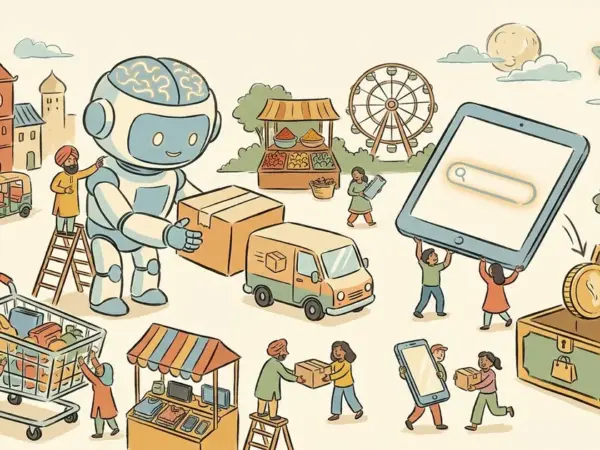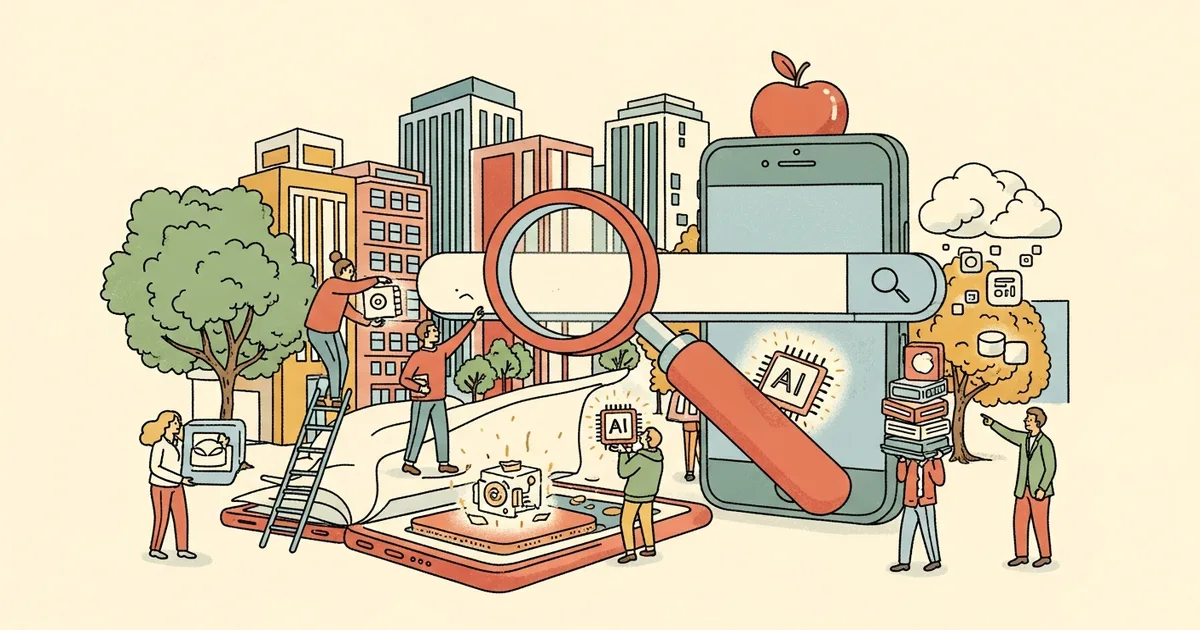
- Apple plans to open Siri to third-party AI chatbots — including ChatGPT, Gemini, and Claude — through a new “Extensions” system arriving with iOS 27.
- The App Store will feature a dedicated section for AI integrations, creating a marketplace where Apple collects its standard 30% commission on revenue.
- Bloomberg’s Mark Gurman reported that Apple collected nearly $900 million in App Store fees from generative AI apps in 2025 and is on track to exceed $1 billion this year.
- The strategy mirrors Apple’s established platform model: offer in-house defaults while letting users choose competitive alternatives.
What Happened
Apple is shifting its artificial intelligence strategy away from building proprietary large language models to compete with OpenAI and Google. Instead, the company will turn Siri into an open platform that hosts third-party AI services, according to a March 29, 2026, report by Bloomberg’s Mark Gurman.
The upcoming iOS 27, expected to debut at Apple’s Worldwide Developers Conference on June 8, 2026, will introduce a feature called “Extensions.” This system will allow users to install third-party AI chatbots — including OpenAI’s ChatGPT, Google’s Gemini, and Anthropic’s Claude — and run them directly inside Siri.
The shift marks a departure from Apple’s traditional approach of building core features in-house. The company has instead chosen to position itself as a platform operator in the AI market rather than a direct competitor.
Why It Matters
Apple was caught off guard by ChatGPT’s launch in late 2022 and has struggled to match the AI capabilities offered by competitors. Internal AI efforts under the Apple Intelligence brand have received mixed reviews from users and technology analysts. Rather than continuing to invest billions in proprietary AI models with uncertain results, the company is leveraging its core strength: ecosystem control and distribution.
Gurman described the approach as Apple “pursuing a two-pronged strategy: embedding just enough AI into its operating systems to keep users from defecting to Android, while opening Siri and Apple Intelligence to third-party services.”
The financial incentive supporting this decision is substantial and already proven. Apple collected nearly $900 million in App Store fees from generative AI apps in 2025 alone. The company is on pace to surpass $1 billion in AI-related App Store revenue in 2026, effectively profiting from AI without bearing the cost of building frontier models.
Technical Details
The Extensions feature will have its own dedicated section within the App Store, functioning as what Gurman called “a marketplace of sorts for third-party AI integrations.” Users will manage their installed AI services through the Settings app, navigating to Apple Intelligence & Siri, then Extensions, where they can select and configure which chatbot apps integrate with Siri.
The redesigned Siri app will function similarly to standalone AI apps like ChatGPT and Gemini, providing a unified conversational interface regardless of which underlying AI service the user has selected. Apple will continue offering its own built-in AI features through Apple Intelligence while allowing competitors to plug into the system alongside it.
Apple’s hardware remains central to the overall strategy. While the company’s AI software has lagged behind competitors, its custom silicon — particularly the Neural Engine in M-series and A-series chips — runs AI inference workloads efficiently on-device. This hardware advantage gives Apple a legitimate role in the AI stack even without a leading large language model of its own.
Some Apple executives and commentators have compared this approach to how Apple handles web search. The company does not operate its own search engine but benefits financially from Google’s default search deal, which reportedly generates more than $20 billion annually. The AI Extensions model applies similar logic.
Who’s Affected
AI companies like OpenAI, Google, and Anthropic gain direct access to Apple’s installed base of more than one billion active devices. However, they will pay Apple’s standard 30% commission on any revenue generated through the Extensions platform, replicating the economics that have made the App Store one of Apple’s most profitable business lines.
For consumers, the change means more AI options integrated into their daily iPhone and Mac experience without leaving the Apple ecosystem. For developers building AI-powered applications, the Extensions framework creates a new distribution channel with built-in Siri integration and access to on-device processing capabilities.
What’s Next
Apple is expected to detail the full Extensions system at WWDC 2026 on June 8, including developer APIs and integration guidelines. The key limitation of this platform approach is that Apple remains dependent on third parties for its most advanced AI features, meaning the quality of Siri’s AI capabilities will be determined by partners and competitors rather than Apple’s own engineering organization.