Key Takeaways
- Anthropic launched a new feature allowing Claude to directly control Mac and Windows desktops, including opening apps, navigating browsers, and filling spreadsheets, available as a research preview in Claude Cowork and Claude Code.
- The feature builds on technology from Anthropic’s acquisition of Vercept AI, with co-founder Kiana Ehsani reporting the team shipped its first product less than four weeks after joining Anthropic.
- A companion feature called “Dispatch” lets users remotely trigger computer control from any location.
- Claude prioritizes existing integrations like Slack and calendar apps before falling back to direct desktop control.
What Happened
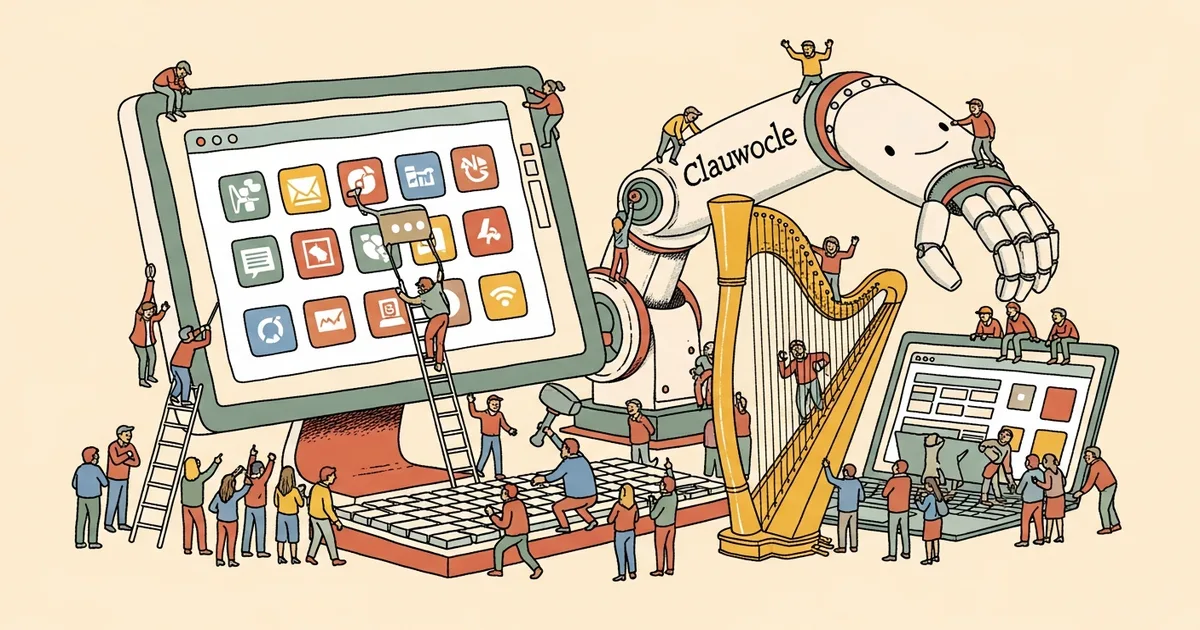
Anthropic announced that its AI assistant Claude can now directly control a user’s computer, handling tasks people would normally perform at their desk. The feature is available as a research preview in Claude Cowork and Claude Code, and as of April 3, 2026, it works on both macOS and Windows for Pro and Max subscribers, according to The Decoder.
Claude can open applications, navigate web browsers, fill out spreadsheets, and perform other desktop tasks. According to Anthropic, the AI first attempts to use existing integrations like Slack, calendar apps, and other connected services. Direct desktop control serves as a fallback when no dedicated integration exists.
Anthropic also launched Dispatch, a companion feature that lets users remotely trigger computer control tasks from any location, effectively turning Claude into a remote desktop agent.
Why It Matters
Desktop computer control represents the next frontier in AI agent capabilities. While most AI assistants operate within chat interfaces or code editors, the ability to interact with arbitrary desktop applications dramatically expands the range of tasks an AI agent can perform. Filing expense reports, updating spreadsheets, navigating complex enterprise software: these are tasks that text-based AI cannot handle without computer control.
Anthropic’s approach of using desktop control as a fallback, not a default, is a deliberate design choice. By routing tasks through dedicated integrations first, Claude avoids the brittleness of screen-based interaction when a more reliable API-based path exists. Desktop control handles the long tail of applications that lack API integrations.
The Dispatch feature adds another dimension. A user can leave their computer running at the office and trigger Claude to perform desktop tasks remotely via mobile or web. This turns the computer into an always-available agent workstation that does not require the user’s physical presence.
Technical Details
The computer control feature is built partly on technology from Vercept AI, a startup focused on AI-powered computer control that Anthropic acquired approximately four weeks before the feature’s initial launch in late March 2026. Vercept AI co-founder Kiana Ehsani stated that her team shipped its first product less than four weeks after joining Anthropic, an unusually fast integration timeline.
The feature launched initially as a macOS-only research preview on March 24, 2026, and expanded to Windows on April 3, 2026. It is available to Pro and Max subscribers through both Claude Cowork and Claude Code interfaces.
Claude’s computer control works by observing the screen, identifying UI elements, and executing clicks, keystrokes, and navigation actions. The hierarchical approach, trying API integrations before falling back to screen control, reduces latency and improves reliability for supported applications. For unsupported applications, screen-based control provides a universal, if slower, interaction method.
Who’s Affected
Claude Pro and Max subscribers gain access to a significantly expanded set of agent capabilities. Knowledge workers who spend time on repetitive desktop tasks, such as data entry, form filling, report generation, and multi-application workflows, stand to benefit the most.
Enterprise IT teams should note the security implications. An AI agent with desktop control can access any application and data visible on screen. Anthropic has not detailed the security architecture or access controls for this feature, which will be a critical consideration for enterprise deployment.
Competing AI agent platforms, including Microsoft’s Copilot and Google’s Gemini, now face pressure to match Anthropic’s desktop control capabilities. Microsoft has demonstrated similar computer use features but has not shipped them as broadly as Anthropic.
What’s Next
Anthropic labeled this feature a “research preview,” signaling that it expects to iterate significantly based on user feedback. Improvements to reliability, speed, and the range of supported applications are likely in the coming months.
The Dispatch feature, in particular, could evolve into a platform for scheduled and automated desktop workflows. Combined with Claude’s existing coding and reasoning capabilities, desktop control positions Anthropic to offer end-to-end automation that spans both code and GUI-based tasks. Enterprise-grade security controls and admin management tools will need to follow before large organizations adopt the feature at scale.