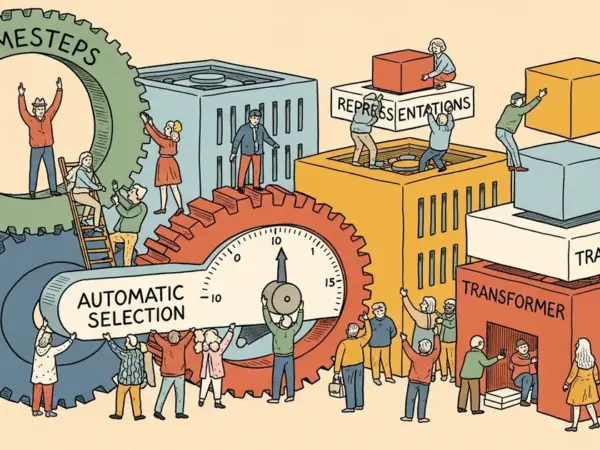
Researchers have introduced AIRA_2 (arXiv:2603.26499), a framework that addresses three structural performance bottlenecks in AI research agents: synchronous single-GPU execution that limits sample throughput, a generalization gap where validation-based selection causes performance degradation over extended search horizons, and the capability ceiling imposed by fixed single-turn LLM operators.
The first bottleneck limits the number of solution candidates an agent can evaluate. AIRA_2 introduces asynchronous multi-GPU execution that provides near-linear throughput scaling, allowing agents to explore significantly more solutions within a given time budget.
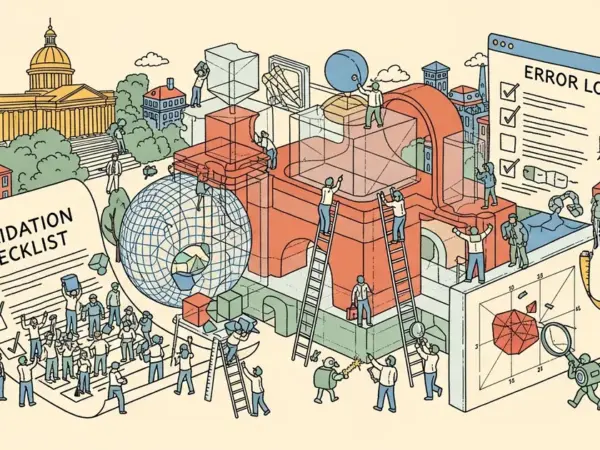
The generalization gap — where agents select solutions that perform well on validation sets but fail on test data — worsens as search horizons extend. AIRA_2 implements selection mechanisms designed to maintain generalization quality across longer search periods, preventing the counterintuitive result where more computation leads to worse final performance.
For the third bottleneck, AIRA_2 replaces single-turn LLM operators with iterative multi-turn interactions. Rather than generating code modifications or experimental designs in a single pass, the system allows the language model to refine its outputs through multiple rounds of feedback. The combined effect of all three improvements produces substantial performance gains on standard AI research benchmarks.