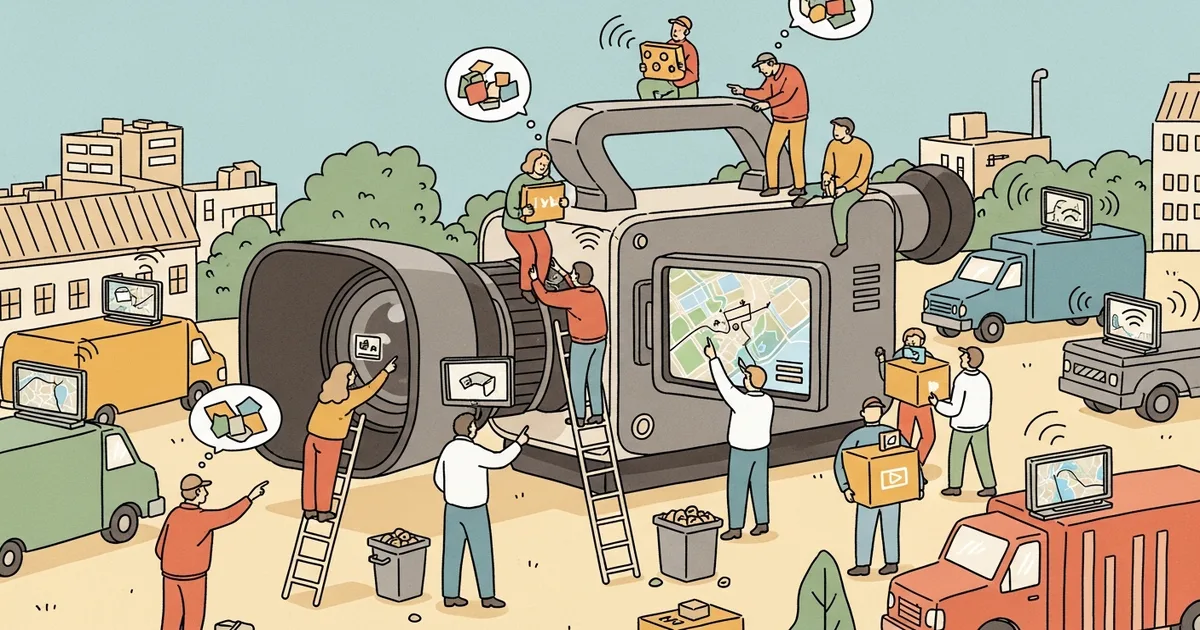
Safety Vision published an industry report on March 16 examining how AI-powered video telematics systems are transforming commercial fleet safety and management while facing hardware constraints from NAND and DRAM shortages. The report, titled “Memory Constraints in Motion,” details how fleet operators are adopting AI dashcams and onboard video systems that detect unsafe driving behaviors in real-time despite component supply limitations.
AI video telematics systems use onboard cameras and edge computing to detect events like hard braking, lane departure, distracted driving, following distance violations, and near-miss incidents. Unlike earlier systems that simply recorded video for post-incident review, AI-enabled devices analyze footage in real-time, alert drivers immediately, and transmit only relevant clips to fleet managers — reducing data transmission costs and enabling proactive rather than reactive safety management.
The report identifies memory component shortages as the primary hardware constraint limiting deployment scale. Each AI telematics unit requires sufficient NAND flash for local video storage and DRAM for running inference models at the edge. Global shortages in both components have increased unit costs and extended lead times, forcing manufacturers to optimize their AI models for lower memory footprints or accept reduced functionality.
Despite these constraints, adoption is accelerating. Insurance companies increasingly offer premium discounts for fleets equipped with AI telematics, creating a financial incentive that offsets hardware costs. The data generated by these systems — driving behavior patterns, risk scores, incident frequency — enables usage-based insurance models that reward safer fleets with lower premiums.
The convergence of AI video analysis, edge computing, and insurance economics is creating a market where fleet telematics transitions from an optional safety investment to a financial requirement. Fleets without AI monitoring systems face higher insurance costs that eventually exceed the cost of the technology itself, making adoption economically inevitable regardless of hardware supply constraints.