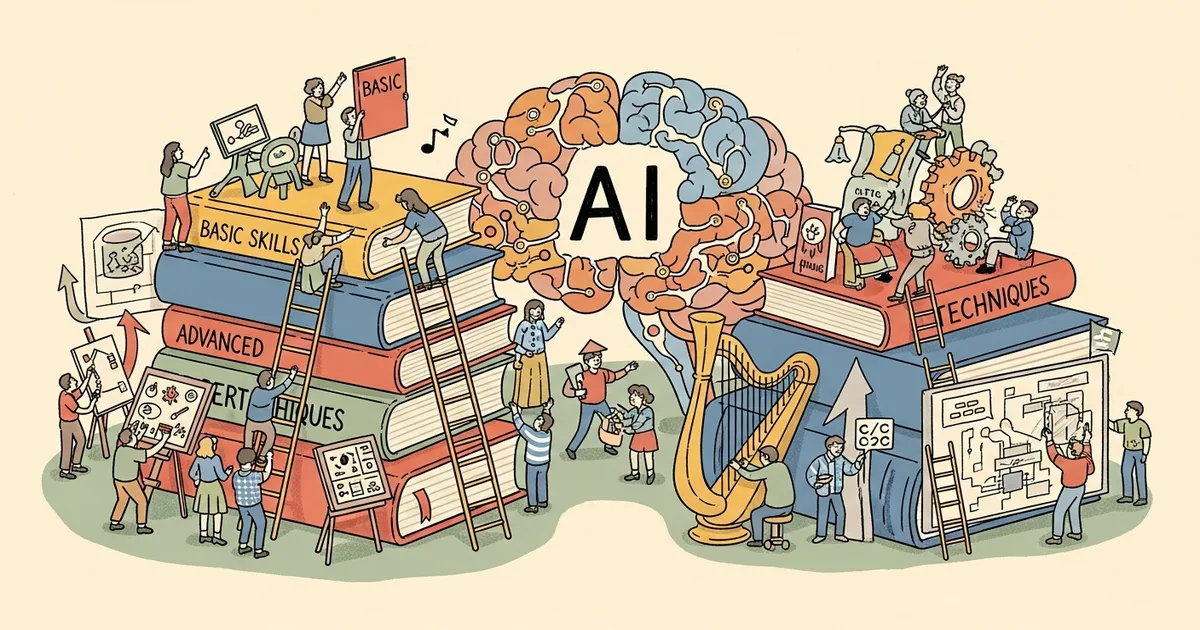
Anthropic has released its fifth Economic Index Report based on February 2026 data, revealing that experienced Claude users achieve significantly better results than newcomers. The analysis of one million conversations from Claude.ai and Anthropic’s API shows experienced users have a success rate roughly 4 percentage points higher than new users working on identical tasks.
The report, which uses privacy-compliant analysis without revealing conversation content, found that “getting good results from AI platforms is a skill that improves with practice.” Even after controlling for task type, model choice, use case, and country of origin, the experience advantage persisted. Anthropic measures success by having Claude evaluate anonymized transcripts to determine whether conversations achieved their goals.
Since Anthropic’s first Economic Index in November 2025, Claude usage has diversified significantly. The ten most common tasks on Claude.ai dropped from 24 percent to 19 percent of total traffic, while coding remains the top application at 35 percent. Personal requests increased from 35 to 42 percent of usage, and the average economic value of completed tasks fell slightly from $49.30 to $47.90 per hour.
The behavioral gap between user groups is substantial. Veterans are 8.7 percentage points less likely to simply give Claude instructions and instead iterate on tasks collaboratively. They use Claude 7 percentage points more often for professional purposes, with top-tier users engaging in AI research, Git operations, and manuscript revision. New users typically request haikus, sports scores, or party food suggestions.
According to the report, around 49 percent of all professions now have at least a quarter of their tasks carried out via Claude. Paying users show clear model preferences based on task complexity, with 55 percent choosing the most capable Opus model for coding versus 45 percent for educational tasks. The study suggests this pattern follows a typical adoption curve, with early adopters focusing on specialized tasks while later users bring broader, simpler requests.