State-of-the-art AI models are losing their performance advantages faster than ever, with competitors routinely matching frontier systems within weeks of release. A Fast Company investigation published February 18 examines how distillation — the process of extracting reasoning patterns from advanced models to train cheaper alternatives — has compressed the competitive window for new AI releases from months to days.
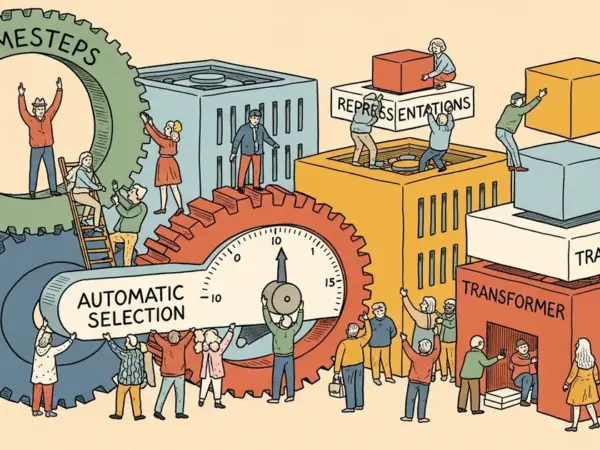
The mechanism is straightforward. When a company releases a frontier model like Anthropic’s Opus 4.6, competitors generate hundreds of thousands of prompts against it, capturing the model’s responses as training data. These response datasets encode the original model’s reasoning strategies without requiring access to its weights or training data. Companies then fine-tune smaller, cheaper models on this synthetic dataset, producing systems that replicate much of the original’s capability at a fraction of the compute cost. The result is that a model released as best-in-class can face near-equivalent competitors within one to two weeks.
The speed of this cycle was demonstrated when GLM-5 appeared within one week of Opus 4.6’s release, matching its performance on several benchmarks. The pattern has repeated across multiple model generations: each new frontier release triggers a rapid distillation cycle that erodes its competitive advantage before the releasing company can fully monetize the capability gap. At least one documented case involved over 100,000 prompts sent to Google’s Gemini model by a single actor, suggesting systematic data extraction at scale.
For AI companies, the implications are commercial. If any performance advantage is temporary, the business model cannot rely on having the best model — it must rely on ecosystem, distribution, and integration advantages that persist after the model itself is commoditized. This explains why OpenAI is building a superapp, Google is embedding Gemini into every product, and Anthropic is investing in Claude Code and enterprise integrations rather than treating model quality as a standalone competitive moat.
The distillation trend also raises intellectual property questions that existing law does not clearly address. Using a model’s API to generate training data may violate terms of service but is difficult to detect and nearly impossible to prevent at the protocol level. Several frontier labs have added output watermarking and usage monitoring, but these measures slow rather than stop the extraction process. The competitive dynamics of AI development increasingly resemble pharmaceutical generics — where the research investment goes into the original compound, but the market quickly fills with near-identical alternatives produced at lower cost.