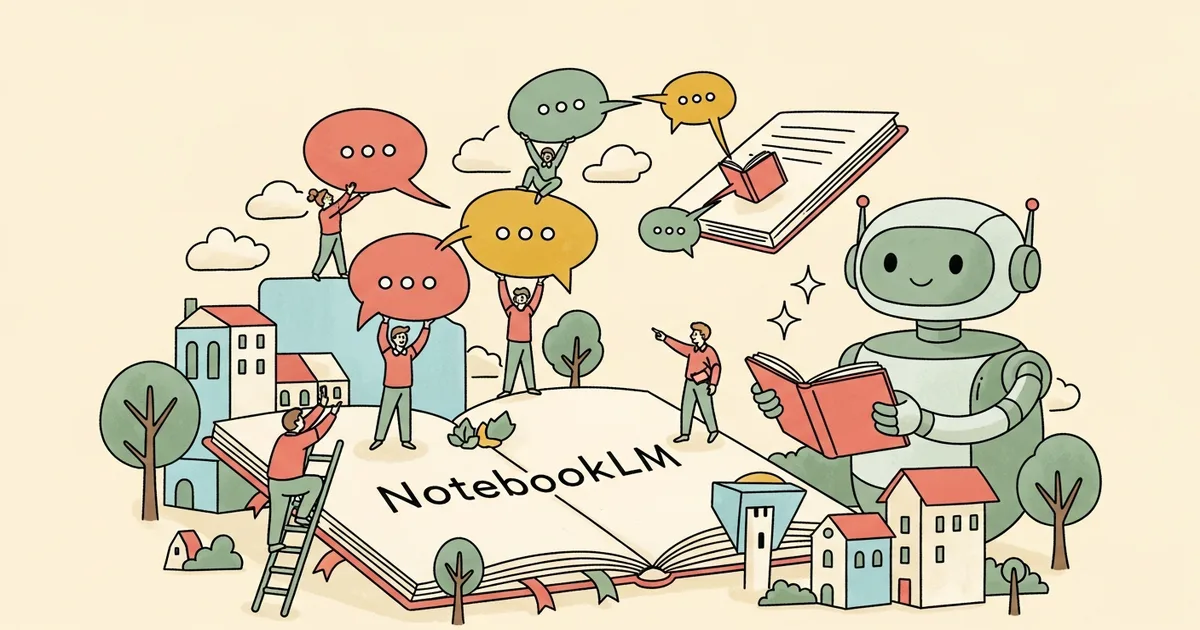
- Google is introducing a “Notebooks” feature in the Gemini app, defined as personal knowledge bases that sync bidirectionally with NotebookLM.
- Users can add chats and sources — including Google Drive files, websites, and copied text — to notebooks, which Gemini uses to ground responses.
- The rollout begins April 8, 2026, for Google AI Plus, Pro, and Ultra subscribers on the web.
- Notebooks created in Gemini appear inside NotebookLM, and Gemini chat sessions generated within a notebook surface as NotebookLM sources.
What Happened
Google announced on April 8, 2026, that the Gemini app is gaining a dedicated “Notebooks” feature — what the company describes as “personal knowledge bases shared across Google products, starting in Gemini.” The update deepens the integration between Gemini and NotebookLM that first appeared in December 2025, when Gemini gained basic NotebookLM source support. The new feature adds a persistent “Notebooks” section to the Gemini side panel, positioned between the existing My Stuff and Gems sections.
Why It Matters
The update represents Google’s clearest attempt yet to bridge its two primary AI interfaces — the conversational Gemini app and the research-focused NotebookLM — into a unified personal knowledge layer. NotebookLM, which Google rebranded and expanded in 2024, was previously a standalone tool for uploading documents and generating summaries or audio overviews. Connecting it to Gemini’s chat interface and web search capabilities creates a workflow loop where curated sources inform real-time conversations, and those conversations feed back into the research tool.
Technical Details
Each notebook functions as a source-aware context window within Gemini. When a user opens a notebook, Gemini draws on its curated sources — which can include Google Drive documents, websites, and copied text — alongside its standard web search capabilities to answer queries. According to Google’s announcement, “Gemini uses them alongside its powerful tools and web search to provide uniquely helpful responses.” Users can toggle a “Use notebook memory” option per session and write persistent instructions that specify response tone and format. The bidirectional sync means notebooks created in Gemini appear in NotebookLM, and chat sessions conducted within a notebook are catalogued as sources inside NotebookLM. Chats are added to notebooks via an “Add to notebook” option in each conversation’s overflow menu.
Who’s Affected
The initial rollout targets paid Google AI subscribers — Plus, Pro, and Ultra tiers — accessing Gemini on the web. Free-tier users, mobile users, and users in additional European countries are excluded from the initial launch; Google stated that broader availability will follow “over the coming weeks” without specifying a date. Students and knowledge workers who already use NotebookLM for document analysis stand to benefit most immediately, as they can now initiate research workflows in Gemini and carry context directly into NotebookLM’s audio and video overview generation tools.
What’s Next
Google characterized the launch as “a first step,” stating it is “working to bring even more helpful features to notebooks in Gemini in the future,” though no specific roadmap was disclosed. Mobile availability and expansion to free accounts are confirmed as near-term targets. The integration sets a structural precedent for how Google may unify Gemini-family products, with Workspace applications such as Docs and Drive already listed as compatible source types within the notebooks framework.