- Anthropic released Claude Dispatch, a feature that lets Pro and Max subscribers assign tasks to Claude from their phone while the AI executes them on their desktop computer.
- Dispatch maintains a single persistent conversation thread across devices, with Claude remembering context and user preferences between sessions.
- All processing occurs locally on the user’s desktop within a sandboxed environment, meaning sensitive data never leaves the machine for task execution.
- The feature supports scheduled recurring tasks, computer use for interacting with desktop applications, and push notifications when work completes.
What Happened
Anthropic launched Claude Dispatch, a feature within its Cowork environment that allows users to assign tasks to Claude from a smartphone while the AI executes them on a desktop computer. The feature is available as a research preview for Pro and Max subscribers.
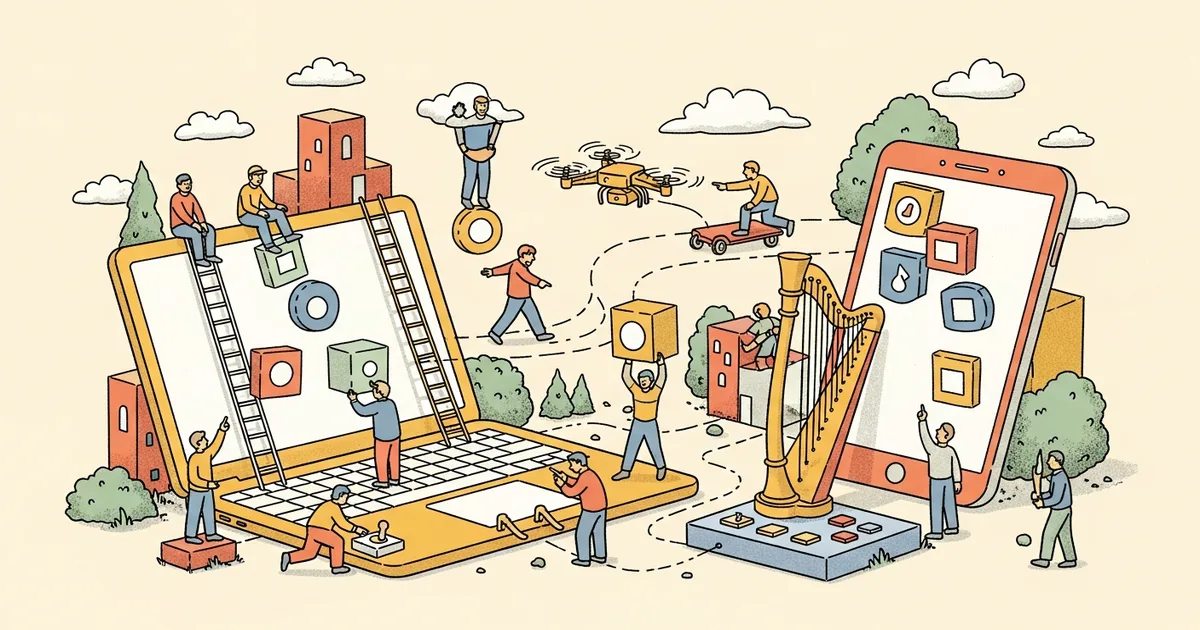
Dispatch works by maintaining a single persistent conversation thread across devices rather than starting new sessions for each task. A user can message Claude from their phone during a commute, and Claude executes the work on their desktop using local files, connectors, and plugins already configured in Cowork. Claude returns finished outputs rather than showing intermediate steps.
Why It Matters
Dispatch represents a shift in how AI assistants operate. Rather than functioning as conversational interfaces that require active monitoring, Claude becomes a persistent background worker that can complete tasks asynchronously. Users delegate work and return to finished results later, turning the AI into something closer to a remote employee than a chatbot.
Competing products from OpenAI and Google have not yet shipped equivalent cross-device task delegation with local processing. The local-first architecture addresses a persistent barrier to enterprise AI adoption: the concern that sensitive corporate data must be uploaded to cloud servers for processing. With Dispatch, the phone acts purely as a remote control interface while all computation happens on the user’s own machine.
The asynchronous model also changes how users interact with AI throughout their day. Instead of sitting at a computer and watching Claude work through a task, a user can assign multiple tasks from their phone while away from their desk and receive push notifications when each one completes or when Claude needs approval to proceed. This reduces the time cost of AI-assisted work from active supervision to brief check-ins.
Technical Details
Setup requires the latest versions of both the Claude Desktop app (macOS or Windows x64) and the Claude mobile app (iOS or Android), plus an active internet connection on both devices. The desktop machine must remain awake and the Claude Desktop app must be running for tasks to execute.
Dispatch includes a memory system that learns user preferences and work patterns, with users controlling what Claude remembers. The feature also supports scheduled recurring tasks, such as daily email checks or weekly report generation. Claude can interact with desktop applications and browsers through computer use capabilities, though this operates outside the Cowork sandbox.
The system is limited to a single conversation thread with no option to create multiple parallel threads. When Claude determines a task requires development work, it routes to Claude Code; knowledge work routes through Cowork.
Who’s Affected
Claude Pro and Max subscribers gain access to Dispatch immediately through the research preview. The feature is most relevant to knowledge workers who need to delegate data processing, document preparation, and file organization tasks. Example use cases listed in the documentation include pulling data from local spreadsheets, searching Slack messages and email to draft briefing documents, building presentations from Google Drive files, and organizing files in specific folders.
Enterprise users handling sensitive data benefit from the local processing model, which avoids the data residency and compliance concerns that arise when files are uploaded to cloud AI services. For organizations in regulated industries such as healthcare, finance, and legal services, the ability to run AI tasks on local data without cloud transmission removes a significant barrier to adoption.
What’s Next
Anthropic plans to expand Dispatch availability beyond the current research preview, though no specific timeline has been announced. The single-thread limitation and the requirement that the desktop machine remain active are the most significant constraints users will encounter during the preview period. Whether Anthropic adds support for multiple parallel conversation threads or extends Dispatch to work when the desktop is in sleep mode will determine how broadly the feature can be adopted for enterprise workflows that require concurrent task handling.