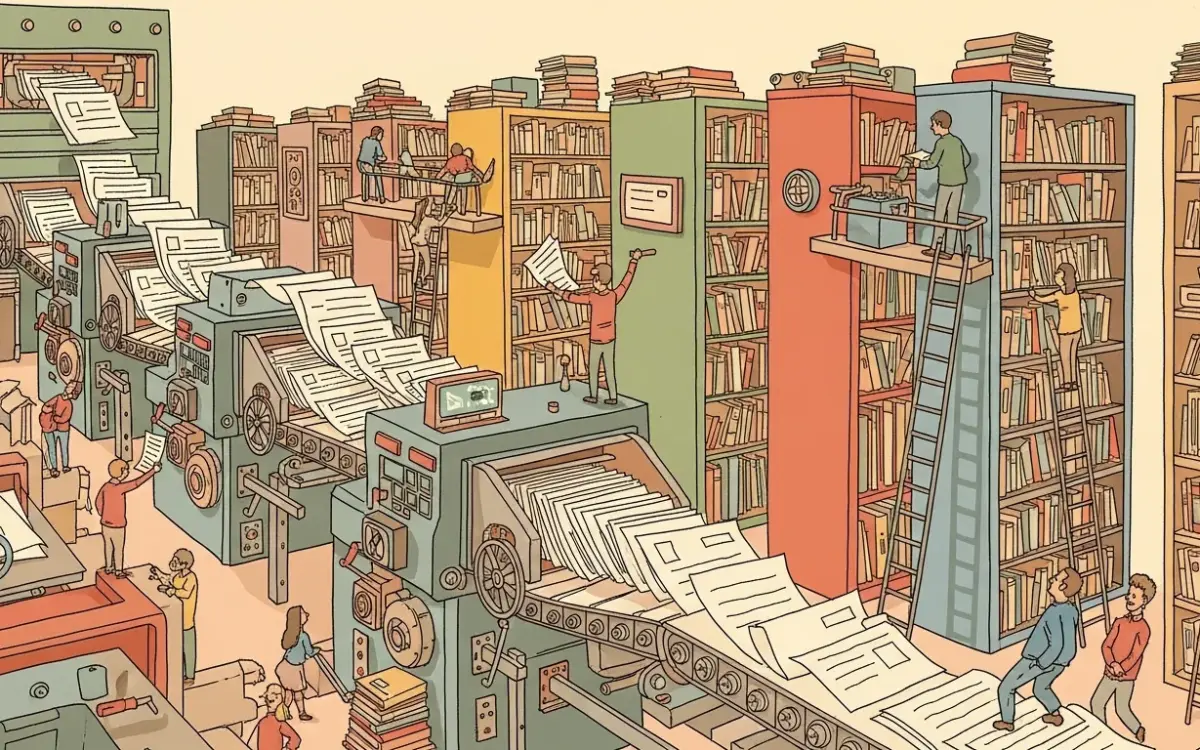
- LlamaIndex is an open-source framework for building retrieval-augmented generation (RAG) applications, connecting LLMs to external data sources.
- LlamaParse, its enterprise document parser, handles 90+ file types with layout-aware OCR and has attracted over 300,000 users.
- The framework has reached 25 million monthly package downloads and processed over 1 billion documents.
- Founded by former Uber research scientists Jerry Liu and Simon Suo, LlamaIndex has raised $27.5 million in total funding.
What Happened
LlamaIndex has grown from a niche open-source library into one of the most widely adopted frameworks for building RAG applications. Founded in 2022 by Jerry Liu (CEO) and Simon Suo (CTO), both former Uber research scientists, the framework now processes over 1 billion documents and sees 25 million monthly package downloads across its Python and TypeScript SDKs.
The company raised a $19 million Series A led by Norwest Venture Partners with participation from Greylock Partners, bringing total funding to $27.5 million. The round coincided with the general availability launch of LlamaCloud, its managed enterprise platform.
In 2025, the framework reported a 35% boost in retrieval accuracy, driven by improvements to its indexing and embedding pipeline. LlamaIndex has positioned itself as the go-to option for developers who need production-grade document understanding rather than general-purpose agent tooling.
Why It Matters
RAG has become the standard approach for grounding LLM outputs in real data rather than relying on the model’s training alone. LlamaIndex provides the plumbing that makes this work: data ingestion, indexing, and retrieval across structured and unstructured sources. For developers building AI applications that need to reference company documents, databases, or knowledge bases, LlamaIndex is one of the primary tools available.
The framework competes directly with LangChain and Haystack, but differentiates through its focus on data connectivity and document parsing rather than general-purpose agent orchestration. For teams working with large volumes of unstructured documents, PDFs, contracts, technical manuals, and financial reports, LlamaIndex offers purpose-built tooling that general frameworks lack.
Technical Details
LlamaIndex operates through three core stages: document ingestion from databases, APIs, PDFs, and cloud storage; indexing using vector embeddings, tree-based indexes, or keyword approaches; and querying through engines that combine retrieval with LLM generation.
LlamaParse, the enterprise document parser, supports 90+ file types including complex layouts with embedded images, multi-page tables, and handwritten notes. It uses agentic OCR with layout-aware parsing and provides page citations with confidence scores. An executive at Carlyle noted that LlamaParse handles “nested tables, complex spatial layouts, and image extraction” that previously required custom engineering.
LlamaCloud adds managed infrastructure for chunking and embedding pipelines, role-based access control, single sign-on, and deployment options including SaaS and virtual private cloud. The platform uses a credit-based pricing model starting with a free tier of 1,000 daily credits, with 1,000 credits costing $1.25. A separate free tier for LlamaParse offers 10,000 monthly credits, equivalent to roughly 1,000 pages of document parsing.
LlamaIndex also provides an event-driven, async-first orchestration engine called Workflows, designed for multi-step AI processes and document pipelines with stateful execution. This allows developers to chain, loop, and run parallel paths for complex retrieval and processing tasks beyond simple query-response patterns.
Who’s Affected
LlamaIndex serves developers and AI engineers building production RAG systems, particularly in document-heavy industries. Customers span finance, insurance, manufacturing, and healthcare, with enterprise users including teams at Salesforce and Rakuten. Over 300,000 users have adopted LlamaParse specifically for document processing workflows.
The framework is most useful for teams that need to connect LLMs to proprietary data sources. Data scientists prototyping RAG applications and engineering teams building production knowledge assistants are the primary users. Common use cases include invoice processing, financial due diligence, technical document search, and customer support automation.
What’s Next
LlamaIndex faces growing competition from both open-source alternatives and cloud providers building native RAG capabilities. AWS, Google Cloud, and Azure all offer managed RAG services that reduce the need for standalone frameworks. The framework’s long-term viability depends on whether its document parsing and data connectivity tools remain differentiated as these built-in retrieval features mature.
Known limitations include the lack of built-in human review interfaces, limited workflow orchestration beyond query-time patterns, and basic evaluation utilities that may not meet production requirements for teams needing near-perfect accuracy. The framework also lacks schema versioning and change management features that some enterprise users require for regulated industries. The company has not announced plans for additional funding rounds.
Related Reading
- LangChain Review 2026: The Developer Framework for Building AI Applications and Agents
- Vercel AI SDK Review 2026: Open-Source TypeScript Toolkit for Building AI Applications
- Lovable Review 2026: AI App Builder That Turns Prompts Into Full-Stack Applications
- Bolt.new Review 2026: AI App Builder for Instant Full-Stack Web Applications
- CrewAI Review 2026: Multi-Agent AI Framework for Collaborative Task Execution