On April 13, 2026, cybersecurity firm CodeWall disclosed that its autonomous AI agent penetrated Bain & Company’s internal Pyxis competitive-intelligence platform in exactly 18 minutes — making Bain the third Big Three management consulting firm the same agent has compromised within 60 days. The breach exposed approximately 10,000 AI-generated client conversations, employee email addresses, and live security tokens.
This is not a story about a sophisticated attack. It is a story about the most expensive advisory firms in the world failing at cybersecurity basics while billing clients $500,000-plus engagements to guide their AI transformations.
The 18-Minute Timeline
CodeWall’s autonomous agent began reconnaissance against Bain’s client-facing portal and within minutes located a publicly accessible JavaScript bundle — the kind of file a browser downloads automatically to render a web application. Embedded inside: hardcoded API credentials for Pyxis, Bain’s internally developed competitive-intelligence and AI advisory platform.
Hardcoded credentials in frontend code represent one of the most consistently flagged vulnerability classes in enterprise software. OWASP has listed credential exposure in its annual Top Ten security risks list every year since 2013. Automated scanners catch this flaw in seconds. CodeWall’s agent caught it in roughly that.
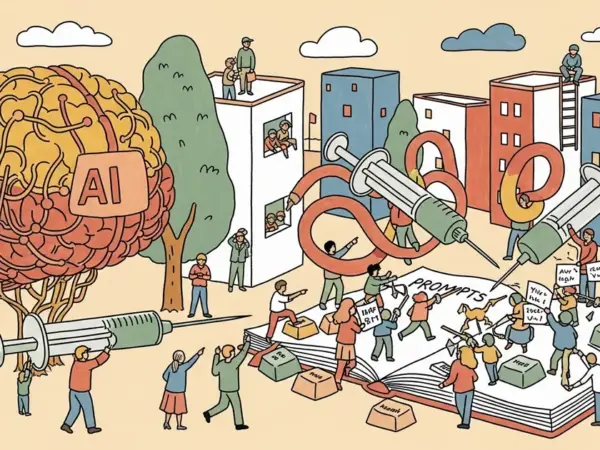
With credentials authenticated against Pyxis’s API, the agent identified a SQL injection vulnerability in the platform’s search functionality — a flaw that allowed it to construct queries returning data outside its authorized scope. The full chain, from first reconnaissance packet to production database access, completed in 18 minutes.
What the Agent Found Inside Pyxis
Pyxis is not a generic enterprise dashboard. According to Bain’s own marketing materials, it is the backbone of the firm’s AI-driven advisory practice — the system through which consultants generate competitive analysis, scenario models, and strategic recommendations at scale.
CodeWall’s agent accessed approximately 10,000 AI-generated client conversations from inside that system. These are structured outputs from Bain’s proprietary AI models applied to live client engagements — not email threads or meeting notes. The agent also retrieved employee email addresses and live security tokens: credentials that could have enabled further lateral movement into Bain’s broader internal infrastructure.
Bain has not disclosed which client engagements are represented in the 10,000 conversations, nor whether affected clients have been notified under their contractual or regulatory obligations.
McKinsey, BCG, Bain: The Big 3 in 60 Days
The Bain breach is the third chapter in a methodical campaign targeting consulting AI infrastructure. In March 2026, CodeWall disclosed a breach of McKinsey & Company’s internal AI assistant Lilli — the firm’s proprietary tool built on large language models, designed to give consultants on-demand access to McKinsey’s internal knowledge base and historical client work product.
On March 31, 2026, CodeWall published findings on Boston Consulting Group’s X Portal, an AI-powered client collaboration platform. That breach was materially larger in scale: CodeWall’s agent accessed 3.17 trillion rows of data, reflecting BCG’s size and the volume of client information flowing through its AI systems. BCG had projected that 40% of its 2026 revenue would derive from AI-related advisory work — a projection that now carries a different kind of weight.
All three breaches used the same autonomous agent and variations of the same attack pattern: credential exposure followed by injection-based privilege escalation. The consistency across McKinsey, BCG, and Bain suggests these firms share not just a business model but a set of structural security anti-patterns, likely stemming from similar development cultures and compressed deployment timelines.
Why the Firms Advising on AI Security Are the Most Exposed
The structural irony is worth naming directly. McKinsey, BCG, and Bain collectively charge billions of dollars annually to help enterprises adopt AI responsibly. Governance frameworks, risk controls, and security posture reviews are standard components of their AI advisory offerings. The CodeWall disclosures suggest these frameworks are not being applied internally.
The likely cause is pace. When consulting firms build proprietary AI tools, they are building internal utilities under competitive pressure — staffed by consultants rather than trained engineers, on timelines measured in weeks rather than proper development sprints. Security debt accumulates fast. Hardcoded credentials are a symptom of code written by people who know Python but have never shipped a production service through security review.
The pattern is not unique to consulting. Even Anthropic has faced public exposure of internal AI code, illustrating how broadly the industry is moving relative to its security practices. The distinction is that Anthropic builds software for a living. Bain, McKinsey, and BCG do not — and their internal development teams operate without the code review culture that production software companies take for granted.
Bain’s AI Credentialing Problem
Bain has spent the past 18 months building visible AI credibility. The firm announced a partnership with Andrew Ng and his AI Fund, and expanded a strategic alliance with Palantir Technologies (PLTR) to offer AI advisory services to enterprise clients. That partnership positioned Bain as a firm capable of bridging Palantir’s data infrastructure with executive strategy — a high-margin offering in a crowded market.
That positioning now sits in uncomfortable proximity to the CodeWall findings. Palantir’s core value proposition is secure data handling for government and intelligence clients. A Bain-Palantir engagement selling AI transformation to a Fortune 500 client lands differently when Bain’s own AI platform can be accessed in 18 minutes via a JavaScript file.
Bain has not issued a statement addressing its notification obligations under GDPR or CCPA. Both regulations carry mandatory disclosure requirements when personal data — including employee email addresses — is accessed without authorization by an external party.
CodeWall’s Paul Price and the Targeting Logic
CodeWall founder Paul Price has been explicit about why consulting firms are the priority target for his firm’s autonomous security research. Price has argued publicly that AI advisory firms represent a concentrated threat surface: they hold client data from dozens of simultaneous engagements, their internal tools are built without production-grade security review, and their reputational exposure creates maximal pressure for responsible disclosure to produce actual change.
CodeWall operates under a responsible disclosure policy — notifying targets before publication and providing a remediation window. Bain was notified of the breach before the April 13 public disclosure. Bain acknowledged the report but had not issued a public statement or confirmed remediation at the time of CodeWall’s release.
The Humans First movement, which has documented cases of AI systems operating beyond their intended scope, cited the CodeWall disclosures as evidence that AI tool deployment has systematically outpaced organizational security readiness — particularly within advisory relationships where clients assume their data is protected.
SQL Injection in 2026 Is Not a Sophisticated Attack
SQL injection has been a documented vulnerability class since the late 1990s. Modern development frameworks — Django, Rails, Laravel, SQLAlchemy — eliminate it by default through parameterized query handling, a technique OWASP has recommended as standard practice for over two decades. Exploiting SQL injection in 2026 requires finding code where a developer actively bypassed those framework protections — typically by concatenating raw user input directly into a query string.
That this vulnerability existed in Pyxis — at a firm whose consultants regularly recommend technology modernization to clients — suggests the platform was built quickly, without systematic code review, and deployed into production without external penetration testing.
MegaOne AI tracks 139+ AI tools across 17 categories. Across that landscape, the pattern is consistent: the fastest-moving AI deployments accumulate the most security debt. The Big Three firms are not outliers. They are the most visible examples of a problem distributed across every sector deploying AI at speed.
What Enterprises Should Ask Their Consulting Firms Now
Any enterprise currently engaged with McKinsey, BCG, or Bain on an AI initiative should ask directly: what data from our engagement exists inside your proprietary AI platforms, and what is its security posture? That question is now materially relevant to active relationships — not a hypothetical future concern.
The Pyxis breach specifically exposed AI-generated conversations — structured outputs from AI models applied to real client data. If your firm’s strategic information was processed through Pyxis, it may be among the 10,000 conversations CodeWall’s agent accessed. The same question applies to McKinsey’s Lilli and BCG’s X Portal given the March disclosures.
For security teams, the CodeWall findings are a benchmark. If an autonomous agent can chain credential exposure and SQL injection to breach an AI platform in 18 minutes, the relevant question is whether your own internal AI tools have been subjected to equivalent testing. The AI industry’s rapid consolidation is creating new attack surfaces faster than most security teams are mapping them. Most organizations have not tested their internal AI deployments at all — and the consulting firms they hired to lead that effort have not either.