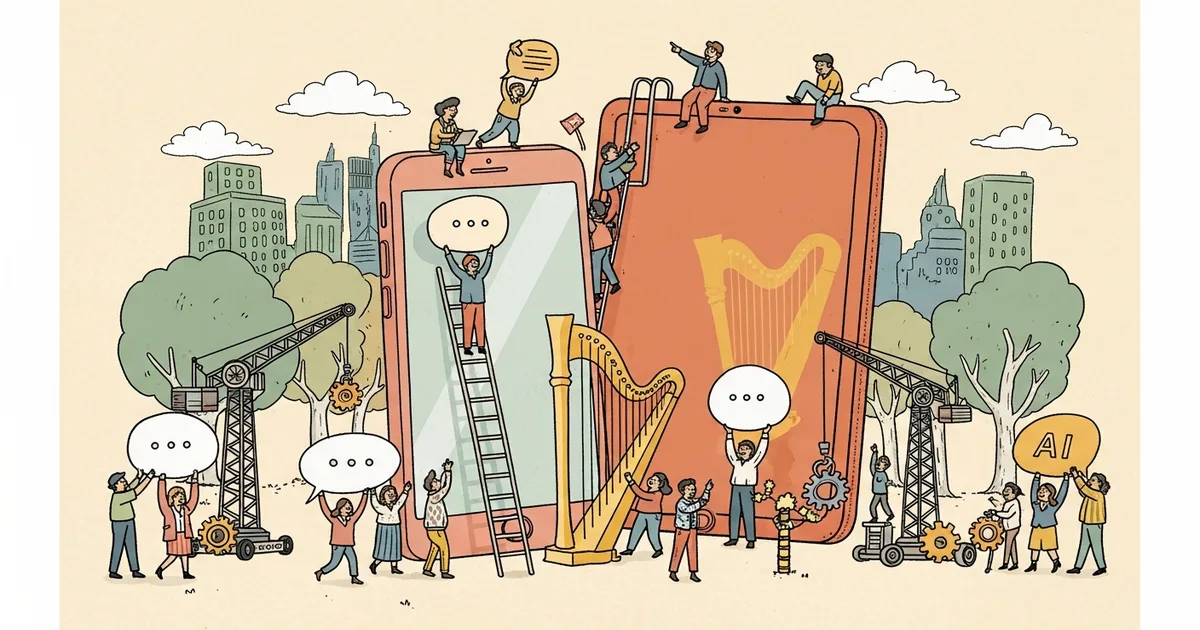
Anthropic has expanded Claude’s mobile capabilities to allow direct interaction with native phone applications on both iOS and Android. Users can now instruct Claude to draft messages and emails, schedule calendar events, find locations, and manage task lists without switching between apps. The integration works across all Claude plans, with advanced features like Health Connect currently in beta for Pro and Max subscribers.
The mobile expansion is part of a broader push to transform Claude from a conversational assistant into an autonomous agent. Claude Dispatch, launched on March 18, 2026, lets users text Claude from their phone while it operates on their desktop — interacting with files, browsing the web, generating reports, and executing tasks within a sandboxed local environment. Every action requires user approval before execution.
Claude Computer Use, introduced on March 24, extends this further by enabling Claude to autonomously operate a Mac — clicking, typing, browsing, and running applications. The combination of mobile command and desktop execution creates a workflow where users can assign tasks from anywhere and have Claude carry them out on their computer, effectively decoupling task initiation from task execution.
The revenue trajectory behind these launches is substantial. Claude Code’s annualized revenue exceeded $1 billion by the end of 2025 and more than doubled to $2.5 billion by February 2026. Claude achieved complete feature parity between iOS and Android on February 25, 2026, and the ability to connect to phone apps began rolling out in September 2025.
Anthropic’s approach to safety in these agentic features is notably conservative compared to competitors. App connections are opt-in, permissions are user-controlled, and Claude requires confirmation for each action it takes. This friction is deliberate — in a landscape where AI agents can now operate computers and interact with personal data, the difference between a helpful assistant and a security risk is measured in the granularity of permission controls.
The competitive context is intense. OpenAI’s GPT-5.4 launched native computer use in March, and Google is embedding agentic capabilities across its Workspace suite. The race to build AI that can act — not just respond — is now the defining competition in consumer AI, and mobile integration is where most users will first encounter it.