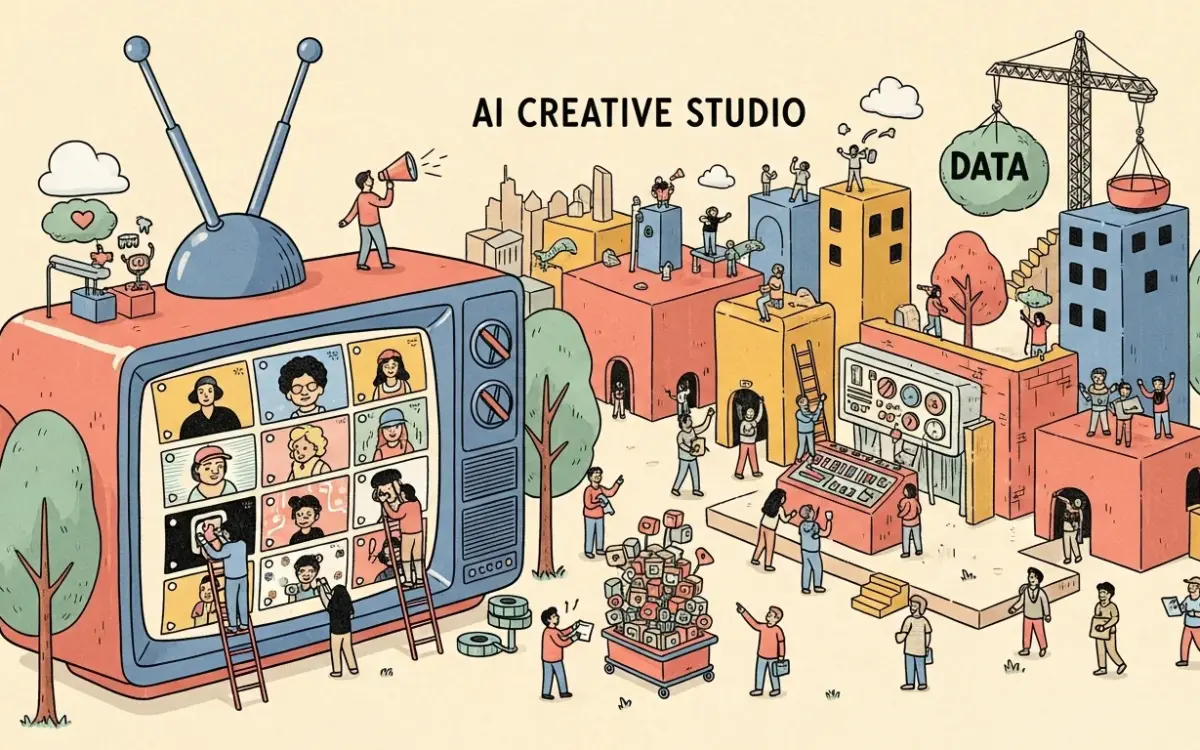
- Captions AI is an AI-powered creative studio built for short-form video creators, offering automated captioning, dubbing, eye contact correction, and AI-generated video from text across 30+ languages.
- Parent company Mirage raised $75 million from General Catalyst in March 2026 and has surpassed 3.2 million downloads and $28.4 million in in-app revenue over the past year.
- Pricing ranges from a free tier with limited credits to $69.99/month for power users, with plans available on iOS, Android, web, and desktop.
- The platform ships a new marketable feature every week, but its proprietary models remain closed-source and exports on the free plan carry a watermark.
What Happened
Captions AI, developed by the startup now called Mirage, has grown into one of the most widely used AI video-editing tools on the market. Founded in 2021 by Gaurav Misra, a former Head of Design Engineering at Snap, the platform started as a simple captioning tool and has expanded into a full creative studio for short-form social media content.
The company raised $75 million in growth financing from General Catalyst’s Customer Value Fund in March 2026. Captions has been downloaded more than 3.2 million times in the past year and generated $28.4 million in in-app revenue during the same period.
Why It Matters
Short-form video dominates social media platforms including TikTok, Instagram Reels, and YouTube Shorts. Creators and small businesses on these platforms need to produce polished content consistently, but professional video editing traditionally requires expensive software and hours of manual work. Captions reduces that production time to minutes by automating captioning, dubbing, and visual corrections through AI.
Misra described his philosophy in an interview with Lenny’s Newsletter: “Ship a marketable feature every week.” A marketable feature, in his definition, is something users would specifically open the app for or pay to use. He added that the team “built Captions in two days, then ignored its success for 1.5 years” while pursuing other ideas. When they returned to it, organic growth had already reached 500,000 users without any updates or support.
The company’s approach to development is aggressive by startup standards. Misra advocates embracing technical debt intentionally: “As a startup, your job is to take on technical debt” to move faster than larger competitors, though teams must monitor their “technical debt runway” to avoid collapse.
Technical Details
The platform runs on proprietary AI models built by the Mirage team. Core features include voice-to-text transcription, real-time captioning in 30+ languages, AI Dubbing with lip-sync correction that preserves the speaker’s original voice, and AI Eye Contact that digitally adjusts a speaker’s gaze to face the camera.
Additional capabilities include AI video generation from text prompts, command-based editing through AI Edit, background removal via AI rotoscoping, color grading, speech correction, and script writing. The AI Twins feature lets creators generate videos using a digital avatar without appearing on camera themselves.
Misra has said the company is now focused on “assembly intelligence,” which involves automatically composing finished videos from different source materials and components.
Who’s Affected
The primary users are individual content creators and small businesses producing social media content. Captions generates output formatted for Instagram, YouTube, Facebook, LinkedIn, and TikTok from a single video, which eliminates the need to re-edit for each platform’s aspect ratio and caption requirements.
Pricing starts at a free tier with 60 to 200 lifetime credits, then scales through Pro ($9.99/month, 200 monthly credits), Max ($24.99/month, 500 credits), and Scale ($69.99/month, 1,400 credits). Paid plans remove the watermark applied to free exports. Annual subscriptions offer a discount over monthly billing. Competing tools in this space include CapCut, Descript, and Opus Clip, though Captions differentiates itself with its proprietary AI models for lip-sync dubbing and eye contact correction.
What’s Next
Mirage plans to invest the $75 million round into building more proprietary AI models, particularly around assembly intelligence and multi-language dubbing. The company also maintains a “secret roadmap” of innovative features alongside its public roadmap of user-requested improvements, with breakthrough wins typically coming from unrequested features that users did not know they needed.
The platform is available on iOS, Android, web, and desktop. Key limitations remain: the free tier is restrictive with a hard cap on lifetime credits, exports carry watermarks unless users upgrade, and the proprietary models are closed-source, meaning creators are locked into the Mirage ecosystem with no way to self-host or customize the underlying AI.