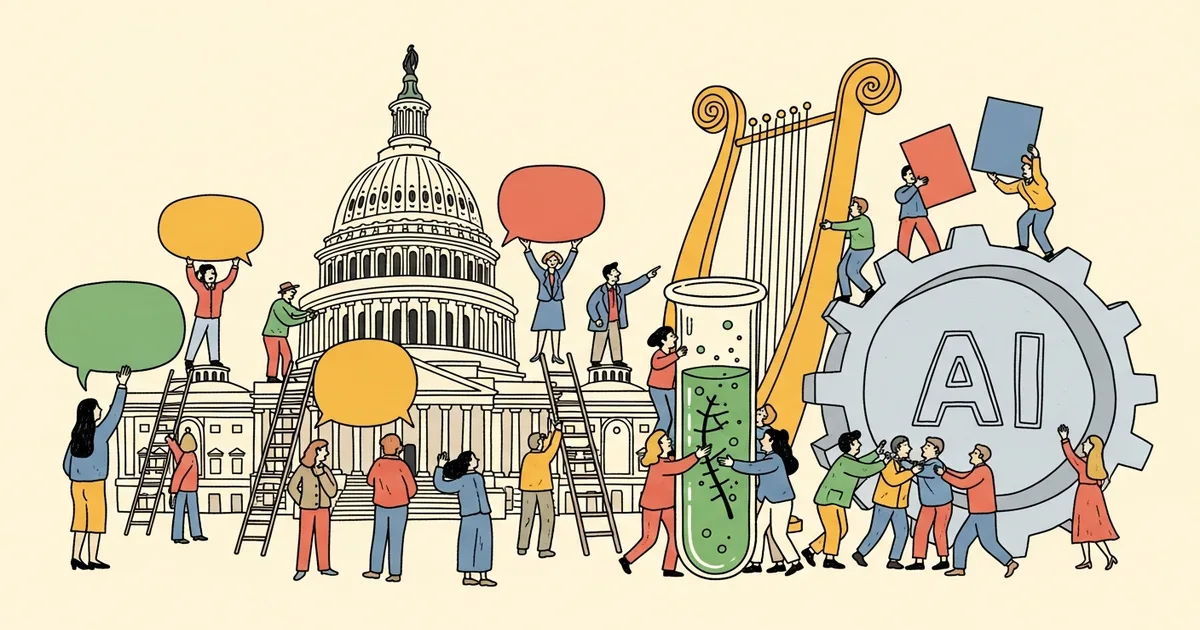
- The CEOs of leading AI labs — Google DeepMind‘s Demis Hassabis, OpenAI’s Sam Altman, Anthropic‘s Dario Amodei, and Microsoft AI’s Mustafa Suleyman — signed a letter urging Congress to act on AI biosecurity.
- The core ask: improve tracking of synthetic DNA sequences that could be misused to develop biological weapons.
- It is a rare show of unity among fierce rivals on a specific, concrete safety measure.
- The letter pushes the AI-safety conversation from abstract principles toward a tangible policy lever — the synthetic-DNA supply chain.
What Happened
The CEOs of several major AI companies are urging members of Congress to adopt laws that would make it harder to develop biological weapons using their technology, Wired reported. Google DeepMind’s Demis Hassabis, OpenAI’s Sam Altman, Anthropic‘s Dario Amodei, and Microsoft AI’s Mustafa Suleyman are among the signatories of a letter to lawmakers calling for improved tracking of synthetic DNA sequences that could be used to build bioweapons.
Why It Matters
AI biosecurity has become one of the most concrete frontier-safety concerns: as models grow more capable at biology and chemistry, the worry is that they could lower the barrier for a bad actor to design a dangerous pathogen. The signatories are betting that the most effective near-term safeguard isn’t restricting models alone but tightening a physical chokepoint — the synthetic-DNA supply chain, where the actual genetic material is ordered and manufactured.
The unity is notable. These labs compete ferociously — Microsoft’s own AI chief just called Anthropic’s models too expensive, and OpenAI and Anthropic are racing each other to IPO. That rivals would co-sign a specific policy ask signals they see AI-enabled bioweapons as a shared, systemic risk rather than a competitive talking point. It also fits the broader pattern of labs trying to shape AI rules proactively, as seen in the intensifying scrutiny and litigation around AI safety.
Technical Details
The mechanism at issue is synthetic-DNA screening. Companies that synthesize custom DNA can screen orders against databases of known dangerous sequences and verify customers — but screening is uneven and not universally mandated. The letter reportedly urges Congress to improve tracking of these sequences, which would strengthen the gate between an AI-designed pathogen “recipe” and the physical ability to manufacture it. This targets the bottleneck rather than trying to make models themselves incapable of biology reasoning — a recognition that capability restrictions are leaky, while supply-chain controls are enforceable.
Specific legislative language, the full signatory list, and the proposed enforcement mechanism are detailed in the letter and Wired’s reporting.
Who’s Affected
Lawmakers gain a clear, industry-backed mandate to act on synthetic-DNA oversight. DNA-synthesis companies face the prospect of mandated screening standards. AI labs get to demonstrate proactive safety leadership on a tangible issue (and shape the rules before they’re imposed). Biosecurity researchers and the public are the intended beneficiaries. And the broader AI-policy debate — tracked across our AI research and safety coverage — gains a rare example of consensus on a concrete control.
What’s Next
Watch whether Congress moves on synthetic-DNA screening legislation and how DNA-synthesis firms respond. The letter is a signal, not a law — its impact depends on whether lawmakers translate it into mandated screening with teeth. Expect biosecurity to remain a focal point of frontier-AI safety policy through 2026, and watch whether this rare lab unity extends to other safety measures or proves a one-off.