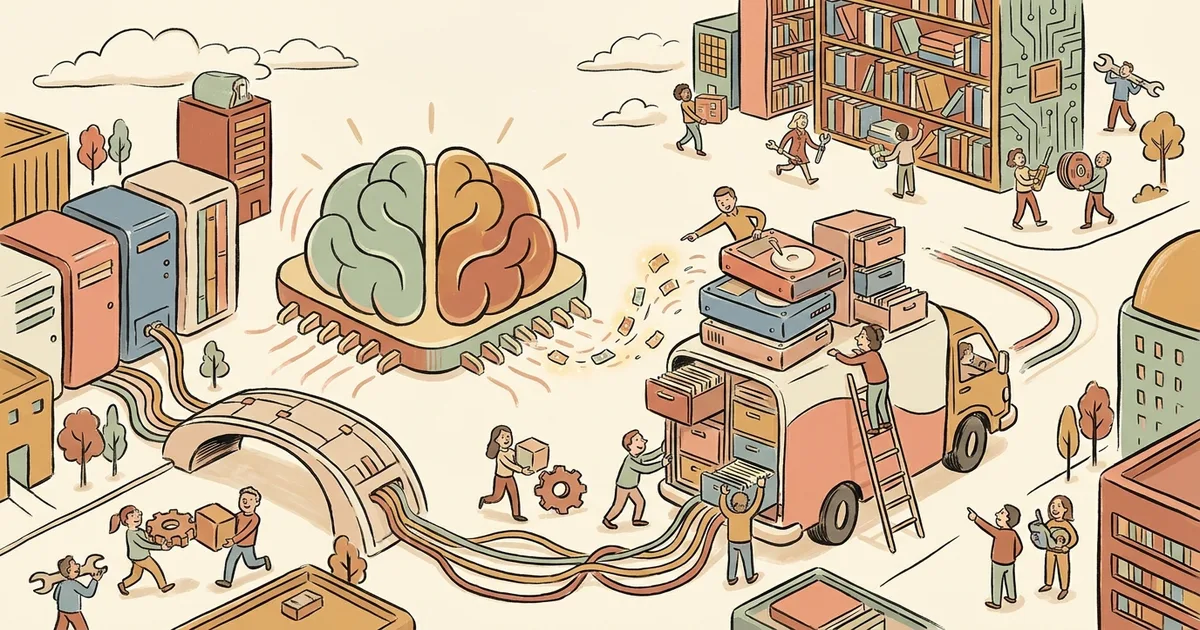
- An 8-second AI-generated video clip returned to users as a 3.97MB file leaves more than 500MB of associated back-end data behind, a 130x gap, according to internal measurements from storage maker WD.
- Unlike training, which is a finite project, inference runs continuously and never “retires,” so its data footprint keeps growing with usage.
- McKinsey projects AI inference demand will grow at a 35% compound annual rate through 2030, versus 22% for training, reaching over 40% of total data center demand.
- A WD-sponsored IDC survey of 763 IT and business decision-makers found 95% reported rising data volumes from generative AI over the past year, with 61% citing growth of 25% or more.
What Happened
MIT Technology Review, in a piece published October 22, 2026, examined an infrastructure cost that gets little attention next to GPU spending: the data storage bill left behind by AI inference, drawing on sponsor WD’s internal measurements and a related IDC survey.
Why It Matters
Most AI infrastructure conversations center on compute, but inference differs structurally from training: a training run is a budgeted project that ends, while every inference request leaves logs, cached context, renders, backups, and safety records behind that don’t shrink when usage slows.
Technical Details
WD’s test case of an 8-second, 720p AI video clip found over 500MB of back-end data generated per 3.97MB of user-facing output. A senior product manager at an unnamed hyperscale cloud provider, quoted in the IDC report, said extra storage functions as “an optimization for keeping the GPUs busy” since idle GPU time is costly.
Who’s Affected
Enterprises running generative video and image workloads face the steepest exposure, since back-end footprints can reach hundreds of gigabytes per clip at scale. IT budget owners are affected directly: storage spend growing 25% year over year can outpace the more predictable, cyclical compute budget line that gets the most planning attention.
What’s Next
The report recommends matching storage architecture to the full AI data life cycle rather than treating it as an afterthought to compute procurement, as retained model logs, synthetic outputs, and inference artifacts continue accumulating independent of training cycles.