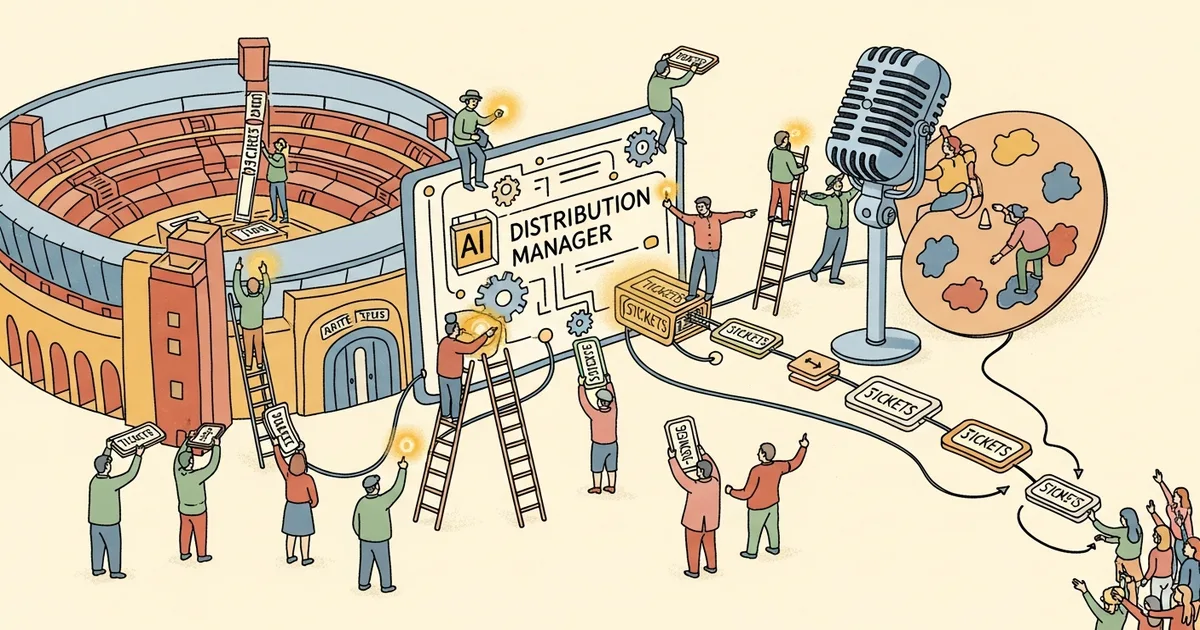
- StubHub launched Distribution Manager, an AI-powered self-serve tool that lets artists, teams, and venues list official tickets directly on its marketplace without intermediaries.
- Directly integrated sales through StubHub’s Open Distribution model have increased 84 percent year-over-year, with one MLB team selling over $40 million in tickets through the platform.
- The tool uses machine learning for demand forecasting, dynamic pricing, and inventory reallocation across 125 million registered users in more than 200 countries.
- No exclusive contracts or seller-side fees are required, giving rights holders full control over pricing and event selection.
What Happened
StubHub on March 18, 2026, launched the StubHub Distribution Manager, an AI-powered self-serve tool that allows artists, sports teams, and venues to list and manage official tickets directly on StubHub’s global marketplace. The tool is the first product built on StubHub’s Open Distribution model, an infrastructure initiative the company has developed over the past 18 months.
More than 35 partners are already using Open Distribution. Early adopters include Country Thunder Music Festivals, GoodVibezPresents, BWT Alpine Formula One Team, and Opendate. The tool requires no exclusive contracts and charges no seller-side fees, giving rights holders full control over which events to list and at what price.
The interface is designed for simplicity. A festival manager, sports team executive, or promoter can type a natural language request as simple as “Help me sell tickets,” and the tool pulls up the event, identifies the ticket type, helps set a sales goal, and automatically lists the inventory on StubHub’s marketplace. No technical team or custom integration is needed to get started.
Why It Matters
The live events industry has historically relied on exclusive distribution agreements that locked venues and artists into single-platform deals with limited pricing transparency. Distribution Manager represents a shift toward direct-to-consumer sales infrastructure powered by AI, reducing dependence on layered intermediaries.
StubHub reports that directly integrated sales through its Open Distribution model have increased 84 percent year-over-year. One MLB team has sold over $40 million in tickets through the platform. These numbers suggest meaningful demand from rights holders for tools that let them retain a larger share of revenue from each transaction.
Technical Details
The AI component handles three primary functions. First, it predicts demand curves for specific events using historical transaction data and real-time market signals such as social media buzz and artist popularity trends. Second, it recommends price points designed to maximize revenue without pricing out fans. Third, it automates inventory reallocation when events sell at different rates across geographic markets, shifting unsold tickets to regions with higher demand.
The pricing model draws on transaction data from StubHub’s marketplace, which processes millions of ticket sales annually across more than 200 countries and territories and 33 languages. The system provides real-time analytics on sell-through rates and buyer demographics. No technical team or complex integration is required on the seller’s side.
Who’s Affected
Rights holders — the artists, sports teams, and venue operators who control ticket allocation — stand to benefit most. The tool eliminates the need for intermediary ticket distributors and removes seller-side fees entirely, allowing partners to keep a significantly larger cut of each sale. For fans, the expansion of official ticket inventory listed directly on StubHub could reduce reliance on secondary market resellers and improve pricing transparency.
Incumbent distribution platforms face competitive pressure if major venues and touring artists adopt Distribution Manager at scale. Traditional ticket distributors built on exclusive, long-term contractual relationships may find their leverage diminished as self-serve tools lower the barrier to direct marketplace access.
What’s Next
Whether Distribution Manager shifts meaningful ticket volume away from incumbent platforms will depend on adoption by major venues and touring artists. The live events industry typically moves slowly on infrastructure changes due to long-term contractual relationships, and many venues remain locked into multi-year exclusive distribution deals that predate tools like this.
StubHub’s 125-million-user reach across 200 countries provides a strong incentive for rights holders to experiment with direct listing. But the tool must prove it can handle the complexity of large-scale touring operations, multi-venue festival logistics, and high-velocity on-sale events where thousands of tickets move in minutes. The 84 percent year-over-year growth in integrated sales suggests momentum, but mainstream adoption by top-tier artists and major league franchises would be the real validation.
Related Reading
- AI Coding Agents Like Claude Code Are Fueling a Productivity Crisis in Tech
- Jensen Huang Proposes AI Token Compensation for Engineers at GTC Conference
- Bluesky’s Attie Lets Users Build Custom Feeds With Plain-Language Prompts
- OpenCode Releases Desktop Beta, Expands AI Coding Agent to macOS, Windows, Linux
- AI Team OS Turns Claude Code Into an Autonomous Multi-Agent System at Zero API Cost