Littlebird, an AI startup, has launched a desktop application for macOS that passively monitors activity across applications and meetings, building a persistent context layer that allows users to search their work history, generate documents, and receive scheduled summaries without re-prompting the system each session. The product is available at littlebird.ai, with a Windows version on a public waitlist. Founder and team details were not available at time of publication.
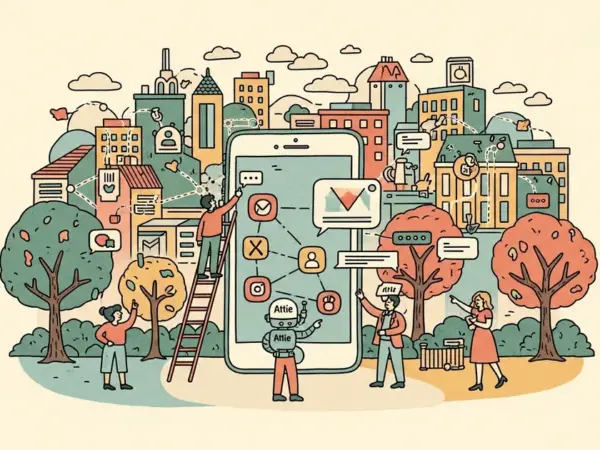
- Littlebird runs as a background process on macOS, reading activity across all applications and meetings to build a searchable, encrypted memory of the user’s work.
- Three core modules are offered: Chat (conversational queries against stored context), Meeting Notes (automatic transcription and summarization), and Routines (scheduled proactive insights).
- The company states it uses enterprise-grade encryption and commits to not selling user data or using it to train AI models.
- iOS and Android companion apps are already available, extending stored-context access to mobile devices alongside the primary desktop application.
What Happened
Littlebird released its macOS desktop AI assistant with an architecture designed to reduce prompt friction by maintaining a continuous, cross-application memory of each user’s work — spanning documents, communications, meetings, and code — so that queries and content generation can draw on shared context rather than starting from a blank slate each session. According to the company’s website, the system “learns from your work across every app and meeting, so you can find anything and create from what it knows.” A Windows release is in active development, with a public waitlist accessible on the Littlebird site.
Why It Matters
Most AI assistants — whether accessed through web interfaces, productivity suite integrations, or standalone mobile apps — begin each session without prior knowledge of the user’s work, requiring context to be supplied manually through prompts, file attachments, or pasted text. Littlebird’s design inverts this assumption by treating passive ambient data collection as the primary mechanism for assistant usefulness, with the system becoming more accurate to a specific user’s work patterns the longer it runs.
The product enters a space that has drawn substantial developer and investor attention since at least 2023, with multiple startups and platform vendors exploring persistent AI memory and ambient computing as solutions for knowledge workers who spend significant time in meetings and context-switching between tools.
Technical Details
Littlebird operates as a background desktop process that ingests activity from across the user’s installed applications — including messaging platforms such as Slack, document editors, code repositories, and web browsers — while simultaneously capturing and transcribing meeting audio. The system is built to cross-reference these sources rather than treat them in isolation: the company states it “understands how a conversation in Slack, a decision from a call, and a doc you’re editing all relate,” surfacing connected information across the six professional use-case categories it targets.
Meeting transcription produces structured output beyond a raw transcript, identifying decisions made and action items assigned during each session. The Chat module supports conversational querying of this stored context, including requests for document drafts, email compositions, and project plans, with the system drawing on accumulated memory rather than requiring background to be re-supplied. The third module, Routines, delivers proactive summaries on schedules defined by the user.
On data governance, Littlebird states that users can exclude specific applications from monitoring, delete all stored data on demand, and fully remove their accounts. The company states explicitly that it does not sell personal data to third parties and does not use it to train AI models. These claims have not been independently verified at time of publication.
Who’s Affected
Littlebird has structured its use-case targeting across six professional categories — business leadership, creative professionals, client-facing roles including sales and consulting, health professionals, technical and product teams, and knowledge workers covering researchers, academics, and students — with individual consumer pricing rather than enterprise procurement, based on the current structure of the Littlebird website.
Two named users are quoted on the site. Luis Amezcua, working in sales, reported using Littlebird to “quickly build targeted training materials.” Amanda Nelson, working in engineering, said the tool helps her “switch between coding tasks without losing my flow” by automatically surfacing relevant content from Slack, code repositories, and documentation — reducing the manual overhead of context-switching between projects.
Health professionals are explicitly listed as a target segment, which raises practical questions about how the background monitoring function handles sensitive clinical information that may pass through monitored applications. The company’s current documentation does not address industry-specific compliance frameworks such as HIPAA.
What’s Next
Littlebird’s immediate roadmap centers on delivering a Windows desktop client — currently in development with a public waitlist open on its website — while iOS and Android companion apps are already released and extend stored-context access to mobile, though primary data capture and processing remain desktop-based for now.
The company has not disclosed the AI models underlying its chat and transcription features, its funding status, or team composition. Users in regulated industries — healthcare, legal, and finance in particular — should note that the system is designed to capture a broad range of application activity by default, and the current documentation does not specify how sensitive or privileged material is handled at the application layer.