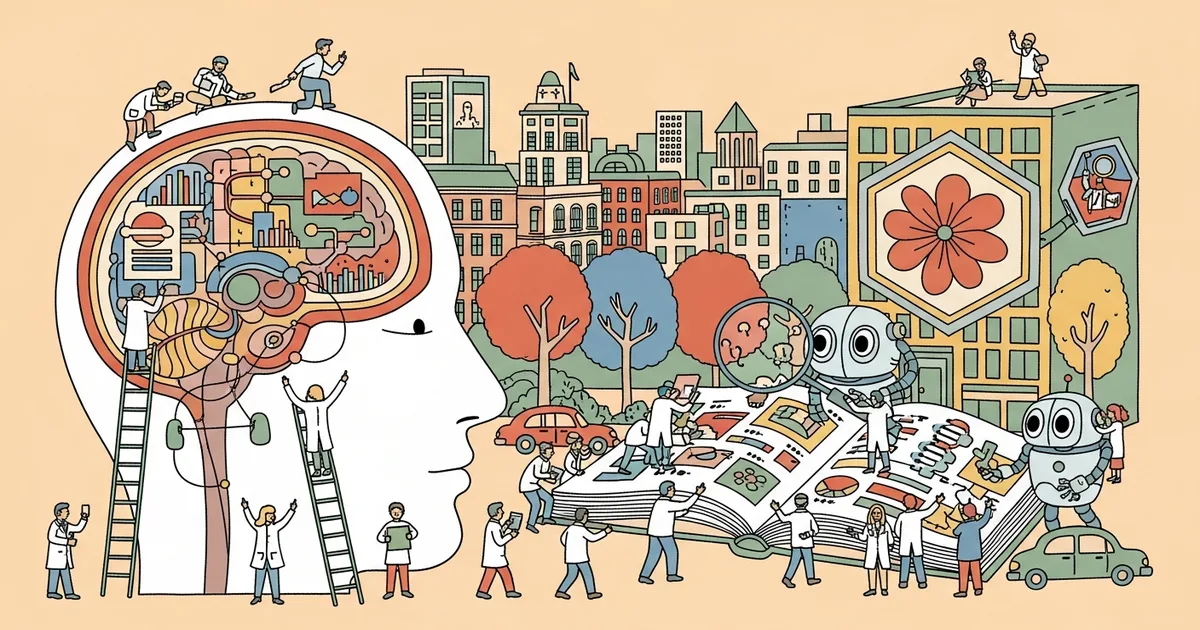
- Boston Children’s Hospital has embedded AI across the organization as core clinical and operational infrastructure.
- The hospital has diagnosed more than 40 rare conditions that had previously gone unresolved.
- AI integration has reduced operational costs and improved access to care across 40+ specialties and ~1 million outpatient visits a year.
- Chief Innovation Officer John Brownstein: ‘The problem isn’t effort, it’s human cognitive limits.’
What Happened
Boston Children’s Hospital has embedded AI as a core part of its clinical and operational infrastructure to improve care for pediatric patients, particularly those with complex and rare conditions, OpenAI announced in a customer case study. The integration has reduced operational costs, improved access to care, and helped diagnose more than 40 rare conditions that had previously gone unresolved.
Why It Matters
Boston Children’s is one of the largest pediatric institutions in the world, serving patients across more than 40 specialties with close to 1 million outpatient visits each year. The case study is among the cleanest examples of AI delivering measurable clinical outcomes at scale: 40+ previously-unresolved rare-disease diagnoses, plus operational cost reductions across supply chain, billing, and operations.
The framing — embedded AI as core infrastructure rather than point solutions — is consistent with the MIT Technology Review piece earlier this week arguing that agentic AI requires systems-level org redesign rather than additive tooling. Boston Children’s is a clinical-domain instantiation of the same pattern.
Technical Details
The hospital’s two pressure points were operational efficiency and clinical reasoning at the edge of human capability. Per Chief Innovation Officer John Brownstein: ‘The problem isn’t effort. It’s human cognitive limits.’ Rare disease cases involve fragmented genetic data, incomplete clinical histories, and an overwhelming body of medical literature — even leading research-institution physicians cannot synthesize all of it fast enough to reach every diagnosis.
Boston Children’s started with individual AI use cases including documentation and translation tools. Those early efforts quickly exposed the limits of fragmented one-off solutions. The hospital then established what OpenAI calls ‘an enterprise AI layer’ that serves as the foundation for both operational and clinical applications. The operational layer handles supply chain, billing, and scheduling at high volume. The clinical layer supports complex-case diagnosis by synthesizing genetic data, clinical history, and medical literature for rare disease cases.
Who’s Affected
Boston Children’s pediatric patient population is the direct beneficiary — 40+ previously-undiagnosed rare conditions now have diagnoses. Pediatric specialists across the hospital’s 40+ specialty areas gain AI-augmented diagnostic support. Other major pediatric institutions (CHLA, CHOP, Cincinnati Children’s, Texas Children’s) face a peer institution with measurable AI-driven outcomes. AI providers (OpenAI, Anthropic, Google DeepMind via Med-PaLM) face the question of which next tier of healthcare institutions adopts a similar enterprise AI layer. Healthcare regulators (FDA, HHS) gain a documented case study for clinical AI integration.
What’s Next
OpenAI did not disclose specific OpenAI products used or contract value. Boston Children’s continues to publish clinical and operational outcomes from the AI integration. Expect parallel case studies from major academic medical centers through 2026. The 40+ rare-disease diagnoses suggests substantial unrealized potential as the model and harness layers continue to improve.