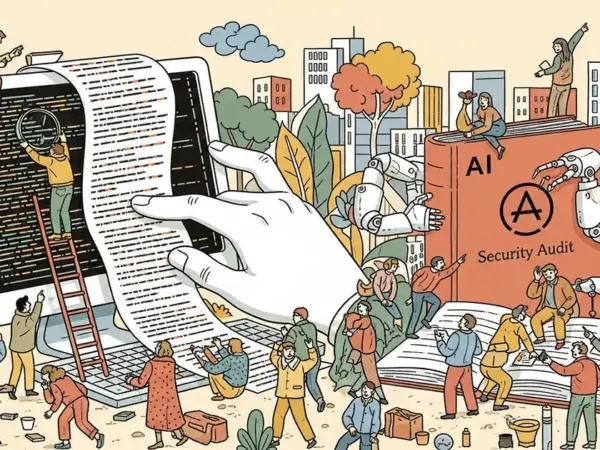
- PwC has deployed AI agents capable of performing core management consulting tasks including data analysis, strategic recommendation generation, benchmarking, and presentation creation.
- The agents handle work traditionally done by junior consultants and analysts, positions that account for roughly 60% of Big Four consulting headcount and generate substantial billable hours.
- PwC is pricing the AI consulting product at approximately 30-40% of equivalent human consultant rates, creating immediate pricing pressure across the $300 billion global consulting industry.
- McKinsey, Deloitte, and BCG have all announced competing AI consulting tools in the past six months, signaling industry-wide acknowledgment that the traditional staffing model is under pressure.
What Happened
PwC announced the general availability of its AI agent platform for management consulting engagements in late March 2026. The platform, which PwC has internally branded as part of its broader “AI-first” transformation initiative, deploys autonomous AI agents that perform data analysis, generate strategic recommendations, produce benchmarking reports, and create client-ready presentations. The announcement was made by Mohamed Kande, PwC’s Global Chairman, during a client event in New York.
“We are not augmenting consultants with AI. We are deploying AI that performs consulting,” Kande said during the presentation. “The agent ingests client data, identifies patterns against our proprietary benchmarking database, and produces actionable strategic recommendations with supporting analysis. The output quality matches what a team of three analysts would produce in two weeks, delivered in hours.”
Why It Matters
The global management consulting market generates approximately $300 billion in annual revenue, according to Statista’s 2025 estimates. The Big Four firms (PwC, Deloitte, EY, and KPMG) plus McKinsey and BCG account for a dominant share. The economic model of this industry has been remarkably stable for decades: hire smart graduates, train them for 2-3 years, bill their time at $200-$500 per hour, and use leverage ratios (many juniors per partner) to generate profit.
AI agents directly attack the leverage model. If an agent can perform the data analysis, benchmarking, and slide creation that occupies 60-70% of a junior consultant’s time, the economic rationale for hiring large analyst classes diminishes. PwC is not the first to make this move. McKinsey launched its Lilli AI platform in 2024, and Deloitte has deployed AI assistants across its audit and advisory practices. But PwC’s framing is the most explicit: these are agents performing consulting, not tools assisting consultants.
Technical Details
PwC’s AI agents operate on a multi-step pipeline. The system first ingests client data through secure upload or API integration, accepting structured data (spreadsheets, databases) and unstructured data (PDFs, reports, interview transcripts). A data processing layer cleans, normalizes, and categorizes the inputs. The analysis engine then runs the processed data against PwC’s proprietary benchmarking datasets, which include anonymized financial and operational metrics from thousands of prior engagements.
The recommendation engine uses a fine-tuned large language model trained on PwC’s internal methodology frameworks, including its “Strategy&” playbooks and industry-specific analytical templates. The system generates strategic options with supporting evidence, risk assessments, and implementation timelines. A presentation module then formats the output into client-ready slides following PwC’s brand guidelines.
PwC claims the agents achieve 85% accuracy on strategic recommendations when benchmarked against recommendations produced by senior consultants for the same client data, measured by an internal panel of partners. The remaining 15% gap typically involves nuanced stakeholder dynamics and organizational politics that the agents cannot assess from data alone. All agent outputs go through a partner review before client delivery.
Who’s Affected
Junior consultants and analysts face the most direct impact. PwC hired approximately 25,000 new graduates globally in 2025. The firm has not announced headcount reductions, but multiple internal sources told the Financial Times that the 2027 analyst class is expected to be 30-40% smaller than the 2025 class. The firm has stated it will redeploy affected staff into “AI oversight and client relationship” roles.
Mid-market consulting firms without proprietary datasets or AI infrastructure face existential pricing pressure. If PwC offers agent-driven consulting at 30-40% of human rates, smaller firms cannot compete on price and may lack the data assets to build equivalent systems. Boutique firms with deep domain expertise in specific verticals may be insulated, at least temporarily.
Clients stand to benefit from lower costs and faster turnaround. However, several CIOs and procurement heads have raised concerns about data security. Feeding sensitive corporate data into AI systems, even with contractual protections, creates a surface area for inadvertent data leakage or cross-client contamination in training datasets. PwC has stated it does not use client engagement data to train its models.
What’s Next
PwC plans to expand the agent platform to tax advisory and regulatory compliance engagements by Q3 2026. The firm is also developing industry-specific agent variants for healthcare, financial services, and energy. The consulting industry’s response over the next 12 months will likely determine whether AI agents become a standard delivery mechanism or remain a supplementary tool. Deloitte and EY are expected to announce comparable platforms before the end of the year.