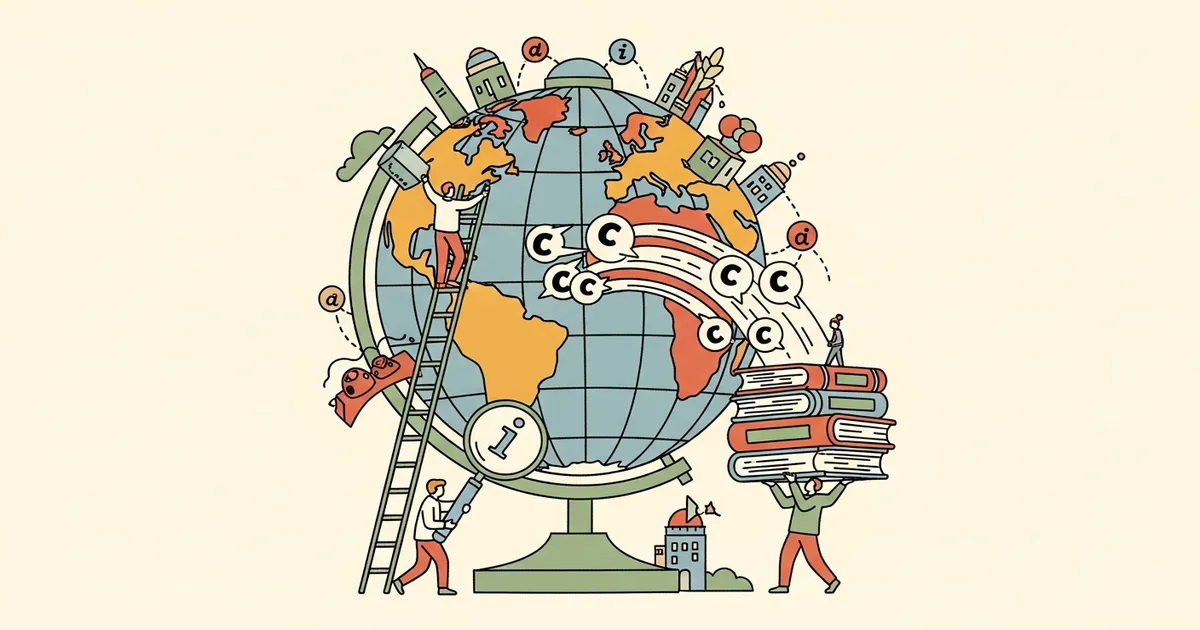
- The Generative Engine Optimization (GEO) market is valued at $848 million in 2025 and projected to reach $33.7 billion by 2034, growing at a 50.5% CAGR according to Dimension Market Research.
- Content with statistics, citations, and structured lists gets 30-40% higher visibility in AI-generated responses, while pages updated within two months earn 28% more AI citations.
- 45% of informational queries cite articles and 41% of commercial queries cite listicles, making content format a decisive factor in AI visibility.
- Fewer than 12% of marketing teams have a documented strategy for appearing in AI-generated answers, despite Gartner projecting a 25% decline in organic search traffic by 2026.
What Happened
A new market category is growing faster than almost anything in digital marketing, and most marketers have never heard of it. Generative Engine Optimization — the practice of structuring content so AI platforms like ChatGPT, Perplexity, Gemini, and Copilot cite it in their responses — is now valued at $848 million as of 2025. Dimension Market Research projects it will reach $33.7 billion by 2034, reflecting a compound annual growth rate of 50.5%.
North America commands the largest share of this market at $360.4 million, roughly 42.5% of global revenue. A separate report from Valuates Reports projects the GEO services segment alone will hit $7.3 billion by 2031, growing at a 34% CAGR.
Why It Matters
Traditional search is losing ground. Gartner projects that organic search traffic to commercial websites will decline 25% by 2026 as consumers shift discovery to ChatGPT, Perplexity, Gemini, and Copilot. SparkToro data shows 70% of search queries now result in zero clicks, with AI engines providing direct answers inside their interfaces.
Despite this shift, fewer than 12% of marketing teams have a documented GEO strategy. Most brands still allocate their entire optimization budget to traditional Google rankings while ignoring the AI engines that now influence over 40% of purchase-stage research decisions.
“The overlap between top Google links and AI-cited sources has dropped from 70% to below 20%,” according to research from Superlines. This gap is growing as AI systems develop their own preferences for which sources to cite.
Technical Details
GEO differs from SEO in a fundamental way. SEO optimizes for ranking position in a list of blue links. GEO optimizes for citations, mentions, and recommendations inside AI-generated text. When a user asks ChatGPT or Perplexity a question, the AI synthesizes an answer from multiple sources. GEO determines whether your content becomes one of those sources.
Research from Carnegie Mellon University’s GEO framework found that pages with a clear definitional structure in the opening sentence receive significantly higher impression scores in LLM-based retrieval pipelines. The first 150-200 tokens carry disproportionate weight during the summarization step, making definition-first openings critical for extractability.
Content format matters as much as content quality. Pages with sequential heading hierarchies have 2.8 times higher citation rates than those with fragmented structure. Content with embedded statistics and citations earns 30-40% higher visibility in AI responses. Pages updated within two months earn 28% more AI citations than older content — when content passes the three-month mark, citation rates drop sharply.
Query type also determines which format AI platforms prefer. For informational queries, 45% of AI responses cite traditional articles. For commercial queries, 41% cite listicles. This means a single content strategy cannot cover both query types effectively.
Who’s Affected
The immediate impact hits content marketers, SEO professionals, and digital agencies. The 86% of enterprise SEO teams that integrated AI tools in 2025 now face a secondary challenge: optimizing not just for Google’s algorithm but for the retrieval mechanisms of multiple AI platforms simultaneously.
E-commerce and SaaS companies face particular pressure. With 75% of Google AI Mode sessions ending without an external website visit, brands that depend on organic search traffic need alternative visibility strategies. GEO offers a path, but it requires structural content changes — adding definition-first sentences, increasing statistical density, implementing schema markup, and creating direct-answer blocks.
Agencies are responding. The GEO services market is expanding rapidly as firms like Superlines, Profound, and others build tools to track AI search visibility across platforms. Domain authority remains the strongest predictor of AI citations, with high-traffic sites earning 3x more AI citations than low-traffic competitors.
What’s Next
The GEO market’s 50.5% CAGR suggests it will become a standard line item in marketing budgets within two to three years. But adoption remains early. The brands that build GEO capabilities now will have a structural advantage as AI-mediated discovery becomes the default.
The main limitation is measurement. Only 30% of brands stay visible between consecutive AI answers, and just 20% remain present across five consecutive runs of the same query. AI citation behavior is volatile, platform-specific, and difficult to track without dedicated tooling. 50% of content cited in AI search responses is less than 13 weeks old, meaning GEO is not a set-and-forget discipline — it requires continuous content freshness.
For marketers evaluating GEO, the starting point is an audit of current AI visibility across ChatGPT, Perplexity, Gemini, and Copilot, followed by structural content changes that prioritize extractability over traditional keyword density.