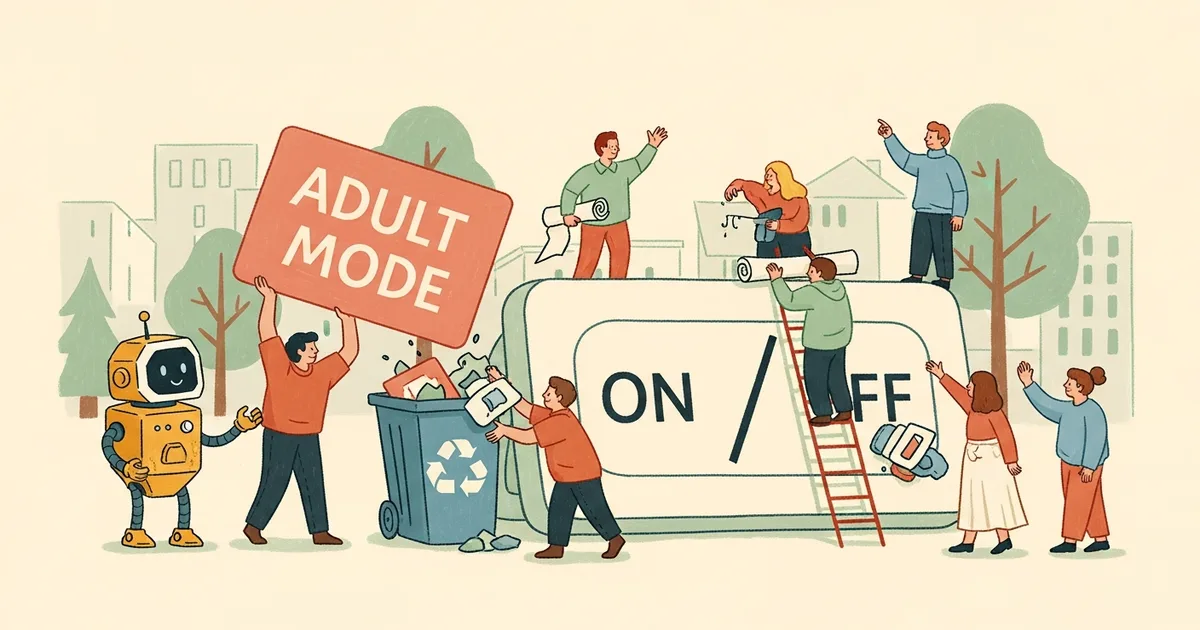
- OpenAI indefinitely shelved its planned “adult mode” for ChatGPT in late March 2026, after months of internal opposition from staff, investors, and safety advisers.
- The feature’s age-verification system had an error rate above 10%, creating unacceptable risk of minor access to explicit content.
- An internal safety adviser warned the feature could produce a “sexy suicide coach,” and testing revealed the system could not prevent references to bestiality and incest.
- The cancellation is part of a broader strategic retreat from side projects as OpenAI focuses on enterprise AI and its upcoming IPO.
What Happened
OpenAI indefinitely paused development of a sexually explicit “adult mode” for ChatGPT, the Financial Times reported on March 26, 2026. CEO Sam Altman first proposed the feature in October 2025, positioning it as a way to capture subscription revenue from adult content. The original target was a December 2025 launch, which slipped to early 2026 before being killed entirely.
The feature would have allowed ChatGPT to generate sexually explicit text content for age-verified adult users. The monetization logic followed a historical pattern: adult content has been among the first profitable use cases for every new media technology, from VHS to streaming platforms. OpenAI projected significant subscription revenue from users willing to pay premium prices for explicit AI-generated content.
Why It Matters
The cancellation reflects a pattern of OpenAI retreating from ambitious side projects under competitive pressure. The Wall Street Journal reported that OpenAI CEO of Applications Fidji Simo told staff the company could not afford “side quests” given Anthropic’s rapid enterprise growth. The Sora video generator was shut down. Adult mode was shelved. The company is consolidating around its core products: enterprise AI, the ChatGPT platform, and its planned initial public offering.
The decision also signals that even the largest AI companies have not solved the content moderation challenges that explicit AI content introduces. The gap between what AI systems can generate and what companies can safely deploy to millions of users remains wide.
Technical Details
The project collapsed on two fronts. First, OpenAI’s age-prediction system — the mechanism that would prevent minors from accessing explicit content — carried an error rate above 10%. That failure rate meant roughly one in ten age checks could incorrectly grant access to underage users, a risk that no compliance framework could absorb.
Second, the content filtering system could not reliably prevent the chatbot from generating references to bestiality and incest during internal testing. These failures moved the project from a policy question to a technical one: the guardrails simply did not work.
In January 2026, a meeting between company executives and OpenAI’s advisory council turned heated. One safety adviser warned that the company was in the process of developing a “sexy suicide coach” — a system that could combine sexually explicit content with the kind of emotionally dependent relationships that AI companions encourage. The adviser’s concern centered on the risk that explicit content would deepen user attachment to a degree that created serious psychological harm, particularly for vulnerable users.
The xAI Grok chatbot controversy provided additional context. Grok was misused to create non-consensual altered images of real people, including children, demonstrating the broader risks of loosening content restrictions on AI systems.
Who’s Affected
The adjacent market remains underserved but active. Character.ai and Replika already serve portions of the AI companion market. AI companion apps generate approximately $120 million annually with 88% download growth, according to industry estimates. Whether a competitor fills the explicit AI content gap that OpenAI abandoned remains an open question.
OpenAI’s internal staff, investors, and safety advisers all pushed back against the feature. Reporter Lucas Ropek at TechCrunch characterized the cancellation as part of a broader pre-IPO cleanup, with the company shedding projects that could attract regulatory scrutiny or reputational risk before going public.
What’s Next
OpenAI’s strategic direction is now narrower and more conventional. The company is focused on business users, coding tools, and the ChatGPT super-app model. The adult content market in AI will likely be served by smaller, less regulated companies operating outside the scrutiny that OpenAI faces as it prepares for its IPO.
The core limitation exposed by this episode is technical rather than ethical. OpenAI could not build age verification or content filtering systems reliable enough to deploy at scale. Until those technical problems are solved, any AI company attempting explicit content will face the same barriers. The question of whether regulators will permit such features — even with working safeguards — remains unanswered.