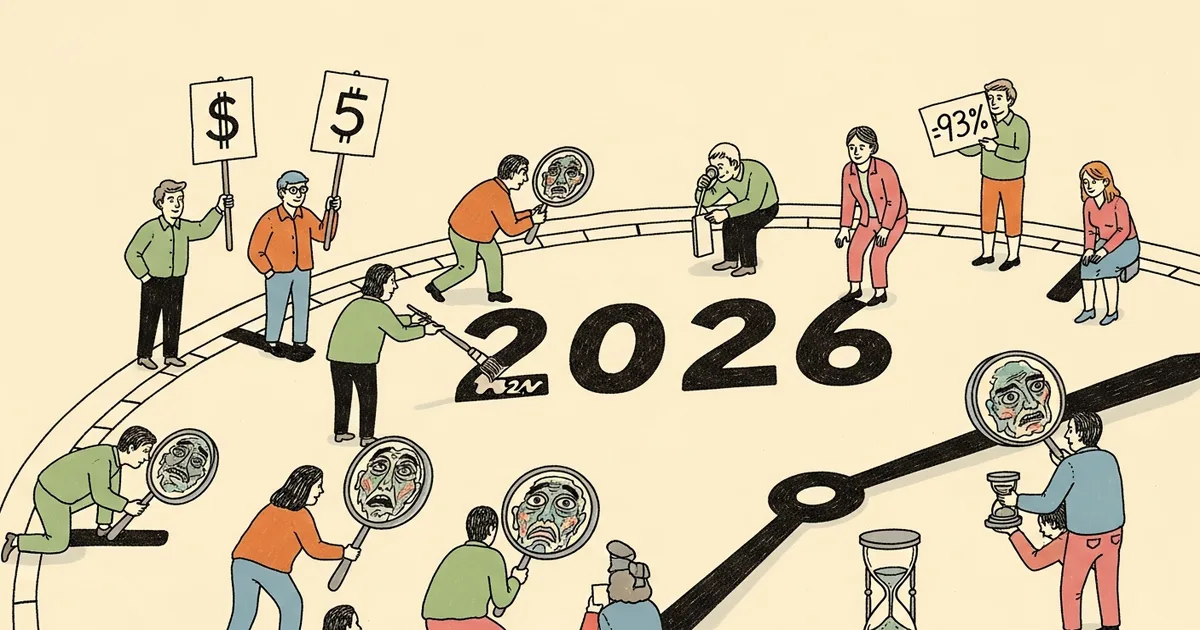
- Deepfake creation now costs as little as $1 and takes under 20 minutes, with 95% of fakes produced using a single open-source tool called DeepFaceLab.
- Only 0.1% of people in a 2025 iProov study correctly identified all fake and real media samples, and human detection accuracy for high-quality video deepfakes sits at just 24.5%.
- Financial losses from deepfake fraud hit $500,000 per incident on average in 2024, with total projected generative AI fraud reaching $40 billion by 2027 according to Deloitte.
- Deepfake incidents rose 257% between 2023 and 2024, with Q1 2025 alone logging 179 incidents — 19% more than all of 2024.
What Happened
A comprehensive analysis by Keepnet Labs has compiled deepfake statistics and trend data spanning 2023 through early 2025. The report draws on research from Deloitte, iProov, McAfee, the University of Florida, and multiple cybersecurity firms to paint a full picture of how deepfake technology has evolved from a niche curiosity into a mainstream fraud tool.
The data shows that the number of deepfake files in circulation grew from roughly 500,000 in 2023 to a projected 8 million by end of 2025. Deepfake-related fraud attempts spiked 3,000% in 2023 alone, with a further 680% year-over-year rise in 2024. By Q1 2025, researchers had logged 179 deepfake incidents — exceeding the full-year 2024 total by 19%.
One of the most cited incidents involved a finance worker at engineering firm Arup who was tricked into transferring $25 million via a video call where every participant — including the CFO — was a deepfake. A separate 2019 case saw a UK energy firm CEO lose €220,000 after criminals cloned his superior’s voice using AI.
Why It Matters
The barrier to creating convincing deepfakes has collapsed. A voice clone now requires just 3 to 5 seconds of audio to achieve an 85% match. The Biden robocall deepfake used in the 2024 New Hampshire primary cost approximately $1 to produce and took fewer than 20 minutes to create. Searches for “free voice cloning software” rose 120% between July 2023 and July 2024.
Meanwhile, human ability to detect fakes has not kept pace. An iProov study published in 2025 found that only 0.1% of participants correctly identified all deepfake and real media samples. For high-quality video deepfakes, human detection accuracy dropped to 24.5%. Even audio deepfakes, which University of Florida researchers claimed could be spotted with 73% accuracy in controlled settings, proved unreliable in practice — 70% of respondents said they lacked confidence distinguishing real from cloned voices.
Technical Details
DeepFaceLab remains the dominant creation tool, responsible for 95% of all deepfake content. Voice cloning platforms have lowered the technical threshold further, requiring no machine learning expertise from the user. Production costs range from under $1 for basic voice clones to $300–$20,000 per minute for high-quality deepfake video.
Detection tools face a significant gap between lab and field performance. AI-based deepfake detection systems see a 45% to 50% drop in effectiveness when moved from controlled testing environments to real-world conditions. The detection tool market is growing at a 28% to 42% compound annual growth rate, but adoption remains uneven across industries.
Biometric authentication systems have proven vulnerable: deepfake attacks bypassing biometric verification rose 704% in 2023. Document forgery using AI-generated content increased 244% between 2023 and 2024, with 57% of all document fraud now involving digital forgeries.
Who’s Affected
Financial services bear the heaviest burden. Cryptocurrency platforms saw 88% of deepfake fraud cases in 2023, while fintech firms experienced a 700% increase in deepfake incidents. An estimated 42.5% of financial fraud attempts now involve AI-generated content. Roughly 400 companies per day face CEO fraud attempts using deepfakes, and deepfake-related vishing attacks in the US surged 1,600% in Q1 2025.
Individuals are equally exposed. McAfee’s 2024 research found that one in four adults had encountered an AI voice scam, with 77% of victims reporting financial losses. One-third of those victims lost more than $1,000. Women are disproportionately targeted for non-consensual intimate imagery, accounting for 99% to 100% of deepfake pornography victims according to multiple studies.
What’s Next
Organizational preparedness remains low. Keepnet’s data shows 80% of companies have no response plan for deepfake attacks, 25% of leaders are unfamiliar with the technology entirely, and only 5% have comprehensive prevention measures across multiple levels. North America saw $200 million in deepfake-related losses in Q1 2025 alone, with the UK reporting a 94% year-over-year increase in incidents. Until detection tools close the lab-to-field performance gap, the advantage remains firmly with attackers.