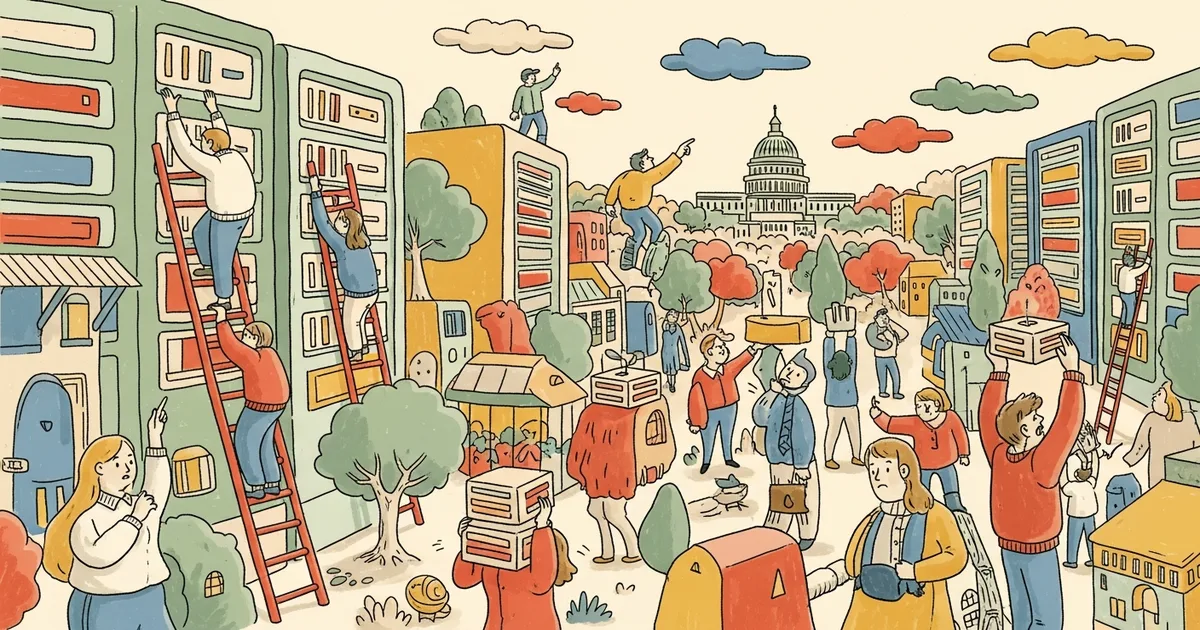
Senator Bernie Sanders and Representative Alexandria Ocasio-Cortez introduced the AI Data Center Moratorium Act on March 25, 2026 — the first major U.S. legislative attempt to directly restrict AI infrastructure growth. The bill would halt all new data center construction nationwide until Congress passes separate federal laws on AI safety, worker protections, and energy costs.
The Energy Math
The International Energy Agency projects global data center electricity consumption will reach approximately 945 TWh by 2030 — nearly 3% of total global electricity, more than doubling from 415 TWh in 2024. U.S. data center consumption alone is expected to increase by 240 TWh, a 130% jump. China follows with a 175 TWh increase (170%), Europe at 45 TWh (70%).
U.S. electricity costs rose nearly 7% last year — more than double the overall inflation rate — costing the average household $123 more in 2025. Sanders frames the bill around consumer impact: AI companies are consuming electricity at rates that drive up prices for everyone, with no corresponding obligation to mitigate the cost or environmental burden.
Industry and Political Reality
The bill faces near-certain opposition from both parties. The AI infrastructure buildout has bipartisan support as a competitiveness issue against China. Jeff Bezos is raising $100 billion for AI manufacturing. Microsoft committed $80 billion to data centers. Globally, $2.5 trillion in AI infrastructure investments are already committed. A construction moratorium would effectively freeze U.S. AI capacity growth while competitors continue building.
The bill’s value may be as a negotiating position rather than viable legislation. By proposing the most aggressive possible restriction, Sanders and AOC create political space for moderate proposals — energy efficiency requirements, renewable energy mandates for data centers, or community impact fees — that might otherwise be dismissed as too interventionist. The tension between AI growth ambitions and environmental reality is real. Whether a construction ban is the right response is a separate question from whether the problem it identifies needs addressing.