- AI-driven advertising reached approximately $57.99 billion in 2026 and is projected to hit $107.5 billion by 2028, growing at a compound annual growth rate of 37.2%.
- 61% of marketers now use AI in marketing activities, with 32% applying it specifically to ad targeting and audience segmentation.
- AI-powered email campaigns produce an average 41% revenue increase, while AI-optimized bidding reduces cost-per-acquisition by 20%.
- Consumer trust remains split: 75% trust AI-written content if reviewed by humans, but 48% find AI-created videos unsettling and 77% worry about misinformation in AI ads.
What Happened
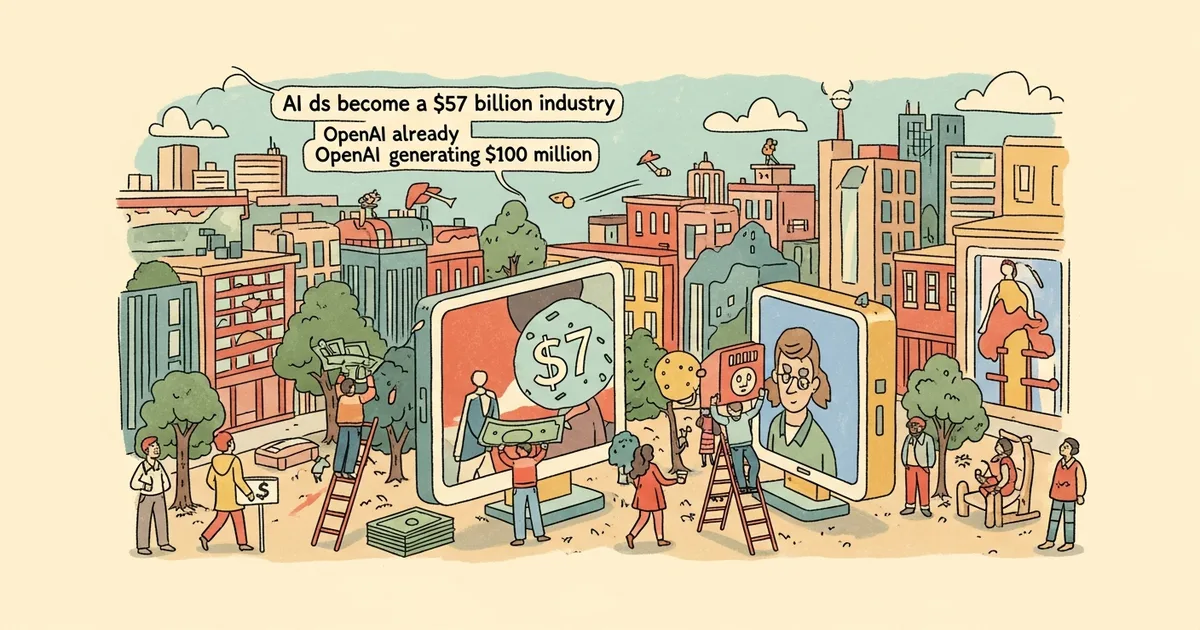
The AI advertising industry reached approximately $57.99 billion in 2026, according to industry data compiled by WiFi Talents. That figure represents growth from $6.46 billion in 2018 — a compound annual growth rate of 37.2% over eight years. The sector is on track to reach $107.5 billion by 2028, with AI marketing revenue projected to surpass $190 billion by 2032.
North America accounts for 40% of global AI advertising spending, while the APAC region is the fastest-growing market. Marketing AI startups raised over $2.5 billion in venture capital funding in 2023 alone, and investment in AI-enabled demand-side platforms reached $3.2 billion. Cloud-based AI marketing solutions now account for 65% of total market revenue.
Why It Matters
The $57 billion figure encompasses three distinct layers of AI advertising. The first is AI-optimized ad placement — platforms like Google Performance Max and Meta Advantage+ that automate targeting, bidding, and creative optimization. This layer is already mainstream and accounts for the bulk of current spending.
The second layer is AI-generated creative. 54% of social media marketers now use AI for image and video generation. 66% use AI to draft social media copy, and 60% of digital marketers use AI to generate headlines for A/B testing. AI tools can reduce graphic design production time by 80%, compressing what once took days into hours.
The third layer is ads inside AI platforms themselves. OpenAI’s advertising pilot crossed $100 million in annualized revenue within six weeks of its U.S. launch, validating that AI platforms can monetize user attention at scale. This newest layer is still small relative to the total market but growing rapidly.
Technical Details
The performance data supports adoption. AI-driven personalization increases marketing spend efficiency by up to 30%. AI-powered email campaigns see an average 41% revenue increase over non-AI campaigns. Organizations using AI for lead generation report a 50% increase in qualified leads. AI-optimized bidding reduces cost-per-acquisition by 20%, and predictive AI lowers overall marketing costs by 15% through churn prediction models.
Dynamic pricing implementations yield 10% profit margin increases. Chatbots in marketing funnels increase conversion rates by 10%. Cross-channel marketing powered by AI increases customer lifetime value by 30%. AI-integrated CRM systems increase sales productivity by 34%, and predictive modeling increases average order value by 18%.
On the workforce side, demand for AI-specialized marketing roles increased 116% in one year. 54% of marketing teams have hired prompt engineers in the past 12 months, and 72% of marketing agencies have invested in AI staff training. Yet only 19% of marketers claim expertise in using AI tools, and 47% cite lack of technical knowledge as the biggest barrier to adoption. Only 22% of companies have a dedicated AI budget separate from their general marketing spend.
Who’s Affected
Small businesses stand to gain the most from AI advertising democratization. Tasks that previously required agencies charging $5,000 to $10,000 monthly — creative generation, audience targeting, bid optimization, results analysis — are now available through software subscriptions. 36% of small businesses have already adopted AI tools for marketing campaigns.
Consumers have mixed reactions. 75% trust AI-written content when reviewed by humans, and 64% believe AI provides better product recommendations than humans do. 70% of Gen Z consumers prefer brands that use AI for personalized shopping. However, 48% find AI-created videos unsettling, 77% are concerned about misinformation in AI ads, and 50% worry about data privacy implications. 68% of consumers want advertisements explicitly labeled as “Made with AI.”
What’s Next
The AI advertising market projects continued growth, but concentration risk is emerging. If AI ad platforms optimize toward the same patterns, every advertiser’s creative begins to look identical. Early evidence from AI-generated ad creative already shows convergence toward similar visual styles and copy patterns. The businesses that outperform will be those that use AI for efficiency while maintaining distinctive brand positioning that automated systems alone cannot replicate. The 27% of brands already using AI to create synthetic influencers represent the frontier of this trend — and the point where consumer trust will be tested most directly.