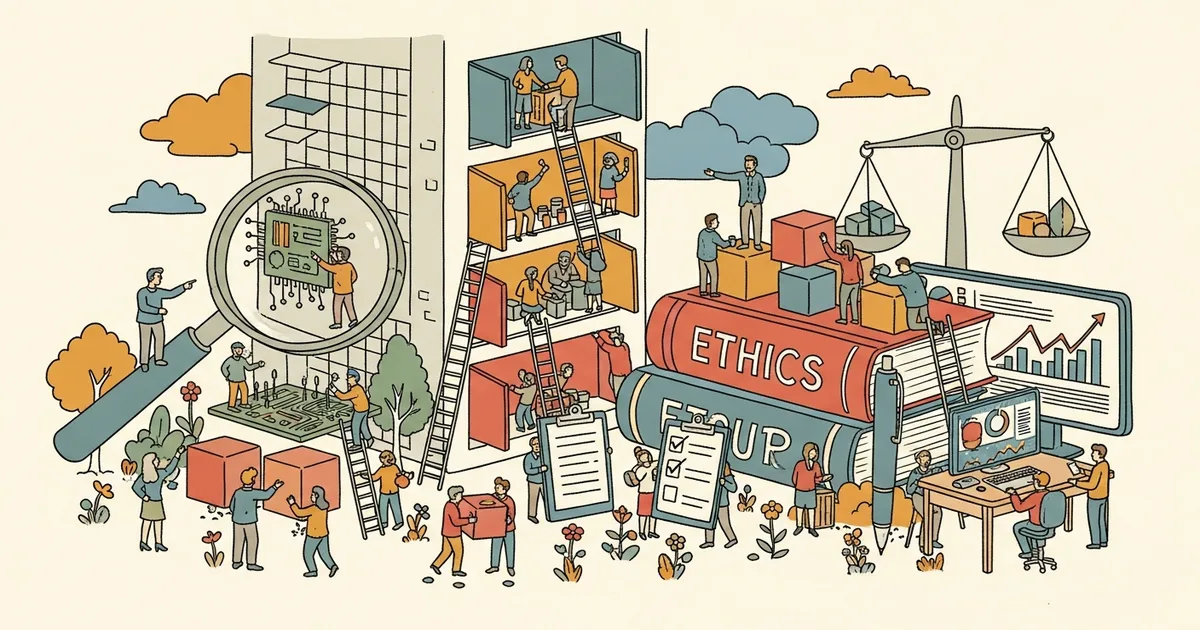
- The TRUMP AMERICA AI Act discussion draft includes a mandate for annual third-party audits of high-risk AI systems to detect viewpoint or political affiliation discrimination.
- Federal agencies would be restricted to purchasing large language models that meet “unbiased AI principles” covering truthfulness, historical accuracy, scientific objectivity, and ideological neutrality.
- The FTC, Department of Labor, and NIST are each assigned oversight roles, with NIST tasked to establish a Center for AI Standards and Innovation.
- The bill remains a discussion draft as of early 2026, with no enacted compliance deadlines or specified penalties yet.
What Happened
The Trump administration took several steps toward comprehensive federal AI regulation in late 2025 and early 2026, including an executive order targeting state AI laws and a legislative discussion draft known as the TRUMP AMERICA AI Act. Title VIII of the proposed legislation, sponsored by Senator Marsha Blackburn, contains what would be the first federal framework for mandatory AI bias audits. A detailed analysis by law firm Latham & Watkins outlines the key provisions.
The Blackburn Bill mandates annual third-party audits of high-risk AI systems, specifically targeting discrimination based on viewpoint or political affiliation. This framing distinguishes it from earlier bias audit proposals — such as New York City’s Local Law 144 — which focused primarily on race, gender, and other protected characteristics under existing civil rights law.
Why It Matters
If enacted, the TRUMP AMERICA AI Act would represent the first comprehensive federal AI regulation in the United States. Previous AI governance efforts operated at the state and municipal level or through non-binding executive guidance. A federal framework would preempt the growing patchwork of state laws — a December 2025 executive order already signaled the administration’s intent to limit state-level AI regulation.
The bill’s definition of bias centers on viewpoint and political affiliation rather than demographic characteristics. This means AI companies would need to demonstrate that their models do not systematically favor or suppress particular political perspectives, a technically and philosophically distinct challenge from traditional fairness metrics used in machine learning.
Senator Blackburn’s office has framed the legislation as a response to concerns about political bias in large language models, though the full bill addresses a broader range of AI governance topics beyond bias alone.
Technical Details
Title XVI of the bill establishes federal procurement standards for AI. Agencies purchasing large language models would be limited to systems meeting four “unbiased AI principles”: truthfulness, historical accuracy, scientific objectivity, and ideological neutrality. Federal contracts for AI systems would require explicit compliance terms, and vendors found in violation could be charged decommissioning costs.
The Federal Trade Commission is directed to establish minimum safeguards for AI systems. The Department of Labor would produce quarterly reports on AI-related job displacement. NIST would create a new Center for AI Standards and Innovation to develop technical standards and benchmarks for AI safety, performance, and bias testing.
The audit requirement applies specifically to “high-risk AI systems,” though the discussion draft does not include a detailed classification framework for determining which systems qualify. This ambiguity is expected to be a focal point during markup and committee review.
Who’s Affected
Developers and deployers of high-risk AI systems would bear the audit obligation. Companies operating frontier AI models — including those used in hiring, lending, content moderation, and government services — would likely fall within scope, though the lack of a formal classification system leaves the exact boundaries undefined.
Federal agencies are affected through the procurement restrictions. Any agency purchasing or contracting for large language model services would need to verify compliance with the four unbiased AI principles before acquisition. Government AI vendors would need to build compliance documentation and potentially modify their models to meet the neutrality requirements.
The bill’s impact on state-level regulation is also significant. If federal preemption provisions hold, states like Colorado and California that have passed or proposed their own AI bias laws may see those frameworks superseded.
What’s Next
The TRUMP AMERICA AI Act remains a discussion draft with no enacted compliance deadlines or specified penalties for violations. The bill must pass through committee markup, floor votes in both chambers, and potential reconciliation before becoming law. Key open questions include how “high-risk AI system” will be defined in final text, what penalties will attach to audit failures, and whether the viewpoint-neutrality standard will survive legal challenges under the First Amendment. Until the bill moves beyond draft stage, companies face no immediate federal compliance obligation — but the direction of travel suggests preparing audit infrastructure now rather than later.