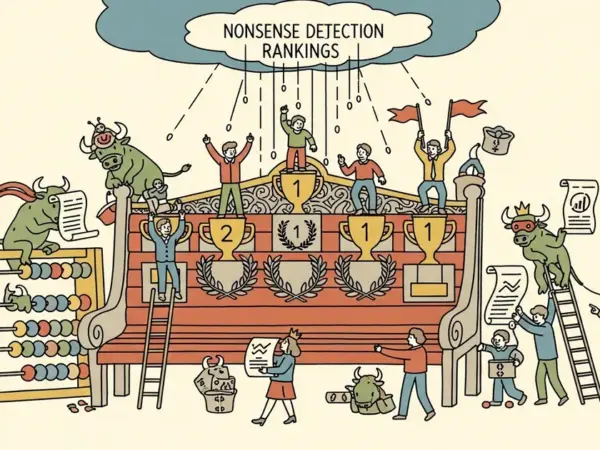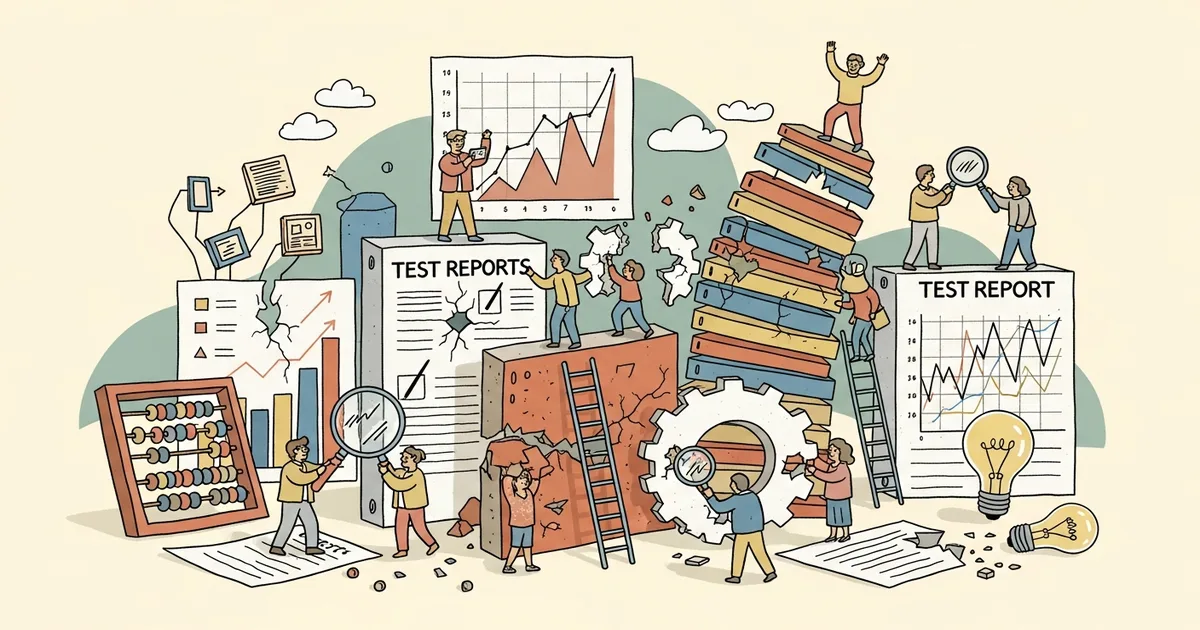
Researchers from the Oxford Internet Institute, the UK’s AI Security Institute, Stanford, and Berkeley have published a study revealing that hundreds of tests used to evaluate AI capabilities contain fundamental methodological flaws. The findings, reported on March 25, suggest that the benchmarks the AI industry relies on to measure model progress may systematically overstate or misrepresent actual capabilities.
The study examined evaluation methodologies across major AI benchmarks and identified several categories of problems: data contamination where test questions appear in training data, inconsistent scoring criteria that allow models to receive credit for partially correct answers, narrow task definitions that conflate pattern matching with genuine understanding, and benchmark saturation where tests become too easy to differentiate between models.
The implications are significant for the AI industry’s narrative of rapid capability improvement. If the metrics used to declare progress are unreliable, then claims about models approaching human-level performance on specific tasks may be overstated. This does not mean AI models are not improving — but it suggests the magnitude and nature of improvement may differ from what benchmark scores indicate.
The research team proposes a framework for evaluating the evaluations themselves — meta-benchmarks that test whether a benchmark actually measures what it claims to measure. This includes adversarial testing where intentionally wrong answers are scored to verify the rubric works, contamination audits that check for test data in training corpora, and construct validity assessments that verify benchmarks measure the intended cognitive capability rather than a proxy.
For AI developers and investors, the study introduces uncertainty into capability claims that have driven billions in investment. If GPT-5.4’s score on a benchmark is inflated by flawed methodology, the competitive gap between it and cheaper alternatives may be smaller than reported. For regulators using benchmark performance to assess AI risk, unreliable measurements could lead to either over- or under-regulation of specific capabilities.