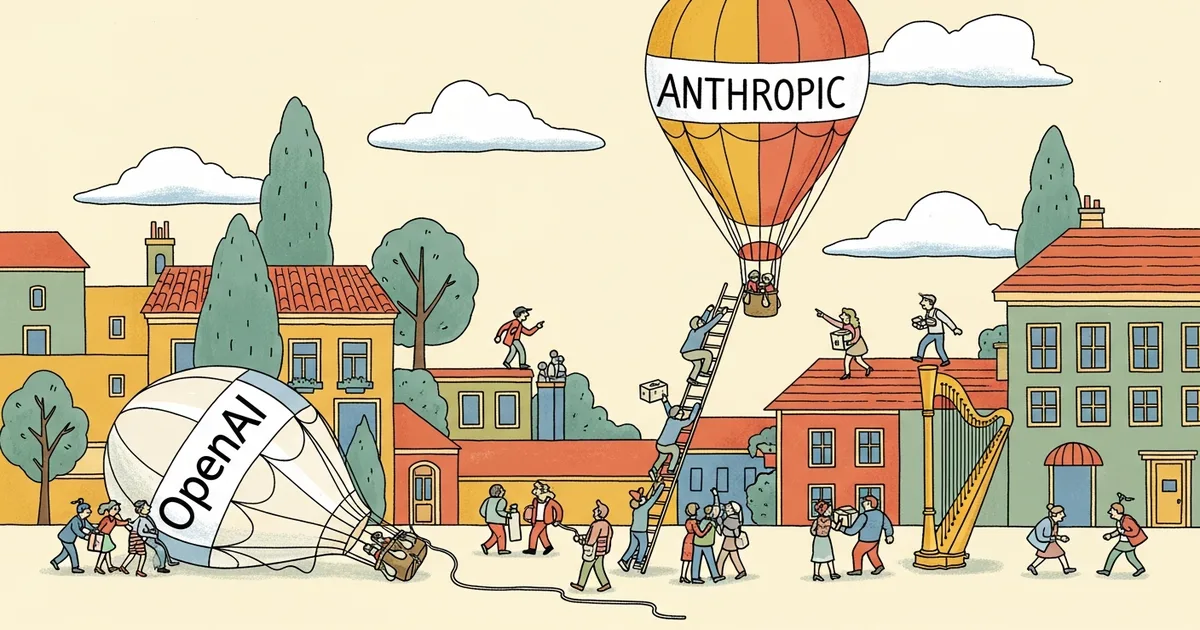
- OpenAI shares have become difficult to sell on the secondary market, with some holders finding them nearly impossible to unload, according to Bloomberg.
- Investors are pivoting to Anthropic, which is seeing surging demand for its shares on secondary exchanges.
- The shift follows a turbulent period for OpenAI, including the shutdown of its Sora video product and ongoing questions about its for-profit conversion.
- Anthropic’s Claude Code product has gained significant developer traction, contributing to investor enthusiasm.
What Happened
OpenAI shares have fallen sharply out of favor on the secondary market, with some holders finding them nearly impossible to sell, according to a Bloomberg report published on April 1, 2026. At the same time, investor demand for Anthropic shares is running hot on the same secondary exchanges where OpenAI paper is piling up.
The secondary market for pre-IPO AI company shares has been one of the most active segments of private markets since 2023, when OpenAI’s valuation soared following the ChatGPT launch. The reversal in sentiment marks one of the most significant shifts in AI investor positioning in the past two years.
Why It Matters
Secondary market pricing often serves as a leading indicator for broader sentiment about private companies. OpenAI completed a funding round at a $300 billion valuation in late 2025, but the secondary market data suggests investors are questioning whether that price holds. The company’s recent decision to shut down the consumer-facing Sora video generation product and pivot resources toward its GPT reasoning models has divided opinion.
Anthropic, by contrast, has seen its Claude Code command-line tool become the most talked-about developer product in AI since GitHub Copilot’s launch. The company is reportedly considering an IPO, and secondary market demand suggests investors want in early.
Technical Details
Bloomberg’s report draws on data from secondary market platforms that facilitate trading in pre-IPO company shares. These platforms typically require minimum transaction sizes of $100,000 or more and serve institutional investors and accredited individuals. Specific pricing data for OpenAI and Anthropic shares was not disclosed in the report, but the trend description—“almost impossible to unload” for OpenAI—indicates a severe demand imbalance.
OpenAI’s last known employee tender offer valued the company at approximately $300 billion. Anthropic’s most recent primary funding round valued it at $61.5 billion in early 2025, but secondary market pricing may have moved substantially since then.
Who’s Affected
OpenAI employees and early investors holding illiquid shares face reduced exit options. Venture capital firms with OpenAI positions on their books may need to reassess carrying values. Anthropic shareholders, including Amazon and Google, stand to benefit from the increased secondary demand. Platforms like Forge Global and EquityZen that facilitate secondary trades in AI company shares are seeing shifting volume patterns.
What’s Next
The secondary market dynamics add pressure to both companies’ IPO timelines. Anthropic is reportedly preparing for a public listing that could come as early as late 2026. OpenAI’s ongoing conversion from a nonprofit to a for-profit structure continues to face regulatory and legal scrutiny, which may further weigh on secondary pricing. Investors will be watching OpenAI’s next product announcements and revenue figures for signals that could reverse the sentiment shift.