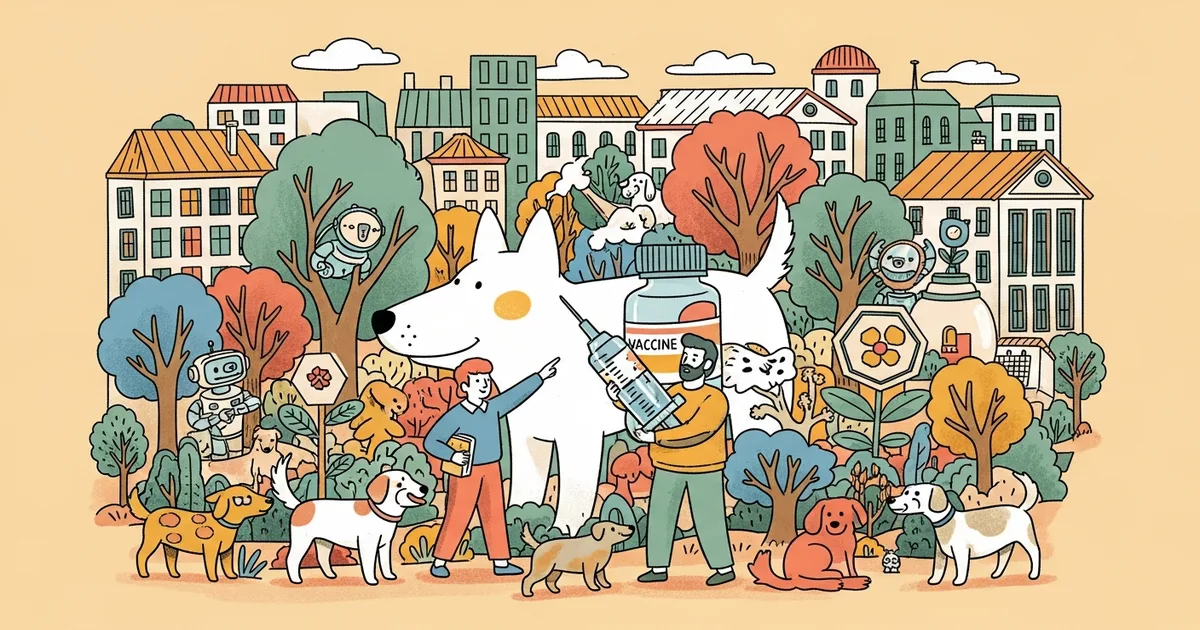
- OpenAI CEO Sam Altman and VP Kevin Weil promoted an AI-assisted dog cancer vaccine story on social media, drawing over 1.3 million views.
- The dog, Rosie, received both an experimental mRNA vaccine and a proven PD-1 inhibitor simultaneously, making it impossible to attribute the tumor reduction to AI.
- Stanford-trained biotech PhD Egan Peltan said there is “zero evidence” the AI-designed vaccine contributed to the outcome.
- Critics say the episode illustrates how AI hype can outpace scientific rigor, especially when promoted by industry executives with a commercial interest.
What Happened
In January 2026, OpenAI CEO Sam Altman shared a story on X about an Australian AI consultant named Paul Conyngham who used ChatGPT, Google’s AlphaFold, and Grok to design a personalized mRNA vaccine for his dog Rosie, diagnosed with incurable mast cell cancer. Altman called the effort “amazing” and suggested “this should be a company.” The post received more than 1.3 million views and was widely reshared across AI communities.
Kevin Weil, OpenAI’s vice president of science, amplified the narrative further, stating the project offered “a glimpse of the future, with AI accelerating personalized medicine.” Conyngham had begun the project in November 2024, using AI chatbots to guide genomic analysis and vaccine design. He reported that Rosie’s tumor “shrunk by about 75 percent” after treatment began. The story was picked up by multiple technology outlets and presented as a breakthrough example of AI-enabled citizen science.
Why It Matters
The story was presented as evidence that AI tools are democratizing advanced medicine. However, the framing omitted a critical detail: Rosie simultaneously received a PD-1 inhibitor, a class of FDA-approved immunotherapy drugs that are among the most effective cancer treatments available. Without a controlled study, there is no way to determine whether the AI-designed mRNA vaccine, the PD-1 inhibitor, or a combination of both caused the tumor reduction.
When senior executives at a company valued at over $150 billion promote unverified medical claims involving their own products, the line between marketing and science blurs. Neither Altman nor Weil acknowledged the confounding treatment in their posts. The omission is particularly notable given that both executives have scientific advisors who would understand the importance of controlling for confounding variables in treatment evaluation.
Technical Details
Conyngham spent approximately $3,000 on genomic sequencing for Rosie. He used ChatGPT for research guidance, AlphaFold for protein structure prediction, and Grok for cross-referencing results. The total treatment cost, including the conventional PD-1 inhibitor therapy, was estimated at $20,000 to $50,000 by outside analysts.
PD-1 inhibitors work by blocking a protein that prevents immune cells from attacking cancer. They have been approved for human use in cancers including melanoma, lung cancer, and bladder cancer. In veterinary oncology, checkpoint inhibitors have shown efficacy in canine mast cell tumors in preliminary studies. The drugs represent one of the most significant advances in cancer immunotherapy over the past decade and have demonstrated tumor reduction rates comparable to what Conyngham reported for Rosie.
Conyngham described the AI chatbots as providing “the power of a research institute,” but no peer-reviewed data has been published on Rosie’s case, and no veterinary oncologist has independently verified the claims.
Who’s Affected
Egan Peltan, a Stanford-trained biotech PhD, was among the most vocal critics. He stated there is “zero evidence” the AI-generated vaccine contributed to Rosie’s improvement and noted the simultaneous use of proven immunotherapy made the AI’s contribution impossible to isolate.
The broader concern extends to pet owners and patients who may interpret the viral story as proof that AI can replace professional medical expertise. Veterinary oncologists have cautioned that anecdotal results shared on social media do not constitute clinical evidence and that self-directed treatment based on AI chatbot outputs carries significant risks, particularly when conventional therapies exist for the same condition.
What’s Next
No clinical trial or peer-reviewed publication is planned for Rosie’s case. Until the AI-designed vaccine is tested in a controlled setting, separate from concurrent therapies, its efficacy remains unproven. The episode highlights a recurring pattern in AI marketing where compelling narratives are promoted before the underlying science is validated. For now, the only verifiable claim is that Rosie’s condition improved while receiving multiple treatments simultaneously, and isolating the contribution of any single intervention remains scientifically impossible without a controlled study design.
Source: The Decoder