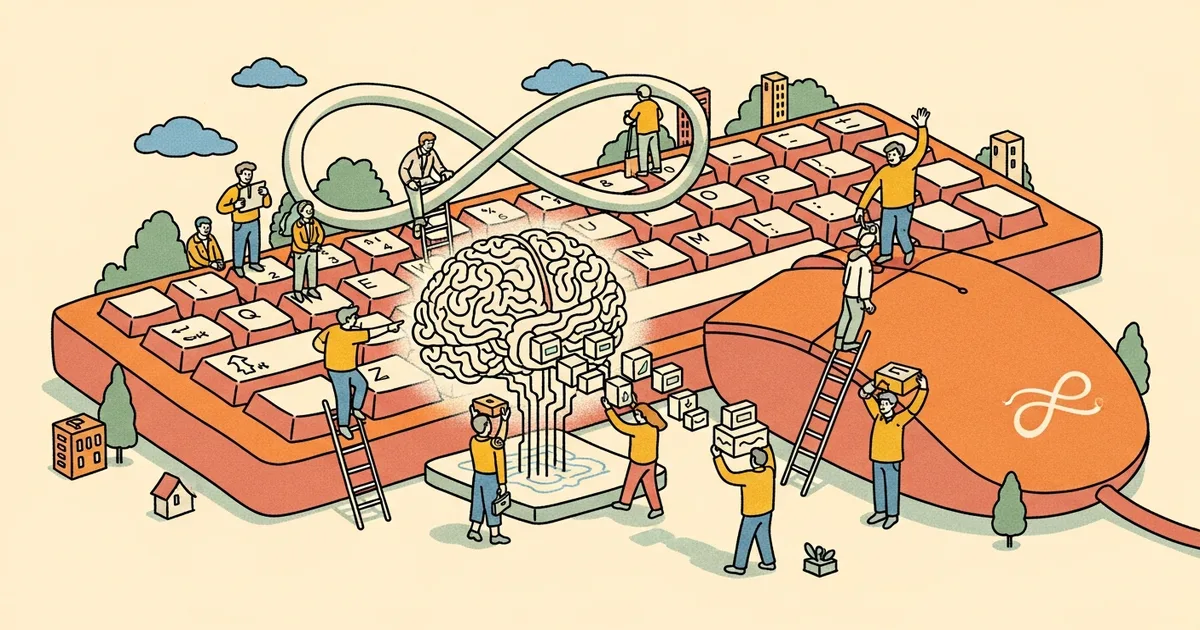
- Meta confirmed it is deploying an internal tool that records employee mouse movements, keystrokes, and interface interactions to generate AI training data.
- The initiative targets computer-use agent development, which requires behavioral examples of how humans navigate software interfaces.
- A Meta spokesperson stated that unspecified safeguards protect sensitive content, and the captured data is used solely for model training.
- The move follows recent reports that defunct startup communications archives are also being repurposed as AI training material across the industry.
What Happened
Meta confirmed on April 21, 2026, that it is deploying an internal tool that records employee keystrokes, mouse movements, and application interface interactions to generate training data for its artificial intelligence models. The disclosure, reported by TechCrunch and first broken by Reuters, represents one of the more explicit acknowledgments by a major AI lab that it is using its own workforce’s behavioral data as a training resource. Meta did not publicly disclose how many employees are enrolled in the program, which internal applications are subject to capture, or whether participation is opt-in or applied by default.
Why It Matters
The initiative reflects a structural challenge facing frontier AI developers: publicly available data sources for training large models are increasingly exhausted or legally restricted, driving companies to seek proprietary behavioral datasets. The specific gap Meta appears to be targeting is computer-use agent training — a category of AI that requires fine-grained behavioral examples of how humans physically interact with graphical software interfaces, not simply text inputs and outputs. Last week, separate reporting indicated that defunct startups’ internal communications — including Slack message archives and Jira ticket histories — were being mined as AI training material, suggesting that corporate behavioral data broadly is being reconstituted as a new category of AI input.
Technical Details
A Meta spokesperson provided the following statement to TechCrunch: “If we’re building agents to help people complete everyday tasks using computers, our models need real examples of how people actually use them — things like mouse movements, clicking buttons, and navigating dropdown menus. To help, we’re launching an internal tool that will capture these kinds of inputs on certain applications to help us train our models. There are safeguards in place to protect sensitive content, and the data is not used for any other purpose.” The tool captures sub-action-level interface events — individual mouse clicks, cursor trajectories, and dropdown navigation sequences — rather than high-level application logs or continuous screen recordings. Meta did not specify whether its content safeguards operate through automated redaction, access controls, or manual review, and did not clarify how the pipeline distinguishes routine interface interactions from potentially sensitive inputs such as credentials or confidential documents.
Who’s Affected
Meta employees working on applications covered by the new tool are the direct subjects of the data capture program. The initiative is aimed at computer-use agent development — AI systems designed to operate software interfaces autonomously on behalf of users — a capability that Anthropic, OpenAI, and Google have each been developing in parallel. Enterprise software vendors whose platforms are used internally at Meta may face questions about whether their terms of service permit this form of behavioral data capture and its downstream use for commercial model training.
What’s Next
Meta has not disclosed a timeline for how captured behavioral data will be integrated into specific model training runs, nor which agent products are expected to benefit from the program. The company has not addressed whether the program extends to contractors, part-time staff, or employees in jurisdictions with stricter labor data protection requirements, including the European Union under the General Data Protection Regulation. Reuters’ original report did not include statements from employee representatives or labor groups in response to the initiative.