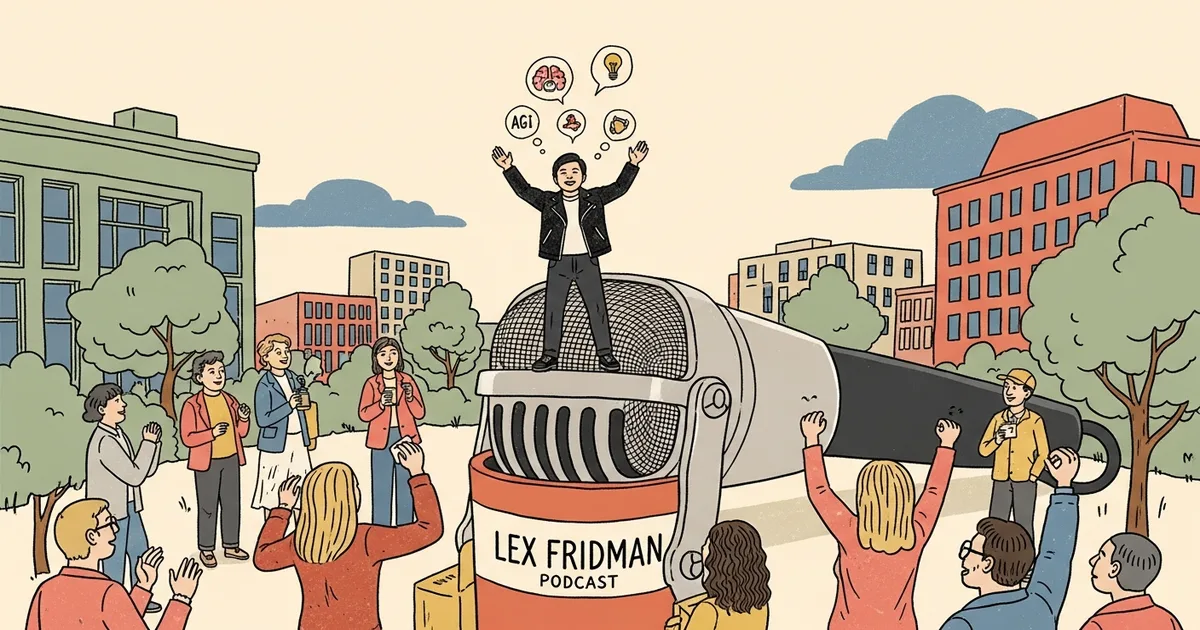
NVIDIA CEO Jensen Huang stated on the Lex Fridman podcast, released March 22-23, that he believes artificial general intelligence has been achieved. Huang’s declaration came in response to Fridman’s working definition of AGI as AI that can perform any intellectual task a human can, at which point Huang replied that current AI systems meet this criteria across a broad range of domains.
Huang’s position is notable for its specificity. He did not claim that AI matches human intelligence in every dimension but argued that across the tasks most people use intelligence for — analysis, reasoning, coding, writing, planning, and problem-solving — current frontier models perform at or above human level. By this pragmatic rather than philosophical definition, Huang contends AGI already exists.
The statement carries commercial implications. As CEO of the company that supplies the vast majority of AI training and inference hardware, Huang has a financial interest in framing AI progress as rapid and transformative. Declaring AGI achieved supports NVIDIA’s narrative that AI infrastructure investment is justified by demonstrated capability rather than speculative potential. The company’s stock has risen significantly on this narrative over the past two years.
The AI research community has responded with mixed reactions. Researchers at Anthropic, Google DeepMind, and academic institutions have pushed back, noting that current AI systems fail consistently at novel problem-solving, physical reasoning, long-horizon planning, and tasks requiring genuine understanding rather than pattern matching. By stricter definitions that require human-level performance across all cognitive domains — including those AI has not been trained on — AGI remains distant.
The definitional debate matters beyond semantics. How AGI is defined affects regulation, investment, and public expectations. If AGI is declared achieved, the conversation shifts from capability development to deployment governance. If it remains aspirational, the focus stays on research funding and safety preparation. Huang’s declaration, from one of the most commercially powerful positions in the AI industry, pushes the Overton window toward the former interpretation regardless of technical consensus.