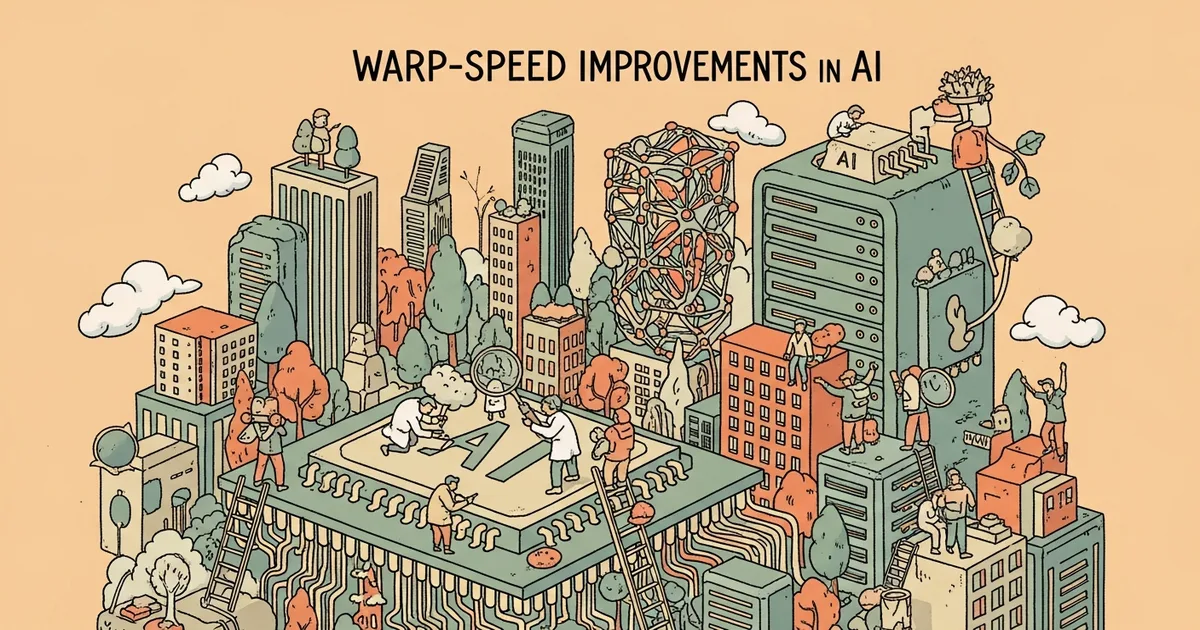
Goldman Sachs Chief Information Officer Marco Argenti described the bank’s AI deployment as advancing at “warp speed” during a March 30, 2026 appearance on Bloomberg’s Odd Lots podcast, hosted by Tracy Alloway and Joe Weisenthal. The interview offered one of the bank’s most senior-level public disclosures about how AI is being integrated into day-to-day operations at a top-tier Wall Street firm.
- Goldman Sachs CIO Marco Argenti described the bank’s AI deployment as advancing at “warp speed” on Bloomberg’s Odd Lots podcast on March 30, 2026.
- Goldman has deployed AI models across trading, risk management, client services, and internal operations.
- The bank has not publicly disclosed specific revenue or cost savings attributable to its AI programs.
- Argenti’s comments signal continued acceleration — not plateauing — of AI adoption at one of Wall Street’s largest institutions.
What Happened
Marco Argenti, who has served as Goldman Sachs’ Chief Information Officer since 2019, appeared on Bloomberg’s Odd Lots on March 30, 2026 to discuss the practical realities of AI deployment at the bank. Hosts Tracy Alloway and Joe Weisenthal — who co-anchor one of the most widely followed financial markets podcasts — drew out Argenti’s perspective on how AI improvements are being experienced inside Goldman’s operations. Argenti’s central characterization: improvements are happening at “warp speed.”
Goldman Sachs has been selective about disclosing operational specifics of its AI programs. Senior executive commentary of this nature provides a qualitative indicator of the bank’s trajectory even when quantitative disclosures are absent.
Why It Matters
Financial services has historically been among the fastest enterprise sectors to adopt and scale new technology, given the industry’s tolerance for high capital expenditure and its exposure to efficiency gains in data-intensive, high-volume workflows. Goldman Sachs has long positioned itself as a technology-forward institution — former CEO Lloyd Blankfein’s description of Goldman as “a technology company” dates to at least 2015 and has shaped the bank’s hiring and infrastructure philosophy since.
The “warp speed” framing matters because many enterprise AI programs launched in 2023 and 2024 have faced scrutiny over whether they deliver measurable returns beyond early pilots. A CIO-level characterization of compounding improvement — rather than stabilization — provides a data point on whether enterprise AI is delivering durable operational value in financial services at scale.
Technical Details
Goldman Sachs has deployed AI models across at least four operational areas: trading, risk management, client services, and internal operations. Each represents a distinct use-case profile. Trading applications typically involve pattern recognition, signal generation, and execution optimization across large data sets. Risk management applications use models to assess exposure, stress-test portfolios, and flag anomalies in real time.
Client services deployments tend to involve AI-assisted research generation, summarization, and communication tooling — reducing the time analysts and relationship managers spend on routine document work. Internal operations deployments span a broader range, from code generation for software engineers to document processing and compliance workflow automation.
Goldman has not publicly disclosed specific metrics — revenue uplift, cost reductions, or headcount impact — attributable to its AI programs. According to the bank’s public financial filings, Goldman spent approximately $4–5 billion annually on technology infrastructure and development in the years preceding this interview, providing a baseline for the scale at which AI integration is occurring. Argenti did not provide specific performance figures during the Bloomberg appearance.
Who’s Affected
Goldman Sachs’ approximately 45,000 employees are the most direct audience for the deployment trajectory Argenti described, particularly those in roles where AI-augmented tooling is already active or being rolled out. Clients of the bank’s asset management, investment banking, and securities divisions will be indirectly affected as AI tools alter the speed and format of research, advisory, and execution services.
Peer institutions — JPMorgan, Morgan Stanley, Citigroup, and Bank of America — will note the “warp speed” characterization as a competitive signal. Enterprise AI vendors supplying large language models and infrastructure to financial services benefit from public validation of this kind from a marquee client. Goldman has not publicly named its primary AI vendor relationships for these production deployments.
What’s Next
Goldman Sachs has not announced a timeline for disclosing quantitative results from its AI programs, and Argenti’s March 30 appearance did not include specific metrics. Investor and analyst pressure for clearer AI return-on-investment disclosures is rising across the sector, and that scrutiny is likely to intensify through 2026 as AI spending continues to appear in capital expenditure line items.
The key open question is whether the “warp speed” characterization reflects improvements in underlying model capability, improvements in Goldman’s internal deployment infrastructure, or both. That distinction carries direct implications for whether peer institutions can replicate the trajectory by sourcing the same foundation models, or whether Goldman’s advantage is embedded in proprietary integration work that is not easily transferred.