- Alex Imas, an economist at the University of Chicago, argues that AI “exposure” scores — used by both OpenAI and Anthropic — cannot predict whether jobs will actually disappear.
- The missing variable is price elasticity data: how much consumer demand shifts when AI-driven productivity lowers the price of goods and services.
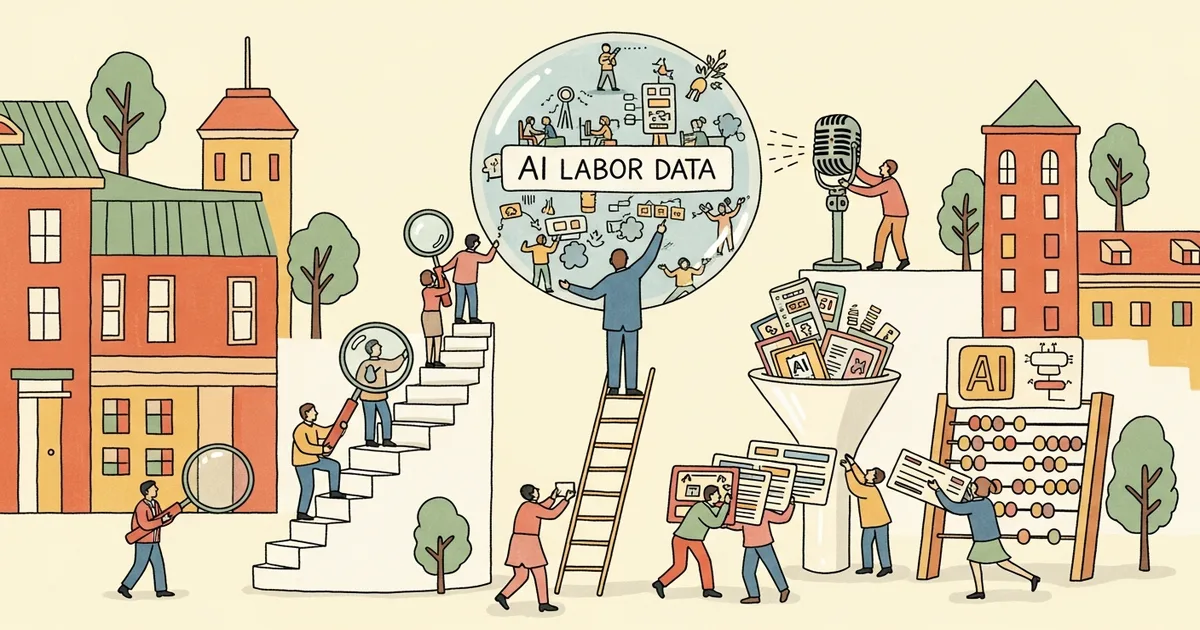
- OpenAI used U.S. government task-catalogue data in December 2025 to rate job exposure to AI; Anthropic cross-referenced that data with Claude conversation logs in February 2026.
- Anthropic CEO Dario Amodei has publicly described AI as “a general labor substitute for humans” capable of replacing all jobs within five years.
What Happened
Alex Imas, an economist at the University of Chicago, told MIT Technology Review on April 6, 2026 that the metrics economists currently use to forecast AI’s labor-market impact are fundamentally inadequate. In the interview, Imas described current predictive tools as “pretty abysmal” and called for a large-scale coordinated effort to collect price elasticity data across every sector of the U.S. economy. “Exposure alone is a completely meaningless tool for predicting displacement,” he said.
Why It Matters
Statements from AI executives have amplified public anxiety about employment in recent weeks. Anthropic CEO Dario Amodei has called AI “a general labor substitute for humans” that could perform all jobs in less than five years. An Anthropic societal impacts researcher, speaking publicly this week, described a possible near-term recession and a “breakdown of the early-career ladder” for workers early in their careers.
Economists who had previously cautioned that AI had not yet caused measurable job losses are themselves reconsidering whether the technology’s impact on labor could be unprecedented in scale and speed.
Technical Details
The methodology under scrutiny relies on the U.S. government’s Occupational Information Network (O*NET), a task catalogue first launched in 1998 and regularly updated. OpenAI researchers used O*NET data in December 2025 to calculate job-level AI exposure — rating a real estate agent’s role as approximately 28% exposed to automation, for example. Anthropic conducted a parallel analysis in February 2026, cross-referencing O*NET task descriptions against millions of actual Claude conversations to identify where AI is already being applied to professional work.
Imas’s critique is that exposure scores say nothing about net employment effects. He uses the example of a software developer whose daily output triples via AI coding tools: the cost of the end product may fall, but whether that price drop increases demand enough to sustain headcount depends entirely on the price elasticity of demand for that product. If millions more consumers adopt the cheaper product, the employer may hire more engineers; if demand barely moves, the same productivity gain leads to layoffs. “Fields that are not exposed now will become exposed in the future, so you just want to track these statistics across the entire economy,” Imas said.
Granular price data of this kind already exists for grocery categories, Imas noted, because the University of Chicago maintains data-sharing agreements with supermarket chains. No comparable dataset exists for professional services — the MIT Technology Review report specifically names tutors, web developers, and dietitians as occupations identified as AI-exposed but lacking elasticity data.
Who’s Affected
Policymakers, labor economists, and workers across knowledge-work and professional services sectors are making decisions without the data required to model what AI productivity changes will mean for net employment. Imas named tutors, web developers, and dietitians as concrete examples of affected occupations. Workers in software development face particular uncertainty: the same efficiency gains that could reduce headcount at one firm could fuel growth at another, depending on how price-sensitive their customers are.
What’s Next
Imas is advocating for a data-collection initiative he described as requiring the scale of a “Manhattan Project” — encompassing not just currently AI-exposed occupations but all sectors of the economy, to allow forward-looking analysis as exposure expands. No specific institution, funding source, or legislative proposal for such a program has been identified. The call comes as Congress has not articulated a coherent workforce policy in response to AI, according to the MIT Technology Review report.