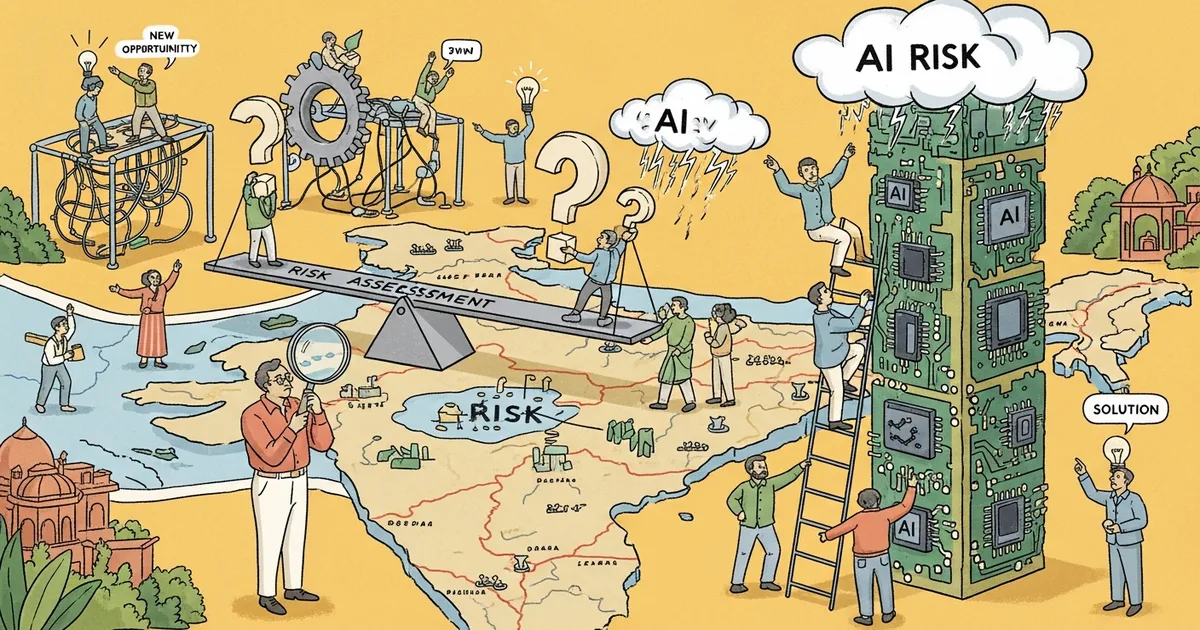
- Short-seller Carson Block of Muddy Waters is rethinking his India market plans because of AI-driven risks, Bloomberg reported on May 28, 2026.
- Block is one of the most prominent fundamental short-sellers globally, known for exposing accounting fraud at Sino-Forest and other targets.
- His pivot reflects how AI is reshaping institutional investor risk modeling — particularly around AI-augmented information asymmetries and AI-mediated market dynamics.
- The story lands during a week when broader AI risk-modeling concerns are surfacing at major financial institutions globally.
What Happened
Short-seller Carson Block of Muddy Waters Research is rethinking his India market plans because of AI-driven risks, Bloomberg reported on Thursday. The Bloomberg segment is paywalled; specific risk framings and named India targets are detailed in the video.
Why It Matters
Block is one of the most prominent fundamental short-sellers globally. Muddy Waters has historically exposed accounting fraud at companies including Sino-Forest, Olam International, and various other targets. When a short-seller of Block’s profile shifts allocation away from a major emerging market, it provides a signal about how the buy-side is starting to model AI-driven market structure changes.
The India market specifically is a notable choice. India’s tech sector has expanded substantially through 2024-2026 — both as an AI development hub (Anthropic, OpenAI, and Google all have India offices) and as an enterprise-AI deployment market. Block’s pivot suggests that whatever AI-driven risks are visible to Muddy Waters are material enough to warrant strategic re-allocation, not just position-level concerns.
Technical Details
Bloomberg’s video segment is paywalled; specific Muddy Waters position changes, India-specific company concerns, and named AI-driven risk categories are presented in the video. Typical categories of AI-driven market risk Muddy Waters and other shorts have flagged in 2025-2026 include: (1) AI-mediated information asymmetries where AI tools surface fraud signals faster than markets can price them, (2) AI-driven accounting manipulation where generative AI helps construct plausible-sounding but false disclosures, (3) AI-augmented market manipulation across geographies with weaker regulatory infrastructure.
The story lands the same week as a Stanford-led study on AI agents adopting Marxist viewpoints under harsh deployment conditions, the AI-hallucinated citations in biomedical papers report, and the broader narrative around AI safety in financial systems (Anthropic’s FSB briefing on Claude Mythos vulnerabilities). The cumulative effect: institutional investors face an increasingly complex risk landscape where AI is both a source of opportunity and material risk.
Who’s Affected
Muddy Waters Research’s portfolio positioning changes affect specific India-listed names that have been or could have been targets. India’s tech sector — particularly the AI-aligned segments — faces a marginal but visible short-seller concern signal. Other prominent shorts (Hindenburg Research, Citron Research, Spruce Point) face the question of whether Block’s framing is a signal to follow. Indian financial regulators (SEBI, RBI) face the institutional-investor risk-modeling shift as input into their own AI-policy frameworks.
What’s Next
Bloomberg’s full segment is available behind Bloomberg.com subscription. Expect follow-up Muddy Waters publications detailing the specific AI risks Block is concerned about. Other short-sellers will likely publish analytical pieces on similar AI-driven risk categories through the rest of 2026.