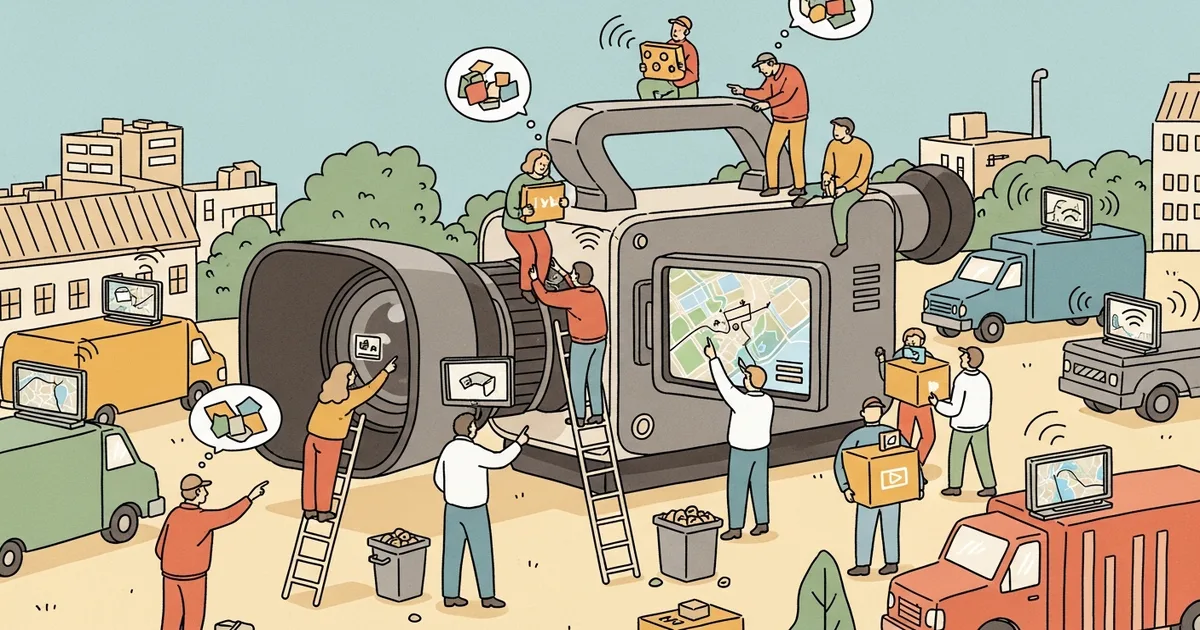
Safety Vision, a provider of vehicle camera and fleet telematics solutions, published an industry report on March 16, 2026, examining how AI-powered video telematics systems are reshaping commercial fleet safety management — and where hardware supply limitations are constraining that rollout. The report, titled Memory Constraints in Motion, surveys current AI dashcam capabilities, the memory components those systems require, and how a global shortage of NAND flash and DRAM is raising per-unit costs and extending lead times across the industry. Author details were not available at time of publication. No direct statements were attributed to named individuals in the available source material; the primary source redirected to a Google News aggregation page rather than the full document.
- AI telematics units require NAND flash for local video storage and DRAM to run edge inference models; global shortages of both components have raised hardware costs and extended supply lead times for manufacturers.
- Systems covered in the report detect at least five specific driving events in real time: hard braking, lane departure, distracted driving, following distance violations, and near-miss incidents.
- Manufacturers are responding to memory constraints by optimizing AI models to run on smaller memory footprints or shipping devices with reduced functionality.
- Insurance providers are offering premium discounts for AI-equipped fleets, creating usage-based pricing structures tied to risk scores and incident data generated by these systems.
What Happened
Safety Vision, a vehicle camera and telematics provider, published an industry report titled Memory Constraints in Motion on March 16, 2026, detailing how AI-powered video telematics are being deployed across commercial fleets while global shortages of NAND flash and DRAM memory components raise hardware costs and extend deployment timelines. The report documents both the operational capabilities of current AI dashcam systems and the supply chain factors slowing their broader rollout.
The report is one of the few industry assessments to directly connect memory component supply conditions with fleet technology adoption rates, rather than treating hardware constraints and telematics growth as separate trends.
Why It Matters
AI video telematics represents a functional departure from earlier passive camera systems: rather than storing footage for post-incident review, these units use edge inference to detect unsafe driving behaviors in real time, alert drivers immediately, and transmit only relevant clips — a model that depends entirely on sufficient onboard memory capacity to operate as designed.
The commercial case for these systems rests partly on reducing data transmission costs, since selective clip transmission replaces continuous video streaming. That architecture requires local processing power, which in turn requires adequate DRAM — making memory supply conditions a direct constraint on the technology’s cost and capability profile, not merely a peripheral supply chain issue.
Technical Details
Each AI telematics unit in Safety Vision’s report requires two memory components to function: NAND flash for storing video clips locally, and DRAM to run the inference models that classify driving events on the device rather than offloading processing to a remote server, making both components direct enablers of the system’s real-time detection capability.
The driving behaviors the systems are designed to detect include hard braking, lane departure, distracted driving, following distance violations, and near-miss incidents. When an event is classified, only the relevant clip is transmitted to fleet managers rather than continuous footage — a design that reduces bandwidth consumption while enabling faster supervisor response.
Manufacturers responding to the NAND and DRAM shortage have pursued two strategies according to the report: compressing AI models to run within lower memory allocations, or reducing the number of detection functions available on a given device. The report does not provide specific figures for per-unit memory capacity requirements or cost increases attributable to current component pricing.
Who’s Affected
Commercial fleet operators are the primary stakeholders facing cost and deployment decisions, particularly those evaluating whether insurance premium discounts for AI telematics adoption — which generate usage-based pricing tied to behavioral data including driving risk scores and incident frequency — are sufficient to offset higher per-unit hardware costs created by the current component shortage.
Fleet insurers are also directly implicated: their usage-based pricing models depend on receiving behavioral data from AI-equipped fleets at scale. Lower adoption rates driven by hardware costs would reduce the data volume available to those underwriting models.
AI telematics hardware manufacturers face the most acute near-term operational pressure, managing the tradeoff between AI model capability and the memory capacity available in a constrained supply environment.
What’s Next
Safety Vision’s report does not disclose a projected timeline for when NAND or DRAM supply conditions are expected to ease, nor does it name specific hardware manufacturers, fleet operators, or insurers referenced in its findings, which limits its direct utility for procurement teams without additional market data.
The report notes that insurance premium discounts represent an active financial incentive for adoption but does not disclose the magnitude of those discounts, the number of insurers currently offering them, or whether they are tied to minimum hardware specifications or detection capability thresholds.
The report does not include independent academic or regulatory validation of its findings. Fleet operators seeking to verify hardware cost claims would need to cross-reference component pricing data from memory market analysts separately.
Related Reading
- US Advisory Panel Warns China’s Open-Source AI Models Are Creating Self-Reinforcing Advantage
- Pentagon Labels Anthropic a Supply-Chain Risk Over Refusal to Remove AI Safety Guardrails
- Cognex Survey: 57% of Manufacturers Already Use AI in Machine Vision Operations
- US Advisory Body Warns China Open-Source AI Strategy Creates Self-Reinforcing Advantage Over American Labs
- Apple Research Exposes Critical Gaps in Multimodal AI Safety