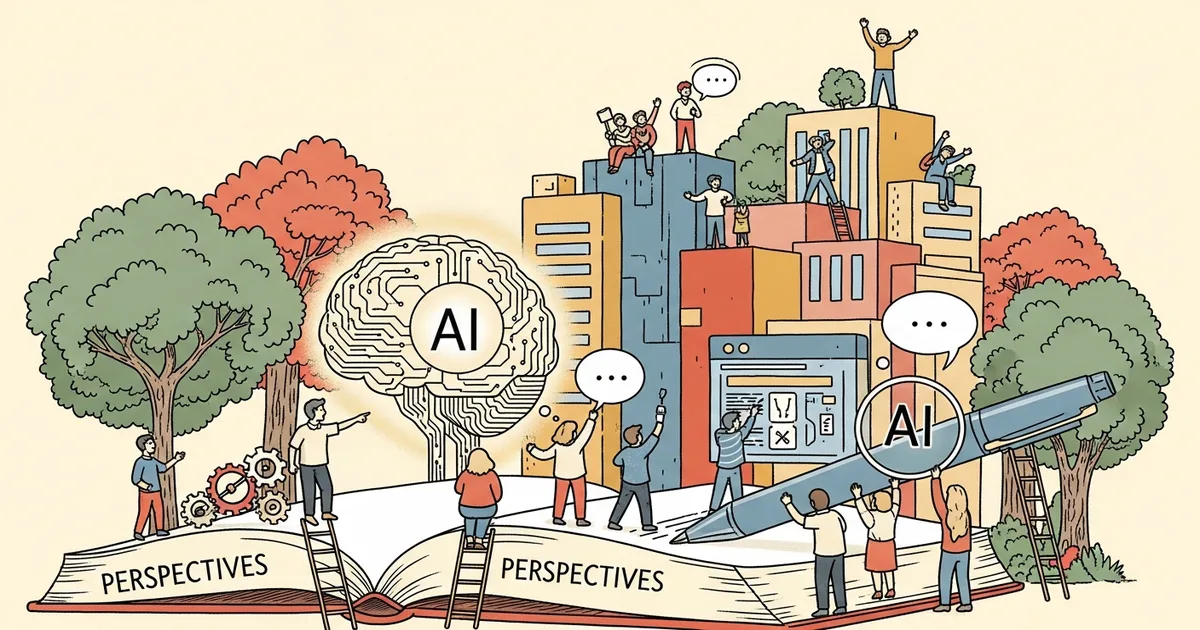
- Rust Project contributor Niko Matsakis published a summary of community perspectives on AI’s role in the project, compiled from a discussion that began in February 2025.
- Contributors are divided: some see AI-generated code submissions as a threat to code quality and community cohesion, while others view AI as useful for documentation, testing, and refactoring.
- Specific concerns include reviewer burnout from low-quality AI-generated pull requests and contributors who funnel reviewer feedback through LLMs without understanding the code.
- No official policy has been adopted, but the summary establishes a baseline for future governance decisions on AI tooling and contribution guidelines.
What Happened
The Rust Project published a summary of contributor perspectives on artificial intelligence, compiled by Niko Matsakis from a discussion that began on February 6, 2025. The document captures views from six prominent Rust maintainers, including Nicholas Nethercote, lcnr, Jieyou Xu, RalfJung, oli-obk, and Matsakis himself, on how AI tools should intersect with the language’s development, community standards, and codebase.
The perspectives reveal a community that is neither uniformly enthusiastic nor hostile toward AI. Nicholas Nethercote argued that “an open source project is more than just a codebase,” warning that AI contributions erode the community understanding and shared commitment that sustain long-term maintenance.
Why It Matters
Rust occupies a strategically important position in the software industry. Microsoft has publicly stated a goal to eliminate C and C++ from its codebase by 2030, with Rust as the primary replacement. Google, Amazon, and the Linux kernel project have all expanded their Rust adoption. As AI coding assistants generate more Rust code, the Rust Project’s stance on quality standards for AI-assisted submissions will influence how the language evolves.
The discussion takes on practical urgency as AI-generated pull requests grow across open-source projects. Contributor Jieyou Xu raised concerns about the volume of low-quality submissions causing reviewer burnout, a problem that directly threatens the project’s capacity to maintain its codebase.
Technical Details
Several contributors noted that AI-generated code frequently produces submissions that compile but violate Rust’s design principles or introduce subtle correctness issues that automated checks miss. Rust’s borrow checker enforces memory safety guarantees at compile time, and AI tools often generate code that passes compilation without meeting the project’s deeper architectural standards.
Contributor lcnr pointed out that AI breaks the effort signal that previously helped maintainers detect contributor competence. When a well-formatted pull request arrives, reviewers can no longer tell whether it reflects genuine understanding or was generated by an LLM in seconds. RalfJung raised ethical concerns about training data sourced without consent, power concentrated among few corporations, and the energy consumption of AI systems. Oli-obk highlighted risks of contributor attrition if AI tools create moral harm or widen accessibility gaps.
Who’s Affected
Rust maintainers face the most immediate impact. The proposed policy framework includes disclosure requirements for AI involvement, a rule that contributors must understand and defend their work, empowered reviewers with authority to reject low-quality contributions quickly, and immediate bans for what the community calls “slop submissions” or LLM-proxy responses submitted without understanding.
The discussion also identified positive use cases: documentation searches, code review assistance, refactoring, boilerplate generation, and supporting non-English speakers. The community drew a distinction between AI as an author of new code, where skepticism dominates, and AI as an assistant for maintenance tasks, where consensus is more positive.
Corporate Rust adopters including Microsoft, Google, and Amazon are also affected. As these companies expand their Rust codebases and increasingly use AI coding assistants internally, the Rust Project’s emerging standards for AI-assisted contributions will shape how corporate contributions to the open-source project are evaluated. The Node.js community’s recent petition against AI-generated contributions shows that Rust is not alone in grappling with these questions.
What’s Next
Matsakis emphasized that the summary reflects individual views rather than an official project position. No policy changes have been announced. The document serves as a baseline for future governance decisions, but the community remains split between fundamentally incompatible positions: deep AI integration versus moral rejection of AI tooling entirely.
One area of common ground exists: all contributors agreed that maintainers are overburdened, that naive AI use produces poor results, and that AI-generated prose is particularly problematic compared to AI-generated code. How the Rust Project resolves the deeper tensions between these positions will set precedent for other major open-source projects facing the same questions about AI’s role in collaborative software development.