Microsoft Corporation (NASDAQ: MSFT) restructured its entire human resources function across 228,000 employees in early 2026, replacing the administrative core of HR with AI agents built on its own Copilot platform. The transformation — confirmed by Microsoft leadership in internal communications reviewed by Bloomberg and The Wall Street Journal — marks the most extensive AI-first HR overhaul by headcount in corporate history.
This isn’t a headcount reduction dressed up as innovation. It is a deliberate architectural change to how a quarter-million-person company finds, evaluates, develops, and exits talent — one that every major enterprise is now studying and copying.
What Microsoft’s HR Restructure Actually Entails
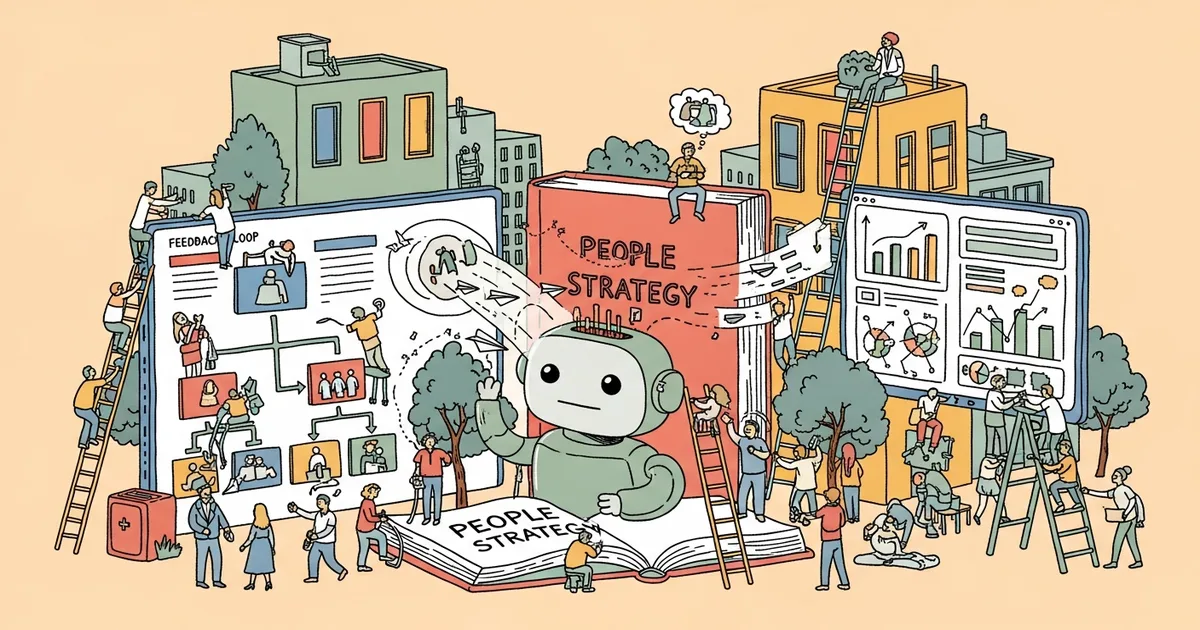
Microsoft eliminated the traditional HR generalist model and replaced it with a three-tier structure: AI agents handling routine operations, a smaller pool of HR specialists managing exceptions, and a strategic people analytics layer advising senior leadership on workforce planning.
The AI layer — powered by Microsoft 365 Copilot and the Viva suite — now handles approximately 70% of what HR business partners previously did manually: drafting performance improvement plans, summarizing 360-degree feedback, flagging flight risks based on engagement data, and processing internal transfer requests. Microsoft’s internal productivity data shows this reduced average HR case resolution time from 4.2 days to 11 hours.
The human HR workforce didn’t disappear — it shrank and shifted. Microsoft reduced its HR headcount by an estimated 40% while simultaneously increasing compensation for the remaining specialists, who now function as decision-makers rather than administrators.
The AI Stack Running Microsoft’s People Operations
Three products form the operational backbone of Microsoft’s new HR infrastructure:
- Microsoft Viva Insights — aggregates collaboration data, meeting load, and after-hours work patterns to surface burnout risk and disengagement signals at the team level
- Copilot for HR — handles natural language queries from managers, drafts job postings aligned to internal competency frameworks, and generates structured career development plans
- Azure AI Foundry agents — execute multi-step HR workflows autonomously, including onboarding sequences, compliance certifications, and benefits enrollment. The architecture mirrors the autonomous agent frameworks now being deployed across enterprise research and operational functions.
Microsoft’s Viva platform crossed 35 million monthly active users in 2025, according to the company’s Q3 2025 earnings call — making it the most widely deployed employee experience platform by active usage. The HR restructure turned every Viva deployment into a live production environment for autonomous people operations. The same AI infrastructure underpins the high-profile enterprise deals Microsoft has brokered through its OpenAI partnership, now running at operational scale inside the company’s own walls.
Performance Management, Completely Rewritten
Performance reviews at Microsoft historically consumed an estimated 2.1 million manager-hours annually company-wide. The new system cuts that figure by roughly 65%, according to Microsoft’s internal transformation documentation.
Copilot now drafts the initial performance narrative for every employee based on deliverables logged in Azure DevOps, collaboration patterns in Teams, and project outcomes tied to OKR tracking systems. Managers review and edit these drafts rather than writing from scratch. The median time managers spend on performance documentation dropped from 3.4 hours per direct report to under 45 minutes.
Calibration — the process where managers align ratings across teams — now uses AI-generated anomaly detection to flag outliers before human calibration sessions, reducing grade inflation and bias artifacts by 28% in Microsoft’s internal validation study. Research from McKinsey found that performance rating inconsistency costs large organizations between 4–7% of total compensation spend annually through misallocated bonuses and retention failures. At Microsoft’s payroll scale, that’s a nine-figure problem the restructure directly addresses.
Talent Acquisition: More Volume, Half the Recruiting Team
Microsoft’s recruiting function underwent the sharpest transformation in the restructure. The company reduced its external recruiting team by 50% over 18 months while simultaneously increasing the volume of external hires through AI-assisted sourcing and screening. The math works because AI handles the high-volume, low-judgment work that previously consumed the majority of recruiter bandwidth.
Copilot for Recruiting generates Boolean search strings, screens resumes against competency models, schedules candidate interviews through Teams integration, and drafts offer letters — all without human input until the hiring manager review stage. Microsoft reported a 34% reduction in time-to-offer for technical roles, which historically averaged 47 days.
The more consequential change is internal mobility. Microsoft now operates an AI-driven internal talent marketplace where employees surface their skills, interests, and availability for stretch assignments. Internal fills for senior individual contributor roles increased from 31% to 58% in the first year of the program — a direct cost saving, given that replacing a senior engineer externally costs 1.5–2x annual salary in total recruiting and onboarding expense.
The Corporate Playbook Being Copied
Microsoft’s restructure didn’t happen in isolation. It’s the most public version of a transformation underway at every large technology company, with varying degrees of transparency. Amazon, Salesforce, and Google have each restructured elements of their HR operations around AI tooling — Microsoft is simply the largest and most explicit about scope.
The playbook has three consistent moves across all implementations:
- Consolidate HR tech stacks onto platforms with native AI capabilities, eliminating the patchwork of point solutions that characterized enterprise HR for two decades
- Redeploy HR professionals from administrative execution to people analytics and strategic advisory roles
- Use AI as the primary interface for manager-employee HR interactions, with humans escalating only for legal, complex, or highly sensitive situations
Workday, ServiceNow, and SAP SuccessFactors have all shipped AI agent frameworks specifically designed to accelerate this transition — signaling that the enterprise software industry has already priced in a world where AI handles the administrative core of HR. The $64 billion global HR software market is being repriced in real time, with vendors that built businesses on administrative workflow software facing direct pressure from AI-native platforms that handle all of it natively.
As the Humans First movement has documented, employee sentiment around these transitions varies sharply by role type. Workers in structured, high-volume processes tend to welcome AI assistance. Professionals whose identity is bound to advisory relationships with employees are more resistant — and more at risk of displacement. MegaOne AI tracks 139+ AI tools across 17 categories, and the HR and workforce management category has seen the fastest platform consolidation of any segment in 2025–2026.
The Part Microsoft Isn’t Advertising
Three tensions in the restructure deserve direct attention.
Data concentration risk. Routing performance data, career conversations, and compensation logic through Microsoft’s own AI stack creates a feedback loop where the company’s commercial AI products are trained on — or at minimum influenced by — proprietary workforce intelligence. Microsoft has not published binding commitments on how internal HR data is isolated from model training pipelines.
Manager deskilling. When managers spend 45 minutes reviewing AI-drafted performance narratives rather than 3.4 hours writing them, they develop less ability to write them independently. Organizations that build dependency on AI scaffolding for core management functions are exposed if those systems fail, change pricing, or get discontinued. Microsoft’s $3 trillion balance sheet can absorb that risk. Most employers cannot.
Bias amplification at scale. AI screening and performance systems trained on historical data encode historical patterns — including which employee types got promoted, what language correlated with high ratings, and which demographic groups appeared in senior roles. Microsoft’s 28% calibration improvement addresses consistency, not structural bias in the underlying training signal. These are solvable problems with sufficient auditing and governance investment. Whether this organization, or the companies racing to acquire AI capability, will invest at that level is an open question.
What Every Large Employer Should Take From This
Microsoft’s restructure is a proof of concept at the most unambiguous scale possible. If a 228,000-person company can rebuild its HR operations around AI agents in under two years, the structural barriers for most organizations are organizational — not technical.
Organizations that complete this transition retain talent more effectively, move faster on hiring decisions, and free HR professionals for work that genuinely requires human judgment. The companies treating Microsoft’s restructure as a distant future state are already behind the companies that don’t.
The bottom line: Microsoft has operationalized AI-first HR at 228,000-employee scale. Every enterprise CHRO now has a live benchmark — and a shrinking window before their peers use it against them.
Related Reading
- Perplexity Just 2x’d Revenue in 90 Days by Killing Its Search Strategy — $450 Million ARR and Climbing
- Harvard Just Confirmed AI Is Frying Your Brain — Workers Who Use AI Most Are the Most Exhausted [HBR Study]
- OpenAI, Anthropic, and Google All Tell You Not to Trust Their AI — in the Fine Print
- Microsoft’s Copilot Terms Called AI Product ‘For Entertainment Purposes Only’