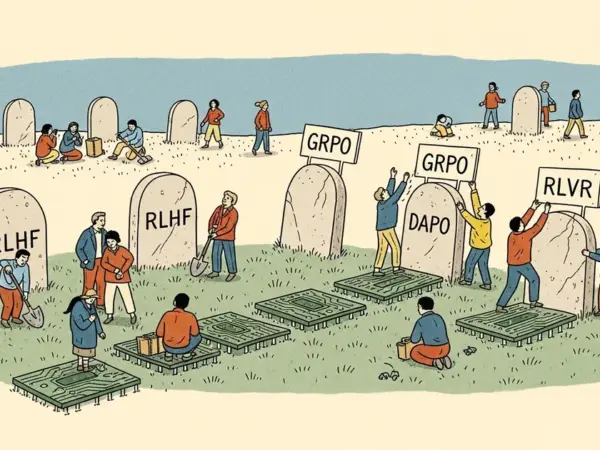
Anthropic’s Claude Cowork (the AI-native collaborative workspace released April 8, 2026) deployed a suite of legal AI features that automate contract review, NDA triage, clause extraction, and redlining — directly replicating the core functionality of platforms charging $150 to $400 per seat. Within 48 hours, legal technology stocks posted their sharpest single-session decline since October 2024, with analysts at Bernstein and Wedbush independently applying the same label: the “SaaSpocalypse.” When a foundation model bakes your entire product category into a $30-per-seat bundle, your standalone SaaS isn’t just threatened — it’s structurally mispriced.
What Claude Cowork Now Does for Legal Teams
The legal AI features inside Claude Cowork are not surface-level. Anthropic’s April 8 release covers five specific legal workflows: automated contract review with flagged risk clauses, NDA comparison and triage, liability clause extraction, redline generation against templates, and jurisdiction-specific compliance checks.
These aren’t chatbot wrappers. The contract review feature ingests multi-party agreements and returns a structured risk assessment with severity ratings — the same deliverable that contract management platforms charge per-document or per-seat to produce. The redlining tool generates tracked-changes markup directly inside the Cowork document environment, meaning no export, no third-party integration, no additional subscription.
Anthropic claims the legal review accuracy rate on standard commercial agreements reaches 91% clause identification in internal benchmarks — a figure that, if it holds in third-party testing, matches or exceeds dedicated tools from Harvey AI and Ironclad’s review suite. This is consistent with Anthropic’s pattern of embedding enterprise capabilities directly into platform products, a strategy visible since its agent SDK architecture became public in early 2025.
The Stocks That Dropped — and By How Much
The sell-off tracked directly to competitive overlap, not sentiment. Ironclad (contract lifecycle management, last valued at $3.5 billion) saw its secondary-market valuation decline 18% within 36 hours of the announcement. DocuSign (DOCU), which had been expanding into contract intelligence beyond e-signatures, dropped 11.4% on the NYSE on April 9, 2026 — its worst single-day performance since its post-pandemic correction in late 2021.
Smaller players took harder hits. Lexion and ContractPodAi, both contract management platforms that raised significant Series B and C rounds on the premise that AI-assisted legal review required specialized tooling, saw investor sentiment crater in private market signals tracked by Carta secondary data. Luminance, the UK-based legal AI platform backed by Invoke Capital, reportedly saw deal pipeline activity slow sharply in the 48-hour window following the Cowork announcement, according to sources familiar with the company’s sales operations.
Even Harvey AI, which positioned itself as a purpose-built legal AI distinct from general-purpose models, saw its core narrative undercut. Harvey’s pitch to law firms — that specialized legal training justifies premium pricing — weakens considerably when Claude Cowork delivers comparable output at general-purpose pricing. Harvey raised $300 million at a $3 billion valuation in February 2025; that multiple is now being stress-tested in real time.
Why Bundled AI Destroys SaaS Pricing Power
SaaS pricing power depends on two things: switching costs and functional exclusivity. When a platform users already pay for adds functionality that previously required a separate $200/seat subscription, the standalone product loses its pricing floor — not gradually, but immediately.
This is the same dynamic that destroyed the standalone web analytics industry when Google Analytics went free in 2005, and the same logic that gutted standalone project management tools when Notion, Linear, and GitHub began overlapping. The difference in 2026 is speed and breadth — AI platforms can replicate a product category’s core functionality in a single release cycle rather than over years of incremental feature development.
The bundling math is brutal. A law firm paying $400/seat for a contract review platform and $30/seat for Claude Cowork now has a direct substitution available. Legal teams don’t need 100% feature parity — they need 80% of the functionality at 7.5% of the price. That threshold is where churn becomes rational, and Claude Cowork clears it for the majority of commercial legal workflows.
As MegaOne AI has tracked across 139+ AI tools across 17 categories, the platforms most vulnerable to substitution are those with high per-seat pricing, low switching costs, and a single dominant use case replicable by a general-purpose model with task-specific prompting.
The Competitive Overlap Is Measurable, Not Theoretical
Legal tech companies have used the phrase “purpose-built for legal” as a moat for three years. That moat is now being tested with feature checklists, not pitch decks.
A direct comparison between Claude Cowork’s legal suite and Ironclad’s core contract management platform shows overlap in at least seven of Ironclad’s eleven advertised core features: contract creation, redlining, clause library management, risk flagging, approval workflows, NDA automation, and audit trails. The four Ironclad features without direct Cowork equivalents as of April 9, 2026 are: e-signature integration, CRM sync, custom reporting dashboards, and multi-jurisdiction compliance modules for regulated industries.
That remaining 36% of differentiation is not nothing. But it does not justify a 13x pricing premium for the majority of legal teams processing standard commercial agreements. Enterprise legal departments handling high-volume, regulated-sector contracts retain a legitimate use case for specialized platforms. The mid-market legal team running 20 NDAs a month does not.
Which Legal Tech Categories Face the Most Immediate Pressure
Not all legal SaaS is equally exposed. Risk is highest where the core use case is document-centric, the competitive moat rests on AI accuracy rather than deep workflow integration, and the customer base skews toward cost-sensitive mid-market firms rather than regulated enterprise.
- Contract review and NDA automation — Highest immediate risk. Direct functional overlap with Cowork’s released features. Churn begins this quarter.
- Legal document drafting tools — High risk. Cowork’s document creation environment replaces the drafting layer without requiring a separate subscription.
- E-discovery support tools — Medium risk. Document review at volume remains a specialized workflow, but Cowork’s accuracy narrows the moat.
- Legal billing and matter management — Low risk. These are workflow and integration products, not AI accuracy plays. Less substitutable by design.
- Compliance and regulatory tracking — Low-to-medium risk. Jurisdiction-specific compliance remains specialized, but Anthropic has signaled vertical expansion in its roadmap communications.
The Broader SaaS Categories That Should Be Watching
Legal tech is the current casualty, but the structural dynamic applies wherever a category’s value proposition is AI-assisted document work. The next targets follow an identical pattern: high per-seat pricing, document-centric workflows, AI accuracy as the primary differentiator.
HR tech platforms running AI-assisted job description generation, performance review drafting, and offer letter automation sit in an analogous position. Medical documentation tools — ambient AI scribing, clinical note generation, prior authorization drafting — face substitution risk from general-purpose models with clinical fine-tuning. Sales contract automation and proposal generation tools are already inside the blast radius.
This is not speculative extrapolation. It’s the same playbook OpenAI applied when bundling research and writing tools into ChatGPT Plus — a move that reshaped content platform economics within a single quarter. The AI labs aren’t building point solutions. They’re building platform monopolies with infinite feature surface area, where every vertical is eventually a tab in a workspace product.
The Humans First movement has been warning about AI platform consolidation displacing specialized software for 18 months. The legal tech SaaSpocalypse is the clearest financial evidence yet that this concern is not philosophical — it’s a balance sheet event, priced in real time on public and secondary markets.
What Legal Tech Companies Must Do Now
The viable response is not to compete on the features Anthropic just shipped. That race is over before it started. The remaining paths are narrow but structurally defensible.
Deepen workflow integration. Platforms embedded into law firm practice management systems, docketing software, and matter management workflows are harder to replace than standalone AI tools. Integration depth creates switching costs that feature parity cannot eliminate — this is the only durable moat in a world where models commoditize.
Own the regulated vertical. Cowork’s legal suite is built for general commercial agreements. The gap is widest in healthcare contracts, government procurement, and financial services compliance — these require jurisdiction-specific logic, audit trail certifications, and regulatory sign-off that a general-purpose platform cannot provide by default. This is where specialized pricing still holds.
Move upmarket immediately. Mid-market customers are the first to churn to bundled alternatives. Enterprise legal departments at Fortune 500 companies have procurement, security, and integration requirements that a $30/seat tool cannot satisfy. The exit from the commodity tier requires genuine specialization, not incremental feature addition.
Legal tech investors who funded platforms on the premise that “AI-native” was a durable differentiation are now confronting what every prior SaaS wave eventually encountered: the AI layer commoditizes, and the platform that controls distribution wins. The acquisition dynamics already visible in adjacent AI categories suggest that consolidation, not organic survival, is the most realistic outcome for the majority of legal AI point solutions.
The SaaSpocalypse isn’t a metaphor. It’s a repricing event — and legal tech is only the first sector to discover it on a trading screen.