- Anthropic announced that Claude will remain permanently ad-free, with no sponsored links, advertiser influence, or third-party product placements in conversations.
- The company argues that AI conversations involve sensitive personal disclosures that make advertising “incongruous — and, in many cases, inappropriate,” unlike search or social media.
- Anthropic plans agentic commerce features where Claude acts on users’ behalf for purchases, but only when user-initiated rather than advertiser-driven.
- Revenue will come from enterprise contracts and paid subscriptions, with access expanded through AI education programs in 60-plus countries and nonprofit discounts.
What Happened
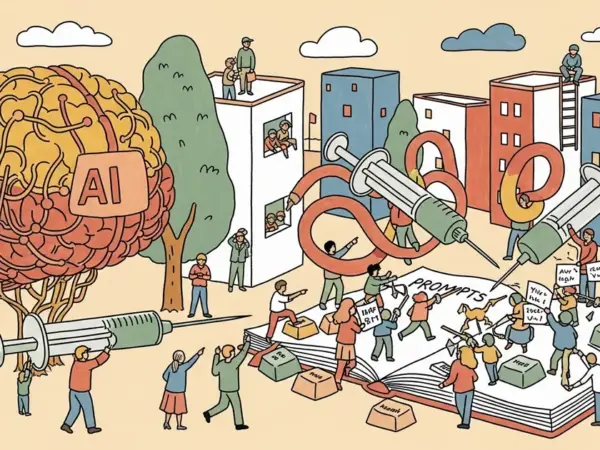
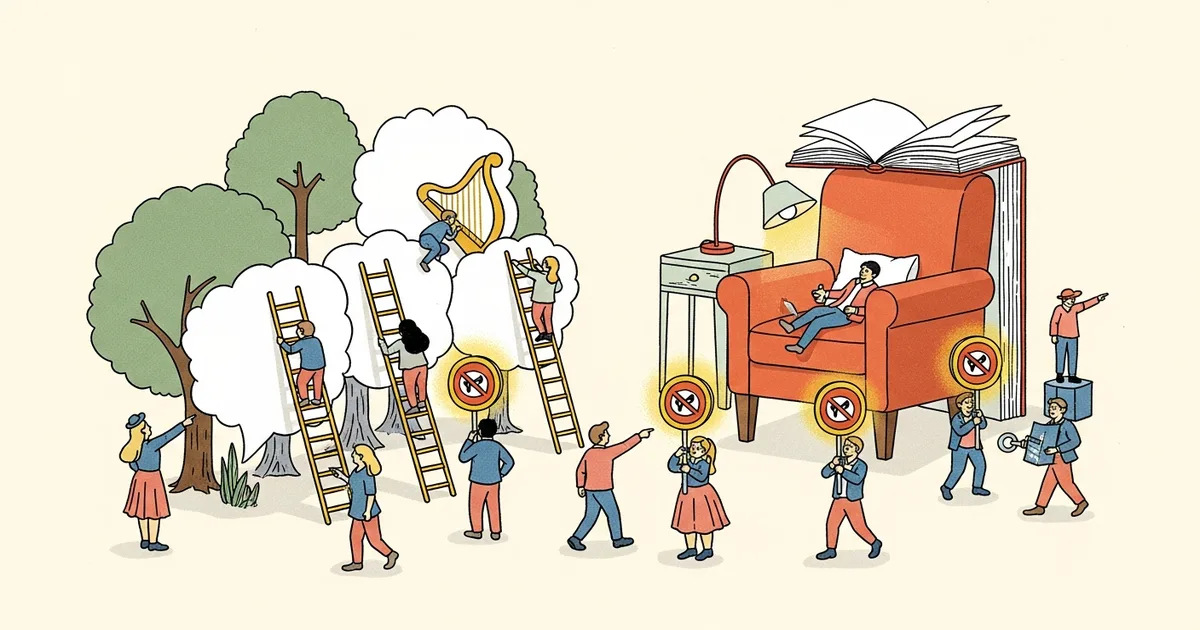
Anthropic announced on February 4, 2026, that its AI assistant Claude will remain permanently ad-free. The company’s blog post stated that users will not see sponsored links adjacent to conversations, Claude’s responses will not be influenced by advertisers, and no third-party product placements will appear. The announcement positions Claude as fundamentally different from search engines and social media platforms, which rely on advertising revenue.
“Users shouldn’t have to second-guess whether an AI is genuinely helping them or subtly steering the conversation towards something monetizable,” the company wrote. Anthropic framed the decision as a structural commitment rather than a temporary policy, arguing that the nature of AI conversations makes advertising inherently problematic in ways that differ from other digital products.
Why It Matters
The decision draws a line in the AI industry’s business model debate. As AI assistants become primary interfaces for information and decision-making, the question of whether their outputs should be influenced by advertising revenue has significant implications. Anthropic argues that AI conversations involve more open-ended sharing than search queries: “users often share context and reveal more than they would in a search query,” creating vulnerability to influence that traditional advertising contexts do not.
The company’s internal analysis of Claude conversations, conducted with private and anonymous data, found that “an appreciable portion involve topics that are sensitive or deeply personal — the kinds of conversations you might have with a trusted advisor.” Other common uses involve “complex software engineering tasks, deep work, or thinking through difficult problems,” making advertising feel out of place.
Technical Details
Anthropic provided a concrete example of how advertising incentives would distort AI behavior. When a user mentions sleep troubles, an ad-free assistant explores various potential causes based on what is most insightful for the user. An ad-supported system would additionally consider “whether the conversation presents an opportunity to make a transaction.” The company acknowledged that “these objectives may often align — but not always,” and the divergence in edge cases is where user trust erodes.
Even non-intrusive advertising would create structural problems, according to Anthropic. Ads within chat windows create pressure to optimize for time-on-platform and return frequency — engagement metrics that “aren’t necessarily aligned with being genuinely helpful.” The company cited early research from JMIR and Stanford showing that AI models can “reinforce harmful beliefs in vulnerable users,” and argued that introducing advertising incentives would “add another level of complexity” to an already developing understanding of model behavior.
Who’s Affected
The commitment applies across all Claude products, from free-tier users to enterprise customers. Anthropic generates revenue through enterprise contracts and paid subscriptions rather than advertising, and stated it will reinvest proceeds into product improvement. The company also outlined access expansion plans: AI education programs in 60-plus countries, national pilots with multiple governments, significant nonprofit discounts, and continued investment in smaller, more efficient models.
Rather than advertising-driven commerce, Anthropic plans to build agentic commerce features where Claude acts on users’ behalf for purchases, plus integrations with tools like Figma and Asana. The distinction is that these interactions would be user-initiated rather than advertiser-driven, maintaining the principle that Claude’s recommendations are not influenced by commercial relationships.
What’s Next
The ad-free commitment sets a benchmark that competitors will be measured against, particularly as Google integrates Gemini deeper into its advertising-supported ecosystem and OpenAI explores revenue models for its expanding product line. Whether Anthropic can sustain this position depends on the viability of its subscription and enterprise revenue at scale. The company acknowledged the tension implicitly by emphasizing its access expansion programs, suggesting that maintaining an ad-free model requires demonstrating that paid tiers can fund broad availability.
The distinction matters most at the edges. For straightforward factual queries, an ad-supported assistant and an ad-free one would likely produce identical answers. But for complex decisions involving products, services, or financial choices, the presence of advertising relationships introduces a systematic bias that users cannot easily detect. Anthropic is wagering that trust will prove more valuable than advertising revenue as AI assistants become central to how people make consequential decisions.