- OpenAI published its Child Safety Blueprint on April 8, 2026, developed with the National Center for Missing and Exploited Children and the Attorney General Alliance.
- The Internet Watch Foundation logged more than 8,000 reports of AI-generated child sexual abuse material in the first half of 2025, a 14% increase year-over-year.
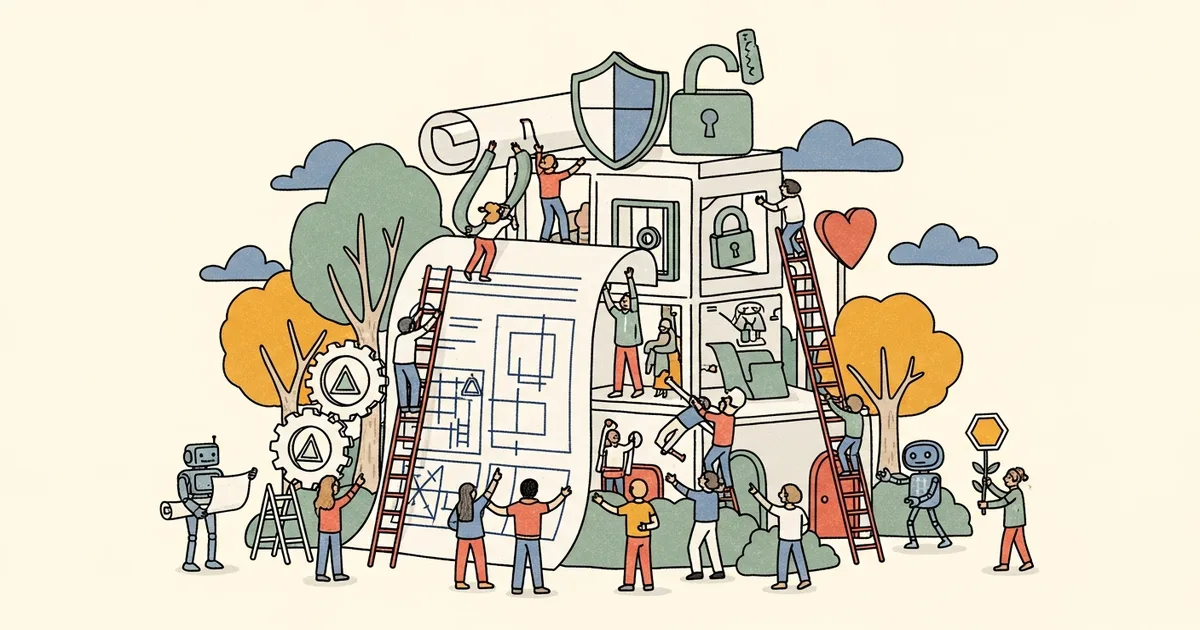
- The blueprint targets three areas: legislative updates covering AI-generated abuse material, improved law enforcement reporting pipelines, and preventative safeguards embedded in AI systems.
- North Carolina Attorney General Jeff Jackson and Utah Attorney General Derek Brown provided input on the document before its release.
What Happened
OpenAI published its Child Safety Blueprint on April 8, 2026, a policy document outlining steps to reduce the use of AI technologies in child sexual exploitation. Developed in collaboration with the National Center for Missing and Exploited Children (NCMEC) and the Attorney General Alliance, the document was described by OpenAI as designed to enable “faster detection, better reporting, and more efficient investigation into cases of AI-enabled child exploitation.”
Why It Matters
The blueprint arrives alongside documented growth in AI-enabled abuse. The Internet Watch Foundation (IWF) recorded more than 8,000 cases of AI-generated child sexual abuse material (CSAM) in the first half of 2025, a 14% increase compared to the same period the previous year. Reported methods include generating synthetic explicit imagery for use in financial sextortion schemes and producing personalized grooming messages at scale.
OpenAI has faced escalating legal and regulatory pressure on broader safety grounds. In November 2025, the Social Media Victims Law Center and the Tech Justice Law Project filed seven lawsuits in California state courts alleging that GPT-4o was deployed before it was adequately tested. The complaints cited four deaths by suicide and three cases of severe psychological harm attributed to extended chatbot interactions. The Child Safety Blueprint follows a separate teen-focused safety document OpenAI released for users in India earlier in 2026.
Technical Details
OpenAI described the blueprint as structured around three interconnected areas of action. First, it calls for updated U.S. legislation that explicitly classifies AI-generated CSAM — including synthetic imagery not involving actual minors — under existing child protection statutes. Second, it recommends improving the reporting pipeline between AI platforms and law enforcement, with the stated aim of delivering actionable data to investigators more quickly than current systems allow. Third, it advocates embedding preventative safeguards at the model and deployment level rather than relying solely on post-publication content moderation.
The company noted the blueprint builds on policies already applied to users under 18, which prohibit generating inappropriate content, encouraging self-harm, or providing guidance that would help minors conceal unsafe behavior from caregivers. Both North Carolina AG Jeff Jackson and Utah AG Derek Brown provided feedback on the document before publication.
Who’s Affected
The blueprint’s principal audience is U.S. legislators, state attorneys general, law enforcement agencies, and AI developers. Should the legislative recommendations be adopted, AI companies operating in the United States would face new statutory obligations covering detection, reporting, and system design. The NCMEC, which administers the national CyberTipline for reporting CSAM, is identified as a key operational partner for implementing the reporting recommendations.
Minors, families, and child safety organizations are the indirect beneficiaries of the proposed framework. IWF data indicates that current exploitation patterns pair AI-generated synthetic imagery with algorithmically crafted personalized grooming messages, expanding both the scale of abuse attempts and their apparent authenticity to targets.
What’s Next
The blueprint carries no binding legal authority; its recommendations require action from legislators and regulators to take effect. Attorneys General Jeff Jackson and Derek Brown, who contributed input to the document, are positioned to advance related measures at the state level. OpenAI has not published a timeline for implementing the technical safeguards described in the blueprint, nor indicated whether a public comment period will follow.
Related Reading
- MCP Just Hit 97 Million Installs — The Protocol Nobody Heard of 18 Months Ago Is Now the Backbone of AI Agents
- AI Writes 41% of All Code — So Why Are We Still Making It Write in Languages Designed for Humans?
- Google Dumped 5 Open-Source AI Models in One Day — Here’s What They Do
- This 8B Open-Source AI Agent Beats GPT-4o at Browsing the Web