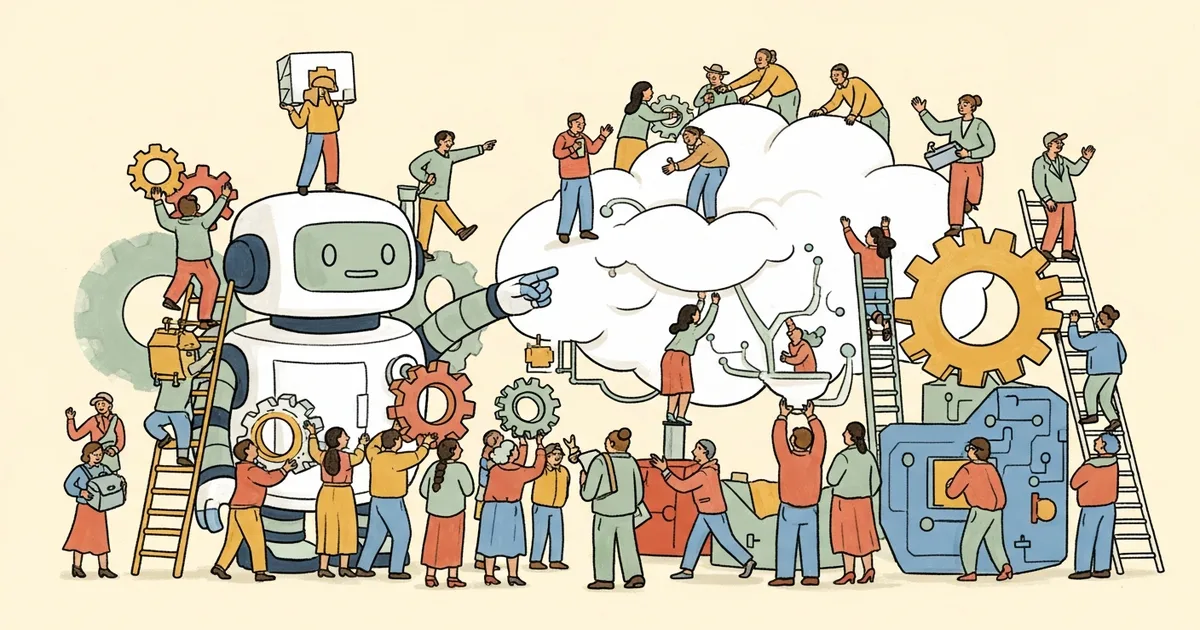
- Bloomberg reported on May 7, 2026 that Cloudflare will cut approximately 1,100 jobs — roughly one-fifth of its global workforce — in a shift to an AI-first operating model.
- The announcement extends a multi-month 2026 pattern of major US tech employers explicitly tying workforce reductions to AI-driven productivity gains.
- Recent comparable moves: DeepL (~250 jobs, May 7), PayPal and Coinbase (joint announcement May 5), Snap (16% workforce, ~1,000 employees in April), DoorDash, IBM, Salesforce.
- The Bloomberg article is paywalled; specific affected business units, severance terms, and the timeline of the restructuring should be confirmed against the original report.
What Happened
Cloudflare will cut roughly 1,100 jobs — about one-fifth of its global workforce — in a restructuring to an AI-first operating model, Bloomberg reported on May 7, 2026. The Bloomberg article is paywalled, so specific affected business units (engineering, sales, customer success, support, etc.), severance terms, regional distribution of cuts, and the timeline should be confirmed against the original report. The 1,100-job figure implies Cloudflare’s pre-cut workforce was approximately 5,500.
Why It Matters
Cloudflare’s reduction is one of the largest single AI-driven layoff announcements at a major US tech infrastructure company in 2026. The “AI-first operating model” framing — explicitly attributing the workforce reduction to operational re-engineering around AI productivity — extends a pattern that has accelerated through April and May. As the cumulative number of high-profile companies tying layoffs to AI grows, the sector-wide labor-market signal moves from anecdotal to structural. Cloudflare’s specific position — as both an infrastructure provider that hosts AI workloads and a customer of frontier AI labs — makes the announcement a leading indicator: if Cloudflare can run 20% smaller with AI augmentation, customers running smaller margins may follow.
Technical Details
Specific operational details of Cloudflare’s AI-first restructuring were not retrievable from the publicly accessible portion of Bloomberg’s article. Based on Cloudflare’s product portfolio and its 2025-2026 AI-related announcements, likely areas of operational re-engineering include:
- Customer support automation using AI agents for common ticket categories
- Sales and customer success automation through agentic CRM workflows
- Internal engineering productivity gains from coding agents (Claude Code, Cursor, Codex)
- Marketing content and developer-relations operations through AI-generated outputs
- Security operations center (SOC) automation through AI threat-detection agents
The layoff context inside the broader 2026 pattern: DeepL announced approximately 250 layoffs the same day (May 7), explicitly framed as restructuring to an “AI-native” organization. PayPal and Coinbase announced layoffs jointly on May 5 with Coinbase citing “AI-native” restructuring for its 700-worker reduction. Snap announced a 16% workforce reduction (~1,000 full-time employees) in April citing AI advancements. IBM cited 3,900 jobs in May 2023, Salesforce 700 in early 2025, Klarna integrated AI customer service driving headcount reductions, and Match Group is now slowing hiring to pay for AI tool adoption (covered earlier this week).
Cloudflare CEO Matthew Prince has been publicly vocal about AI’s transformational role in the company’s operations through 2025-2026. Cloudflare itself ships Workers AI (its serverless inference platform), AI Gateway, and similar AI-infrastructure products. The company is therefore both a customer of frontier AI labs and a provider of AI infrastructure to its own customer base — meaning the AI-first operating model is operationally credible rather than just rhetorical.
Who’s Affected
Approximately 1,100 Cloudflare employees face immediate job-search circumstances; the broader US tech labor market absorbs the impact alongside the DeepL, PayPal, Coinbase, and Snap reductions of recent weeks. Cloudflare’s roughly 4,400 remaining employees take on operational changes consistent with the AI-first model. Cloudflare customers — particularly enterprise contracts — face questions about whether reduced support and customer-success headcount affects service levels. Competing infrastructure providers (Fastly, Akamai, AWS CloudFront, Vercel) face an immediate competitive opening if Cloudflare’s restructuring affects customer-facing service quality. Workers in adjacent infrastructure-engineering and customer-success roles broadly face a clearer signal that AI productivity is being realized through headcount reduction rather than capacity expansion.
What’s Next
Cloudflare is expected to provide additional detail in any companion press release or earnings commentary. The Q2 2026 earnings call will likely include specific operational impact metrics — productivity per employee, support ticket volume per FTE, and similar. Watch for whether other major infrastructure providers (Akamai, Fastly, Vercel, even AWS divisions) follow with similar announcements. The cumulative count of 2026 AI-driven layoff announcements — now spanning DeepL, PayPal, Coinbase, Snap, Cloudflare, Match Group, Klarna, IBM, Salesforce, and others — is becoming a sector-wide policy issue likely to surface in U.S. labor-market data and political response.