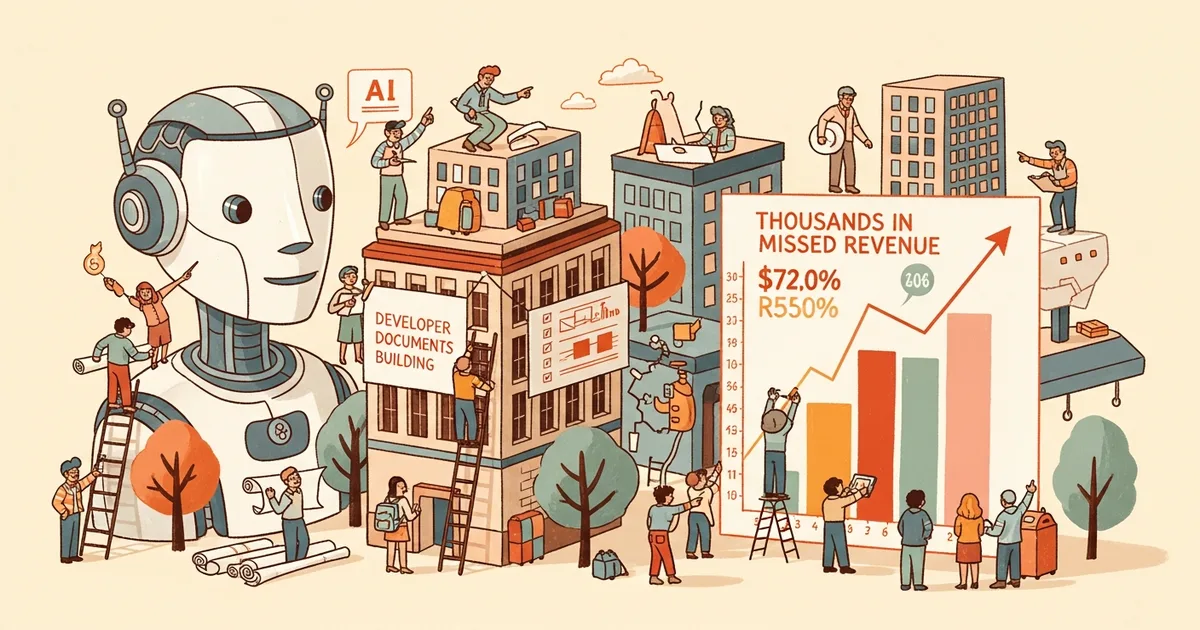
A developer has published a detailed technical walkthrough of building a custom AI receptionist named Axle for a luxury auto mechanic shop, documenting how the system recovers thousands of dollars in monthly revenue that was being lost to missed calls and unanswered inquiries. The project, shared as a multi-part series, demonstrates the practical economics of AI voice agents in small business operations where every missed call represents a potential high-value service booking.
The mechanic shop’s problem was straightforward: luxury vehicle repairs generate significant per-job revenue, but the shop’s small staff frequently couldn’t answer phones during active repair work. Calls went to voicemail, and most callers — accustomed to immediate service when spending thousands on vehicle maintenance — simply called a competitor instead. The AI receptionist addresses this by answering every call, understanding service requests through natural language processing, and either booking appointments directly or routing urgent matters to staff.
The technical implementation uses a voice AI pipeline combining speech-to-text transcription, a large language model for understanding intent and generating responses, and text-to-speech for natural-sounding replies. The developer trained the system on the shop’s specific service catalog, pricing structure, and scheduling rules so that Axle can handle booking requests without human intervention for routine inquiries. Complex requests — insurance claims, warranty disputes, custom modification consultations — are flagged for human callback with context from the AI conversation attached.
The revenue impact is measurable. Before the AI receptionist, the shop estimated it was losing several thousand dollars monthly in missed bookings. After deployment, call answer rates reached near 100 percent, and the conversion rate from inquiry to booked appointment improved because callers received immediate engagement rather than voicemail. The economics are favorable: the AI system’s monthly operating cost is a fraction of hiring an additional front-desk employee, and it operates 24/7 including evenings and weekends when the shop is closed but potential customers are researching services.
The project has generated significant interest in the developer community because it demonstrates AI delivering direct, quantifiable business value in a context that isn’t a technology company. While most AI deployment stories focus on enterprise software or consumer applications, Axle illustrates the long tail of AI adoption — small businesses with specific, costly operational gaps where a purpose-built AI agent can pay for itself within weeks of deployment.